
BPS records Indonesia's trade balance surplus continues for 69 months in January 2026
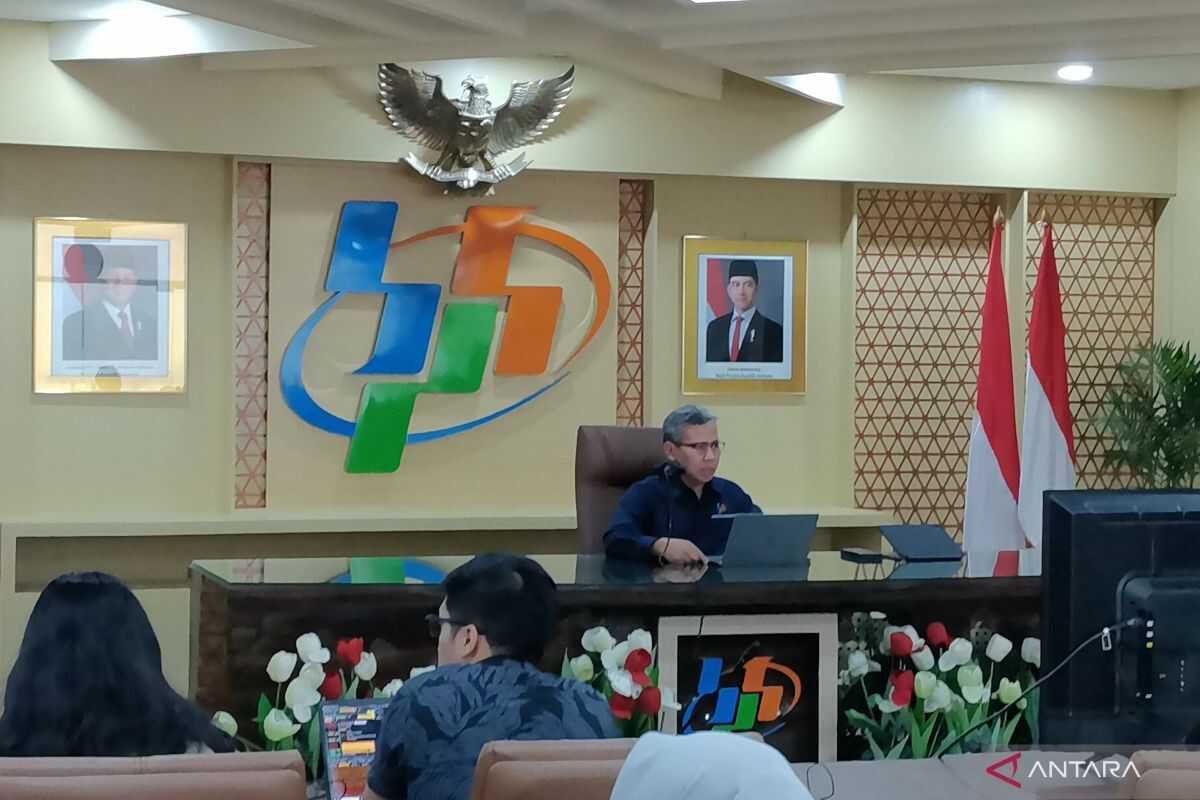
Jakarta — The Statistics Indonesia agency (BPS) recorded Indonesia’s merchandise trade balance returning to surplus in January 2026 at USD 0.95 billion, extending a consecutive surplus trend spanning 69 months since May 2020.
Ateng Hartono, Deputy for Distribution and Services Statistics at BPS, announced at a press conference in Jakarta on Monday that the surplus was primarily supported by strong non-oil and gas trade performance, despite a substantial year-on-year increase in imports.
“In January 2026, Indonesia’s merchandise trade balance recorded a surplus of USD 0.95 billion. With this achievement, Indonesia’s merchandise trade balance has recorded a surplus for 69 consecutive months,” stated Ateng.
According to BPS, the surplus originated from the non-oil and gas trade balance, which recorded a surplus of USD 3.22 billion, whilst the oil and gas balance continued to experience a deficit of USD 2.27 billion.
Ateng noted that the principal commodities contributing to the non-oil and gas surplus included vegetable and animal fats (HS15) with a surplus of USD 3.10 billion, mineral fuels (HS27) at USD 2.16 billion, and iron and steel (HS72) at USD 1.51 billion.
From a trade performance perspective, BPS recorded Indonesia’s export value in January 2026 reaching USD 22.16 billion, an increase of 3.39 per cent year-on-year. This growth was primarily driven by non-oil and gas exports, which expanded 4.38 per cent to USD 21.26 billion.
He further noted that the increase in non-oil and gas exports primarily derived from vegetable and animal fats, which surged 46.05 per cent, followed by nickel and nickel products, which rose 42.04 per cent, and machinery and electronic equipment, which increased 16.27 per cent.
Meanwhile, Indonesia’s import value in January 2026 reached USD 21.20 billion, a substantial increase of 18.21 per cent compared to January 2025. The import increase was primarily driven by non-oil and gas imports.
“The value of oil and gas imports stood at USD 3.17 billion, or an increase of 27.52 per cent year-on-year. Additionally, non-oil and gas imports valued at USD 18.04 billion also experienced a year-on-year increase of 16.71 per cent,” he said.
BPS recorded that the import increase occurred across all usage categories, particularly raw materials or auxiliary materials, which increased 14.67 per cent, and capital goods, which rose 35.32 per cent.
By trading partner country, the United States was the largest contributor to Indonesia’s surplus at USD 1.55 billion, followed by India at USD 1.07 billion, and the Philippines at USD 0.69 billion.
The largest deficits were recorded with China at USD 2.47 billion, followed by Australia at USD 0.96 billion, and France at USD 0.47 billion.