
BPS Issues Warning: Monitor Food Price Surge Ahead of Eid
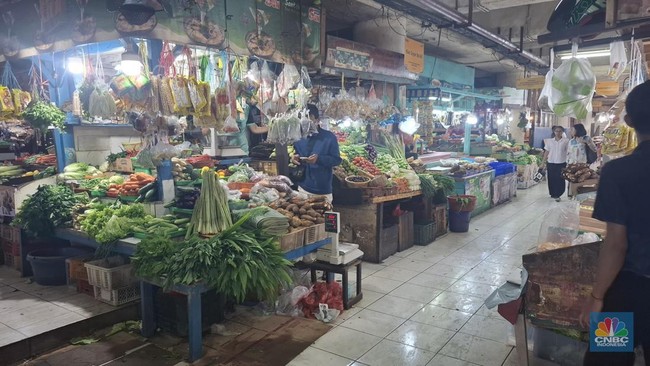
Jakarta – The Central Bureau of Statistics (BPS) has recorded that inflation during Ramadan 2026 was relatively lower compared to Ramadan of the previous year. However, the government has been urged to remain vigilant regarding price increases in several food commodities that are beginning to rise ahead of Eid.
BPS Head Amalia Adininggar Widyasanti stated that Ramadan inflation in February 2026 was recorded at 0.68% month-on-month. This figure is significantly lower compared to Ramadan inflation in March 2025, which reached 1.65%.
“The Ramadan period in 2026 in February shows relatively lower inflation compared to the Ramadan period in 2025. So if we look at the Ramadan period in February 2026, it was 0.68% and in 2025 it was 1.65%,” Amalia said during a Regional Inflation Control Coordination Meeting on Monday, 9 March 2026.
Historically, BPS has recorded that Ramadan is almost always accompanied by inflation increases due to rising consumer consumption. However, in 2026, inflationary pressures appear more controlled.
Nevertheless, Amalia reminded that volatile food price components remain the primary source of inflationary pressure during Ramadan. In February 2026, this component contributed approximately 0.41% to inflation.
“We have noted that during Ramadan, prices that rise significantly include broiler chicken, bird’s eye chillies, fresh fish, red chillies, and in some areas chicken eggs have also experienced increases,” she said.
BPS data shows that inflation from the volatile food price group has indeed occurred every Ramadan over the past five years. In fact, during Ramadan 2026, inflation from this component was recorded at 2.50%, the highest compared to previous Ramadan periods.
Commodities that most frequently drive inflation in this group include broiler chicken, bird’s eye chillies, chicken eggs, rice, and fresh fish.
Beyond price pressure, BPS is also monitoring the spread of price increases across regions. Based on the Price Development Index (IPH), several commodities have experienced price increases across hundreds of districts and cities.
Chicken eggs, for example, experienced price increases in 210 districts and cities, whilst bird’s eye chillies in 177 areas, broiler chicken in 176 areas, and shallots in 136 areas.
Therefore, Amalia emphasised that both central and local government must take stabilisation measures to prevent larger price spikes ahead of Eid.
“With this in mind, our note is that in preparing for Eid, several commodities that require the attention of all authorities are chicken eggs, bird’s eye chillies, broiler chicken, and shallots,” she said.
“For rice, only in a few districts and cities are there still price increases, but what is most important is that chicken eggs, bird’s eye chillies, broiler chicken, and shallots need to receive attention for price stabilisation,” she concluded.