
BPS: Indonesia's Population Reaches 284.67 Million, Majority on Java Island
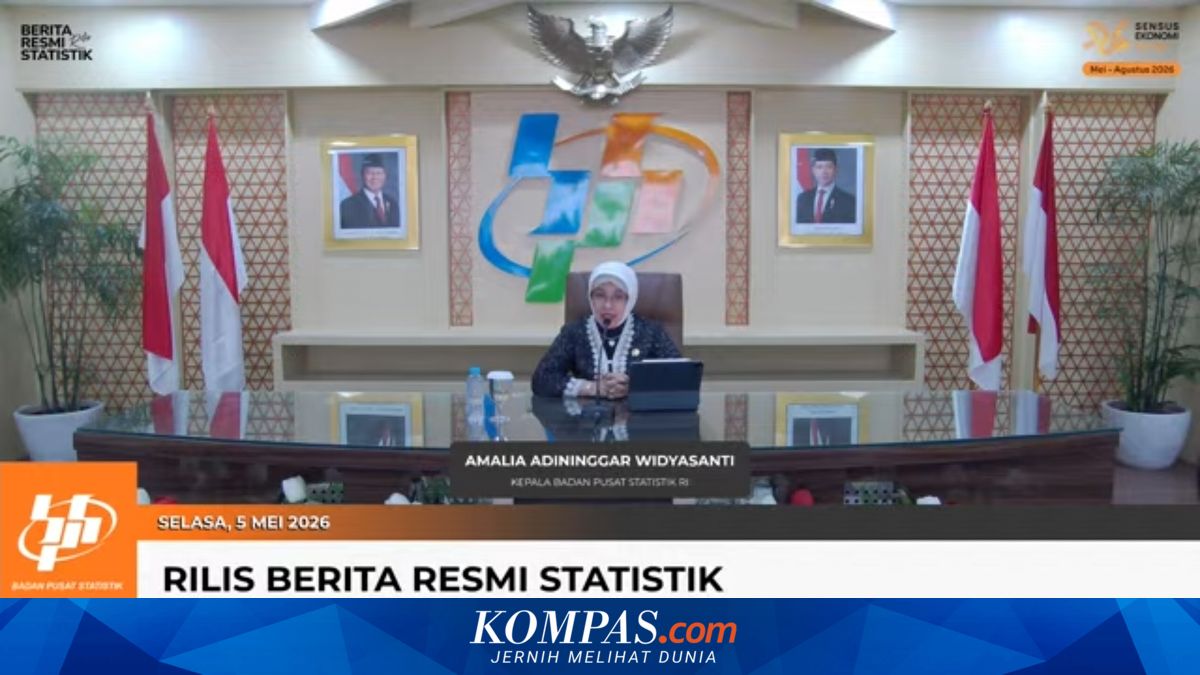
JAKARTA - The Central Statistics Agency (BPS) reports that Indonesia’s population, based on the 2025 Inter-Census Population Survey (SUPAS), reaches 284.67 million people.
BPS Chief Amalia Adininggar Widyasanti stated that SUPAS is conducted between two population census periods to obtain various demographic indicators such as fertility, mortality, and mobility.
Notably, of Indonesia’s total population, 55.65% reside on Java Island.
Amalia explained that, based on age groups, approximately 68.92% of Indonesia’s population comprises Gen-Z (born 1997-2012), Millennials (born 1981-1996), and Post-Gen Z (born 2013 and later). Meanwhile, the population dependency ratio based on the 2025 SUPAS results stands at 45.05.
This means that for every 100 working-age individuals, 45 non-working-age individuals are supported.
“This figure has risen from 44.33 in the 2020 Population Census (SP2020) data,” she added.
The decline in the Total Fertility Rate (TFR) is primarily driven by a significant drop in birth rates among women aged 15-19 and 20-24 years.
Meanwhile, the Infant Mortality Rate (IMR) shows a downward trend over time.
The IMR based on the 2025 SUPAS is recorded at 14.12 infant deaths per 1,000 live births, down from 16.85 infant deaths per 1,000 live births in the 2020 SP.
Furthermore, the Maternal Mortality Ratio (MMR) also exhibits a declining trend.
The MMR based on the 2025 SUPAS has decreased to 144 maternal deaths per 100,000 live births, down from 189 maternal deaths per 100,000 live births in the 2020 SP.
The MMR in the 2025 SUPAS has fallen by more than half compared to the 2010 SP conditions, which stood at 346 maternal deaths per 100,000 live births.
“From a domestic perspective, DKI Jakarta has the highest percentage of inter-provincial out-migration, both lifetime and recent,” she concluded.