
BPS: Indonesia Continues Trade Surplus Trend for 71 Months Supported by Industry
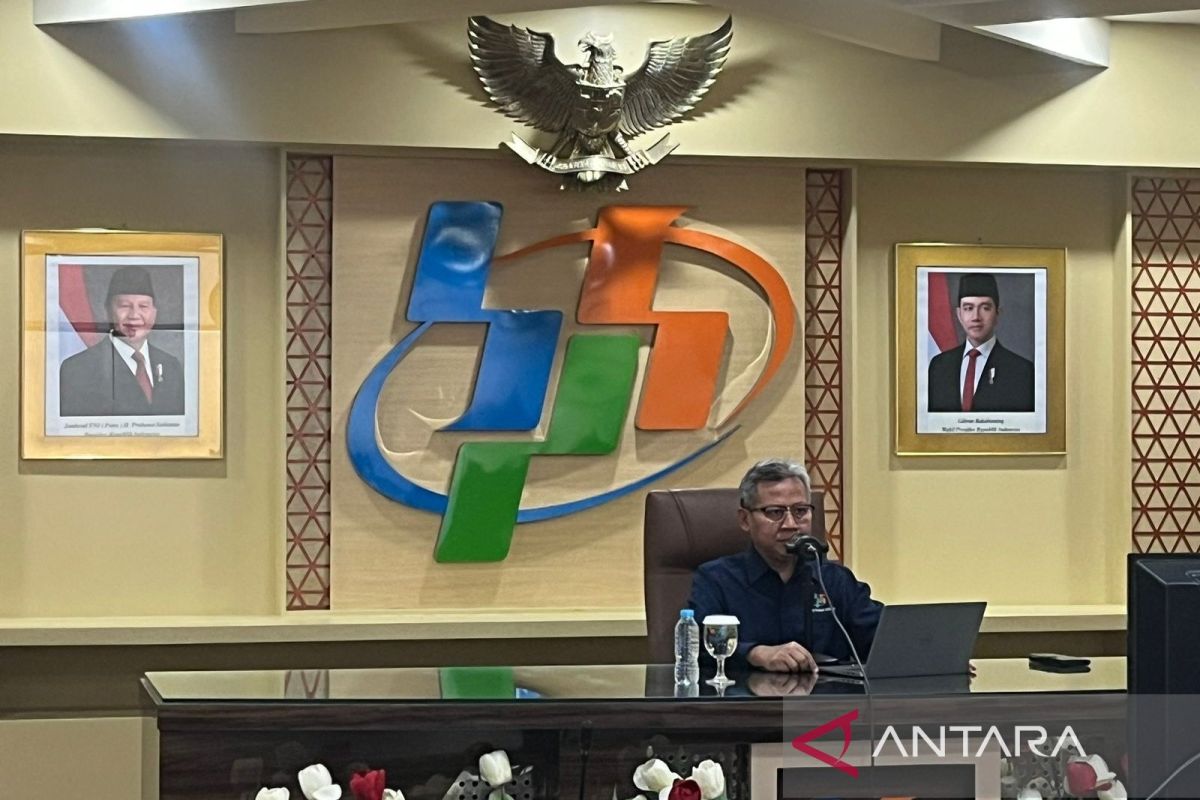
Indonesia’s trade balance has recorded a surplus for 71 consecutive months since May 2020.
Jakarta (ANTARA) - Statistics Indonesia (BPS) states that Indonesia has continued its trade surplus trend for 71 consecutive months up to March 2026, with performance primarily supported by non-oil and gas exports, particularly the processing industry.
“Indonesia’s trade balance has recorded a surplus for 71 consecutive months since May 2020,” said Deputy for Distribution and Services Statistics at BPS, Ateng Hartono, in Jakarta on Monday.
He explained that Indonesia’s goods trade balance in March 2026 recorded a surplus of $3.32 billion, supported by a non-oil and gas commodity surplus of $5.21 billion, with the main contributing subsectors being animal and vegetable fats and oils, mineral fuels, and iron and steel.
On the other hand, the oil and gas trade balance still recorded a deficit of $1.89 billion, with deficit-contributing commodities coming from crude oil, oil products, and gas.
Cumulatively, from January to March 2026, Indonesia’s trade balance recorded a surplus of $5.55 billion, supported by a non-oil and gas surplus, including the processing industry at $10.63 billion, while the oil and gas sector experienced a deficit of $5.08 billion.
From the export side, Indonesia’s total exports from January to March 2026 reached $66.85 billion, or an increase of 0.34% compared to the same period last year.
Oil and gas exports were recorded at $3.25 billion, or down 10.58%, while non-oil and gas exports grew 0.98% to $63.60 billion.
Ateng explained that the cumulative increase in non-oil and gas exports was mainly driven by the processing industry sector, which became the main driver of the export performance increase.
“The processing industry sector became the main driver of the increase in non-oil and gas export performance throughout the January to March 2026 period, with a contribution to the increase of 3.15%,” he said.
Significant growth in processing industry exports was driven by increases in nickel, organic basic chemicals based on agricultural products, palm oil, other organic basic chemicals, and semiconductors and electronic components.
In March 2026, total non-oil and gas exports were recorded at $21.25 billion. From that amount, the processing industry sector contributed the largest at $17.92 billion.
In addition, Indonesia’s three flagship commodities—iron and steel, crude palm oil (CPO) and its derivatives, and coal—contributed around 28.53% to total non-oil and gas exports during January to March 2026.
Further details show that iron and steel exports rose 0.56% cumulatively, CPO and its derivatives grew 3.56%, while coal exports fell 11.51%.
From the destination country side, China remains the main market for Indonesia’s non-oil and gas exports with a value of $16.5 billion, or up 17.49% compared to January-March 2025.
Besides China, two other export destination countries for Indonesia are the United States and India, which contributed 44.48% to the total national non-oil and gas exports.
Meanwhile, from the import side, Indonesia’s import value from January to March 2026 reached $61.30 billion, or up 10.05% compared to the same period last year.
Non-oil and gas imports were recorded at $52.97 billion, or up 12.16%, while oil and gas imports fell 1.72% to $8.33 billion.
According to Ateng, the import increase was mainly driven by imports of raw materials and auxiliaries reaching $43.17 billion, or growing 6.89%.
Major import commodities that experienced significant increases include machinery and electrical equipment, precious metals and jewellery, and various chemical products.
He also stated that plastic raw material imports in March 2026 were recorded at $338.1 million, or down 14.96% monthly.
In terms of trading partners, the United States became the country contributing the largest trade surplus for Indonesia at $4.43 billion, followed by India at $3.29 billion and the Philippines at $2.61 billion.
Conversely, the deepest deficit was recorded with China at $5.18 billion, Australia at $2.5 billion, and Singapore at $1.9 billion.