
BPS DIY Records 0.45% Inflation in March 2026, with Five Commodities as the Largest Contributors
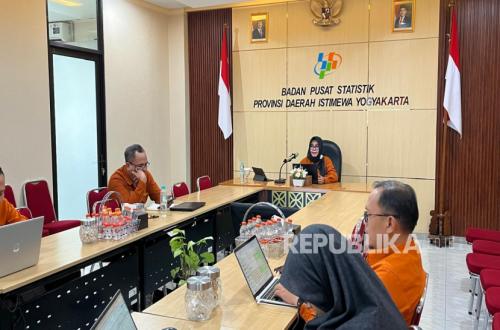
YOGYAKARTA – The Central Statistics Agency (BPS) of the Special Region of Yogyakarta (DIY) recorded a monthly (month-to-month) inflation rate of 0.45% in March 2026. According to the data, this inflation was triggered by several major commodities in the food to transportation groups, considering that the period from February to March coincided with the momentum of Ramadan and Eid al-Fitr.
Overall, the annual (year-on-year) inflation in DIY was recorded at 4.08%, while the calendar year (year-to-date) inflation reached 0.97%. These figures indicate that price pressures remain relatively controlled throughout the first quarter of 2026.
Acting Head of the Central Statistics Agency of DIY Province, Endang Tri Wahyuningsih, revealed that there are five commodities that became the largest contributors to inflation, starting with petrol as the main contributor because it is an administered price commodity regulated by the government, thus having a broad impact on other inflation components. Following that, commodities such as broiler chicken meat, gold jewellery, spinach, and tomatoes also served as major drivers of inflation in March 2026.
“Similar pressures also come from the transportation group, in line with fluctuations in fuel prices and transport fares,” she said while presenting data on commodities contributing to monthly inflation and deflation at the BPS DIY office on Wednesday (1/4/2026).
Meanwhile, on an annual basis, inflation pressures were more influenced by increases in electricity tariffs and food prices. The expenditure groups with the largest contributions were food, beverages, and tobacco; housing, water, electricity, and household fuels; as well as personal care and other services. From the commodity side, she continued, electricity tariffs became the largest contributor to annual inflation, followed by gold jewellery affected by global price trends. Rice, broiler chicken meat, and green beans also entered the top five commodities driving inflation throughout the year.
Endang stated that regional comparisons also show differences in price dynamics in DIY. Gunungkidul Regency recorded a higher monthly inflation of 0.55%, compared to Yogyakarta City at 0.33%. However, on an annual basis, Yogyakarta City recorded higher inflation at 4.19%, while Gunungkidul was at 3.98%.
“Gunungkidul is higher monthly, Yogyakarta is higher annually. These two regions, which are the coverage of inflation monitoring in DIY, show different patterns in March 2026,” she explained.
Furthermore, Endang highlighted broiler chicken eggs, which usually trigger inflation ahead of Eid al-Fitr, but this time were relatively controlled.
“It’s interesting, broiler chicken eggs, which usually for Eid are used a lot for cakes and demand is also high, but it has been well anticipated,” she said.
When asked about the tourism sector, Endang stated that in February 2026, this sector showed diverse dynamics. On one hand, arrivals of foreign tourists (wisman) through Yogyakarta International Airport (YIA) grew strongly. On the other hand, trips by domestic tourists (wisnus) actually declined, which also impacted hotel occupancy rates.
Based on BPS DIY data, the number of wisman arrivals through YIA in February 2026 was recorded at 7,384 visits. This figure increased by 8.73% compared to January 2026 (month-to-month) and surged by 21.31% compared to February 2025 (year-on-year).
“Cumulatively, wisman arrivals from January to February 2026 reached 14,175 visits, or up 10.71% compared to the same period last year. This trend shows the continued strengthening of international tourism recovery in DIY post-pandemic,” she explained.
Meanwhile, in terms of countries of origin, the dynamics of wisman appear quite contrasting. Arrivals of tourists from Malaysia fell 15.22% monthly and 16.49% annually. A similar situation occurred with tourists from Singapore, who fell 6.97% monthly, though still recording a slight increase of 2.32% annually. Conversely, a significant surge came from tourists from China. Monthly, arrivals from that country jumped 82.38%, while annually it surged dramatically to 177.17%.
Endang noted that amid the growth in wisman, wisnus trips to DIY actually experienced a decline. In February 2026, the number of wisnus trips was recorded at 3,087,623 trips, down 12.53% from January 2026 and down 8.50% from February 2025. This decline is considered a common seasonal pattern in February, given the lack of long holidays that usually drive spikes in domestic tourism.
“Of the total trips, 43.33% were intra-provincial trips within DIY, while 56.67% came from outside the province (inter-provincial). This shows that DIY is still dominated by tourists from outside the region. By region, all regencies and cities in DIY recorded a decline in the number of wisnus trips in February 2026. The deepest decline occurred in Gunungkidul Regency, which plunged up to 27.56% compared to the previous month. This condition is suspected to be influenced by the characteristics of nature tourism that highly depend on seasons and long holiday moments,” she said.
Thus, cumulatively, the total wisnus trips from January to February 2026 reached 6,617,666 trips, down 7.22% compared to the same period last year. This decline becomes an early signal of slowing domestic tourism at the beginning of the year.