
BPOM wins National Archival Award 2026 with an AA rating
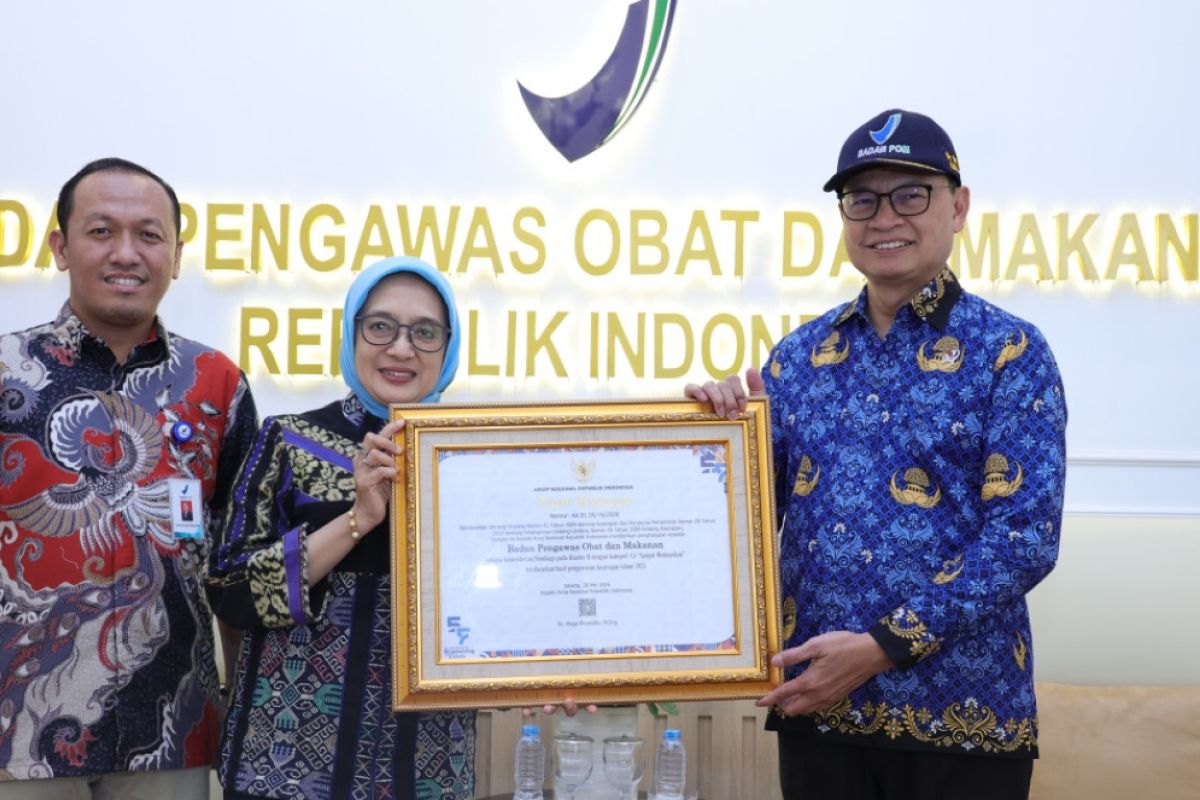
BPOM has again been awarded the National Archival Award 2026 for the Ministry/Agency category in Cluster II with an AA ‘Very Satisfactory’ rating, based on the 2025 archival oversight results.
BPOM Head Taruna Ikrar said in Jakarta on Thursday that the recognition would serve as motivation for archival staff within BPOM to continue safeguarding the agency’s performance accountability through robust records management.
‘Since 2024, BPOM has consistently achieved top rankings in the Archival Oversight Results by ANRI. This shows that BPOM’s records governance is recognised as among the best at the level of non-ministerial government agencies (LPNK),’ he said.
BPOM’s archival oversight is assessed on compliance with national archival principles, rules and standards. The assessment references two main aspects: dynamic records management, which carries the highest weighting, and archival resources.
Those assessment aspects are further divided into two stages: internal archival oversight with a 40 percent weighting and external archival oversight with a 60 percent weighting.
He also expressed appreciation for contributions to BPOM’s archival management and hoped the achievement would be maintained as a commitment and evidence that BPOM’s duties and functions are carried out in a transparent and accountable manner.
The award was presented at the Archival Coordination Meeting organised by the National Archives of the Republic of Indonesia (ANRI) on Wednesday 20 May 2026.
The National Archival Award 2026 ceremony coincided with the peak of the 55th Archival Day commemorations, under the theme ‘Empowering the Future: Archiving to Empower the Future toward Indonesia Emas 2045’.
ANRI head Mego Pinandito described Archival Day as a historic moment reflecting commitment to bureaucratic reform, particularly in archival reform and digital transformation of archives.
According to him, archives are no longer merely records but strategic resources that empower shaping, guiding and enabling the nation’s future.
‘Archives, as guardians of the nation’s collective memory, ensure authenticity, completeness and continuity of archival information; most importantly, they safeguard accountability in the state’s administration,’ Mego said.
Mego urged all archival professionals from ministries/agencies and institutions present to align their steps with government programmes to build a more modern digital government.
Thus, the archival system is expected to maintain the authenticity of state archives integrated into the foundation for decision-making, policy formulation and accountability, with the ultimate aim of delivering innovation in public service.