
BPOM Permits All Minimarkets to Manage Medicine Sales Starting October 17th
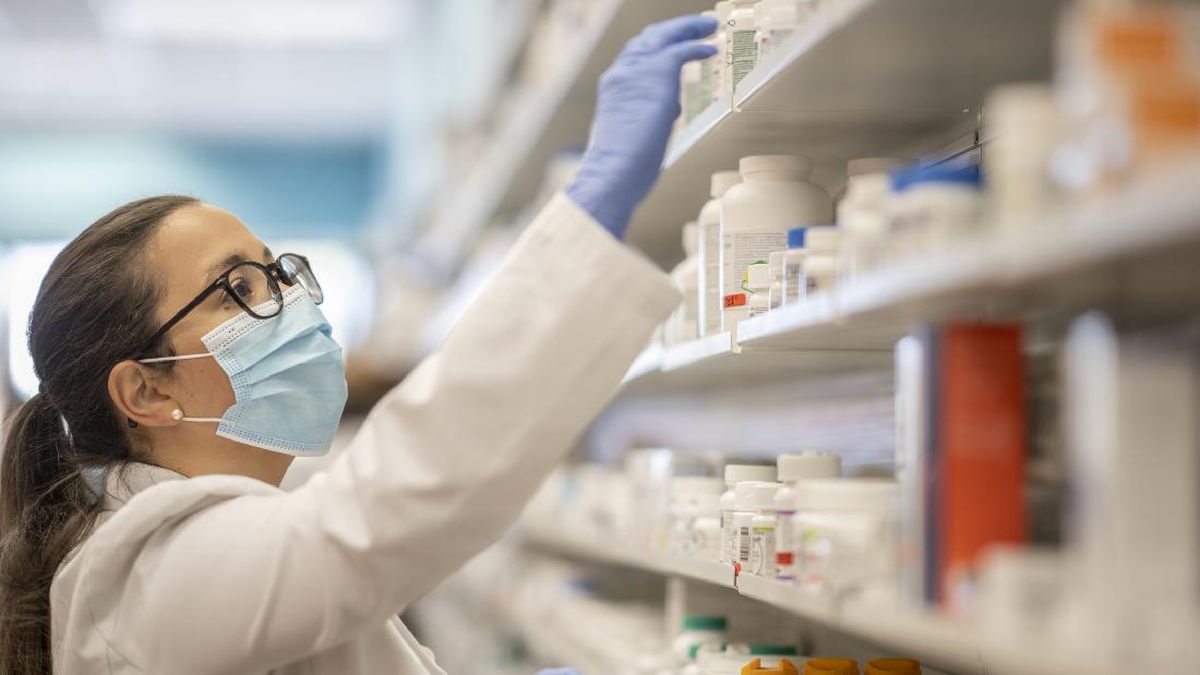
BPOM Permits All Minimarkets to Manage Medicine Sales Starting October 17th
The Indonesian Food and Drug Authority (BPOM) has issued a new regulation, BPOM Regulation No. 5/2026, governing the new scheme for the sale of medicines in hypermarkets, supermarkets, and minimarkets (HSM).
Through this regulation, BPOM allows employees in supermarkets and minimarkets to manage and oversee certain medicines, but they must receive special training. The implementation must begin no later than mid-October.
According to the agency’s official website, BPOM Head Taruna Ikrar signed the regulation on March 13.
Director of Drug and Narcotics Standardization at BPOM, Ria Christine Siagian, said that the management of medicines in modern retail must comply with the new provisions no later than October 17, 2026. This is stated in Articles 24-25 of the regulation regarding transitional provisions.
“The management of medicines for hypermarkets, supermarkets, and minimarkets must comply no later than October 17, 2026,” she said during an online discussion to socialize KMK No. HK.01.07/MENKES/972/2025 and BPOM Regulation No. 5 of 2026, which was broadcast online via the YouTube channel of the Indonesian Pharmacists Association (IAI), Wednesday (May 13).
“And, for the management of medicines in the form of their distribution by drug stores to hypermarkets, supermarkets, and minimarkets, compliance must be achieved no later than October 17, 2026,” she added.
In addition, she emphasized that, according to Article 21, BPOM prohibits other facilities outside the pharmacy unit from carrying out compounding and repackaging activities.
“If there are violations, there will be administrative sanctions, including a recommendation for the revocation of business permits to the ministry/agency or local government that issued them,” she said.
“In addition, we [BPOM] can issue warnings, strong warnings, or stop activities,” Ria continued.
Previously, the issuance of this regulation received objections from several groups and pharmacy professionals. Those who objected argued that the regulation contradicted Law No. 17 of 2023 concerning Health, and could reduce the authority of pharmacists.
One of the protesting groups is the Indonesian Pharmacists United (FIB) alliance. Quoting from a post on its Instagram account, FIB stated that it rejected the invitation to a dissemination event held by BPOM regarding BPOM Regulation 5/4026 on May 4.
“This rejection is based on the assessment that the regulation contradicts Law No. 17 of 2023 and could reduce the professional authority of pharmacists,” they said in a post on their IG account.
In its official statement, FIB stated that its absence was a form of rejection of the substance of the policy, which was considered to deviate from the applicable legal norms.
“FIB also emphasizes that participation in the dissemination forum risks being interpreted as legitimization or support for regulations that are considered to have no strong legal basis and could harm pharmacy practice,” it added.
In a subsequent post, FIB also revealed alleged philosophical disorientation in the regulations regarding the management of Limited Over-the-Counter (OTC) Medicines.
“This regulation has a very strong nuance as an instrument of liberalization but is very weak in protecting the safety of the use of Limited OTC Medicines. Allowing the use of Vending Machines is the peak of ignoring the standards of rational drug use,” it said.
“Allowing machines and non-professional staff to dispense prescription drugs (even if limited) is a form of allowing the risk of therapeutic failure and prohibited medical incidents under Article 140 of Law 17/2023,” their statement continued.
Previously, in a press conference at his office on Monday (May 4), Taruna Ikrar explained that BPOM Regulation 5/2026 was intended to fill the regulatory gap that had existed in non-pharmaceutical facilities.
“Basically, BPOM is regulating something that was not regulated before. That’s why we created the regulation, to ensure that the medicines that reach the public are guaranteed in terms of efficacy, identity, and quality,” said Taruna, quoted from the BPOM website.
He explained that previously, supervision was only focused on pharmaceutical service facilities, such as pharmacies, while other facilities did not have clear regulations. Therefore, his agency issued the regulation to eliminate this gray area.
“In reality, in drug stores, hypermarkets, supermarkets, and even minimarkets, these medicines are already being sold. Therefore, the state must be present to ensure supervision,” said Taruna.
In contrast to the protests that have emerged, he claimed that the regulation was a mandate from Law 17/2023 and Presidential Regulation 80/2017. He added that with this regulation, legal consequences become clear for all parties involved in the drug distribution chain.
Retail Employees Manage Medicine Sales
In its implementation, Taruna said that his agency also provides technical guidance for modern retail business actors.
One of the important points in this regulation is the obligation to have trained personnel in medicine sales facilities. Although not from the pharmacy profession, the staff must first undergo special training.
In addition, the implementation of drug management tasks must be under the supervision of a pharmacist at the distribution center of hypermarkets, supermarkets, and minimarkets or under the supervision of pharmacy vocational staff at drug stores.
“The special staff does not have to be a pharmacist, but they must be trained personnel. They must understand how to properly store medicines, place them on display, and check packaging, marketing authorization, labels, and expiration dates,” he explained.
BPOM also emphasized that only over-the-counter and limited over-the-counter medicines can be sold in these facilities. However, supervision will be tightened on certain medicines that have the potential for abuse.
Commitment
On that occasion, Ikrar also signed a joint commitment with the Chairman of the General Assembly of the Indonesian Pharmacists Association (PAFI).