
BPOM mentors 2,407 iftar vendors to ensure safe, healthy food sales
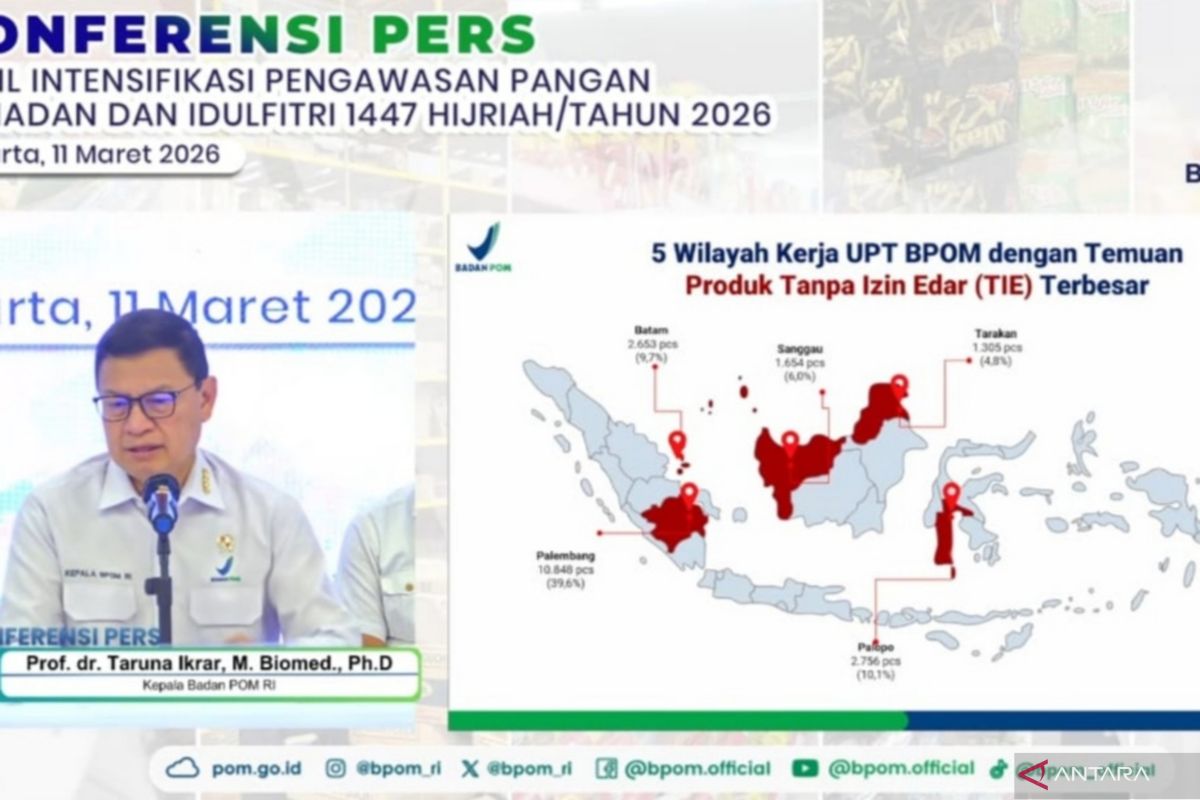
Jakarta — The Indonesian Drug and Food Supervisory Authority (BPOM) has conducted guidance programmes for 2,407 problematic iftar food vendors across 513 monitoring locations dispersed throughout 38 provinces to ensure that food sold to the public during Ramadhan is safe and healthy for consumption.
“The guidance programme aims to prevent business operators from repeating the use of harmful substances or selling food containing dangerous ingredients, as these can jeopardise public health,” stated BPOM Chief Taruna Ikrar during a press conference on Food Supervision ahead of Ramadhan and Idul Fitri 2026 in Jakarta on Wednesday.
He explained that this initiative stemmed from increased surveillance of iftar vendors following a surge in food sales activities by street vendors and small and medium-sized enterprises (SMEs) during the breaking of the fast.
From the surveillance results, BPOM tested 5,447 samples of iftar food collected from various regions across Indonesia. The findings revealed that 108 samples, approximately 2.0 per cent, failed food safety requirements.
Additionally, BPOM discovered that 35 samples, or 32.4 per cent, contained rhodamine B, a substance commonly found in various crackers, sponge cake, red jelly, cendol ice, syrup ice, cup cakes, and red-coloured beverages with striking appearance.
Furthermore, 22 samples, or 20.4 per cent, tested positive for borax, typically found in wet yellow noodles, lontong, crackers, and various flour-based processed products. Meanwhile, one additional sample contained textile dye metanil yellow in a tofu product.
BPOM also identified several violations during inspections at wholesale locations in Pasar Rebo, Jakarta, including products with expired marketing authorisation, use of marketing authorisation numbers belonging to other products, and falsification of food product identities.
Additionally, BPOM conducted inspections of food production facilities such as dry cake industries, including an inspection of PT Mustika Citarasa production facility, which manufactures bakery products, to ensure the application of food safety standards.
“However, not all iftar vendors sell problematic products. One example is the iftar centre in Makassar, which demonstrated encouraging results because all 45 samples tested met food safety requirements. This is also consistent with the guidance programmes implemented by BPOM in cooperation with local authorities,” stated Taruna.