
BPOM Highlights Nutri-Level, ATMP in Health Policy Committee Coordination Meeting
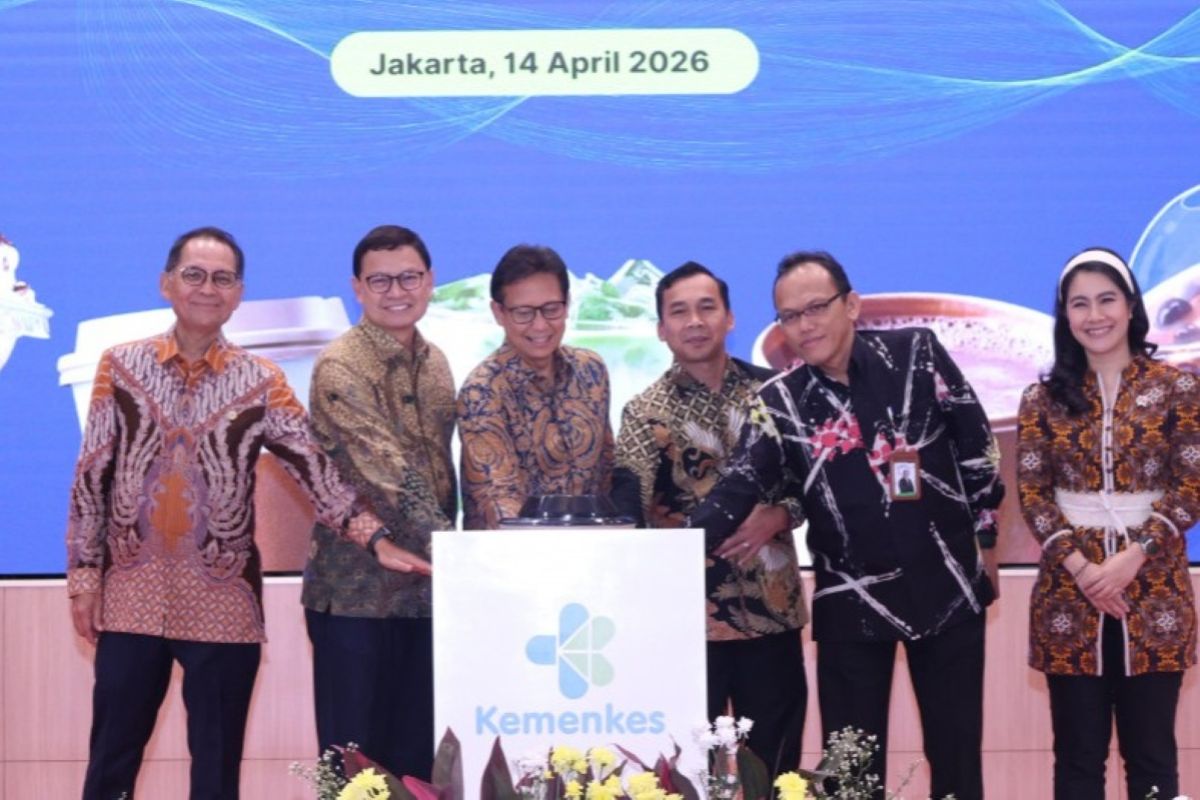
Jakarta (ANTARA) - The National Agency of Drug and Food Control (BPOM) highlighted several issues during the 9th Coordination Meeting (Rakor) of the Health Sector Policy Committee (KKSK), ranging from the inclusion of nutritional labelling or Nutri-Level for health education to advanced therapy medicinal products (ATMP).
BPOM Head Taruna Ikrar stated in Jakarta on Wednesday that the meeting discussed health problems encompassing several new issues, while following up on previously discussed matters. One of the main issues he raised concerned the policy on implementing Nutri-Level.
Taruna Ikrar emphasised the importance of implementing Nutri-Level as an effort to limit intake of sugar, salt, and fat (GGL), which are the main causes of non-communicable diseases (NCDs) in Indonesia. He noted that the incidence of NCDs in Indonesia is quite high, with the death rate due to NCDs at 73 per cent, while the global average is below that at 70 per cent.
This fact prompted the BPOM Head to sign the Draft Revision of BPOM Regulation on Nutritional Information Labelling for Processed Food on Monday (6/4). According to him, the launch of the Nutri-Level policy is for public education, so that people can choose healthier food.
“The implementation stages are not as simple as we imagine. We haven’t reached the mandatory stage yet. The initial stage is education first,” he said.
According to him, BPOM will accommodate this through regulations on drug packaging, which is expected to control any price increases.
Taruna also highlighted the misuse of certain drugs (CDs), such as trihexyphenidyl and tramadol. He stated that from BPOM’s monitoring results, there has been a surge in misuse, with 80 per cent occurring among the younger generation.
“This is a major concern for BPOM. We, together with relevant cross-sectors, will strive to prevent this misuse from spreading further, one of which is through the National Action to Eradicate Drug Misuse,” he said.
His side also discussed the utilisation of natural ingredient medicines in the National Health Insurance (JKN) system.
“Our potential is very large in the use of natural ingredient medicines. We need support in this regard,” he said.
Meanwhile, Health Minister Budi Gunadi Sadikin mentioned the importance of synchronising health programmes between the central government and regional governments. According to him, this lack of synchronisation risks causing national health programmes to not run effectively, including in improving the quality of health services at primary health facilities.
“We want the health sector to not just treat sick people, but to keep people healthy. We manage it starting from community health centres,” he said.
In agreement, Minister of Population and Family Development Wihaji raised one quite important health issue related to BPOM’s supervisory role, namely drug misuse. Wihaji highlighted the dangers threatening the health of the nation’s future generations, given that misuse often targets school-age children.
“It might start from a prescription, but afterwards that prescription is misused. This is a simple problem, but a big one. And I hope BPOM and relevant agencies can handle this problem together,” he said.
In addition, Director of Planning and Development of BPJS Health Sutopo Patria Jati discussed their focus on measuring and analysing their resilience in meeting the needs of JKN implementation in Indonesia.