
BPOM discovers food violations at East Jakarta wholesale distributor ahead of Eid al-Fitr
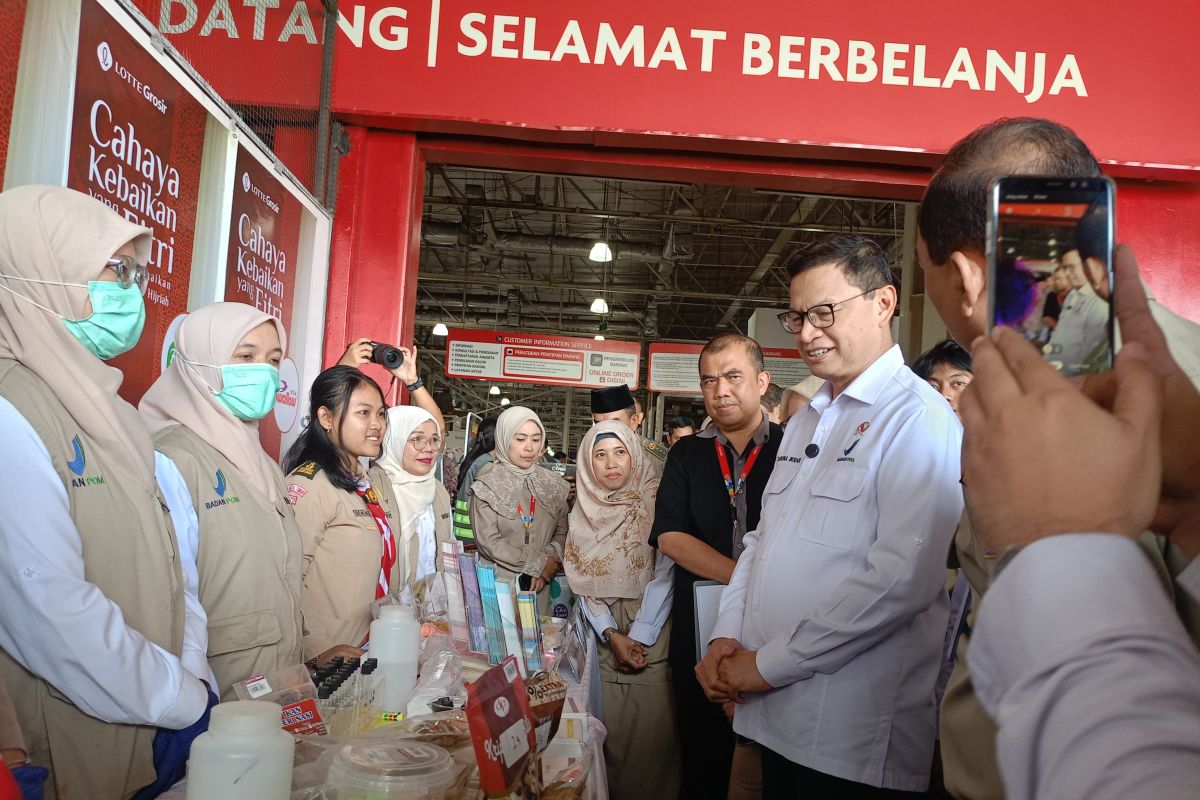
Jakarta – Indonesia’s National Drug and Food Regulatory Body (BPOM) has discovered numerous violations in food products during a direct inspection at Lotte Grosir Pasar Rebo in Ciracas, East Jakarta, ahead of the Islamic New Year 1447 Hijriah (Eid al-Fitr).
“The results of today’s inspection of various products are generally in compliance with regulations, but we did identify several violations,” said BPOM Head Tarunan Ikrar following the food safety inspection in East Jakarta on Monday.
Among the violations detected were Ommason Mat brand Kimchi products in 215-gram and 32-gram packaging that had exceeded their distribution permit validity periods. Additionally, 18 packages of spicy Kimchi (100 grams) were found to be stored incorrectly, with temperatures failing to meet the required minus four degrees Celsius specification.
“BPOM also discovered pempek products bearing distribution permit numbers belonging to other products,” said Taruna.
Furthermore, BPOM identified overcapacity in the frozen product storage warehouse, with products stacked to the ceiling, potentially compromising temperature stability and product quality.
“The remaining products met sanitation, hygiene, labelling standards, packaging requirements, distribution permits, and expiry date regulations,” he added.
“Alhamdulillah, testing of all 40 samples was negative for hazardous substances and met consumption standards,” said Taruna.
Taruna explained that before conducting the wholesale market inspection, BPOM had also visited processed food production facilities in the Ancol area of North Jakarta. The inspections were conducted because food demand and consumption typically increase significantly ahead of major religious celebrations.
“We know that during these periods, the intensity of food product sales and use is very high. Therefore, inspections are conducted simultaneously throughout Indonesia every day,” Taruna stated.
During the inspection, BPOM employed two verification methods: surveillance through random and covert inspections, and formal inspections such as those conducted at the wholesale location.
Taruna emphasised that BPOM will continue executing inspections in accordance with Food Safety Law Number 18 of 2012, particularly Articles 46 and 47, to ensure that food products in circulation are safe for public consumption.
The inspection forms part of the intensified food safety monitoring conducted throughout Ramadan and the Eid al-Fitr period across Indonesia.
“We, the National Drug and Food Regulatory Body, accompanied by the Jakarta Large Food and Drug Control Centre, conducted this direct inspection. This activity is part of our intensified food safety monitoring during the fasting month, throughout Ramadan, and until Eid al-Fitr,” Taruna explained.
The operation was supported by officials from the Jakarta provincial government, including Jakarta’s Regional Secretary Uus Kuswanto, East Jakarta Deputy Mayor Kusmanto, the Assistant for Economic Affairs, and representatives from the Department of Industry, the Department of Food Security, and the Regional Cooperation Bureau.