
BPOM Approves Mandatory Nutri-Level Labelling on Food Products
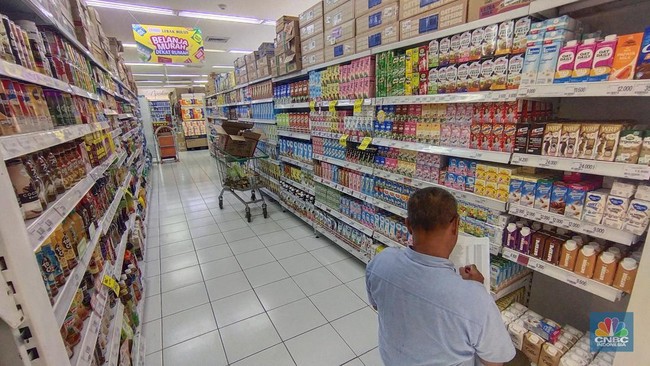
Jakarta, CNBC Indonesia - The National Agency of Drug and Food Control (BPOM) has approved a policy for the inclusion of Nutri-Level on labels of processed foods. This policy supports the government’s programme in controlling Non-Communicable Diseases (NCDs) through limiting the consumption of sugar, salt, and fat.
BPOM Head Taruna Ikrar signed the Draft Revision of the BPOM Regulation on Nutritional Information Labelling for Processed Foods on Monday. The signed draft revision adds provisions regarding the inclusion of Nutri-Level in the front-of-pack nutrition labelling (FOPNL). Nutri-Level is a nutritional labelling system that will be implemented in Indonesia to help the public choose healthier food products.
Nutri-Level indicates the level of processed foods based on their GGL content. The inclusion of Nutri-Level is marked with letters A to D, followed by colour indicators showing the GGL content levels: A (dark green: lower GGL content), B (light green: low GGL content), C (yellow: should be consumed wisely), and D (red: should be limited according to needs or health conditions).
“With Nutri-Level labelling, it is hoped that public awareness in choosing healthier products can be increased,” explained the BPOM Head in a written statement.
The BPOM Head emphasised that the inclusion of Nutri-Level is not a prohibition on consuming a processed food product. However, it serves as a simple guide for the public to more easily compare and recognise healthier choices of processed food products.
When will the Nutri-Level policy take effect?
The inclusion of Nutri-Level on processed foods is planned to be implemented gradually, with the initial target being beverage products. This policy will be applied voluntarily with a transition period before it becomes mandatory, to give business actors time to adapt and implement this policy.
Indonesia ranks fifth as the country with the highest number of diabetes sufferers in the world. According to the Center for Indonesia’s Strategic Development Initiatives (CISDI), these figures indicate a worrying trend, considering that the increase in non-communicable disease (NCD) cases such as diabetes is closely related to consumption patterns of foods high in sugar, salt, and fat (GGL). Not only diabetes, the prevalence of obesity in Indonesia has also doubled in the last 15 years.