
BPOM: 7,400 online links selling illegal food discovered including from the United States
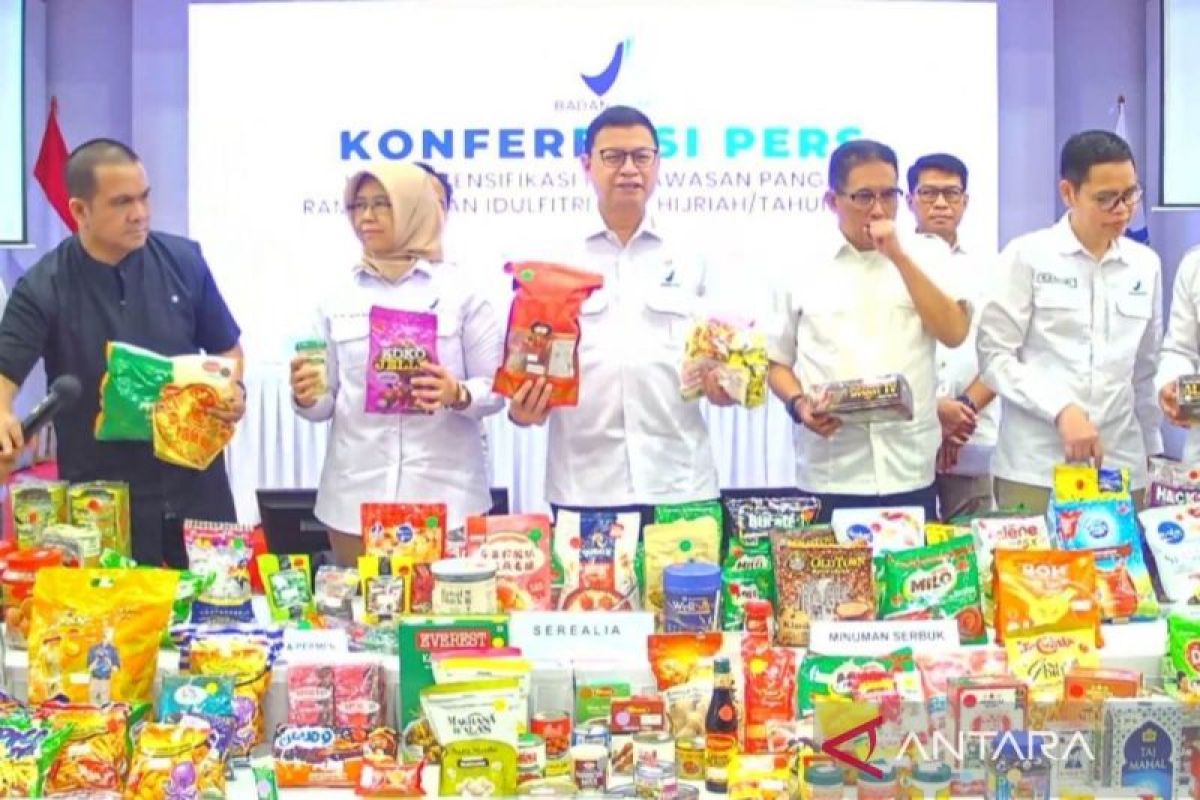
Jakarta — Indonesia’s Food and Drug Regulatory Authority (BPOM) has identified approximately 7,400 links across various e-commerce channels and digital media platforms in Indonesia suspected of selling food products without proper distribution permits and containing pharmaceutical substances, including those originating from the United States.
BPOM Head Taruna Ikrar stated at a press conference on food oversight ahead of Ramadan and Eid al-Fitr 2026 in Jakarta on Wednesday that the discoveries resulted from supervision up to the third stage as of 9 March 2026, conducted through online cyber patrols and direct field inspections.
BPOM recorded the total economic value of food products found to not meet regulatory requirements during this intensive surveillance at more than IDR 103.57 billion. This comprised IDR 102.9 billion from cyber patrol findings and approximately IDR 642.6 million from direct inspections of food distribution facilities.
From direct inspections, BPOM discovered unlicensed food products valued at IDR 527.9 million, representing approximately 82 percent of total offline findings. Additionally, expired food products valued at IDR 86.3 million and damaged food products valued at IDR 28.3 million were found.
“These were discovered by BPOM offices in East Nusa Tenggara, West Sulawesi, Ambon, Jambi, West Sumatra, East Java, and Maluku,” Ikrar stated.
Ikrar noted that the economic value of findings reflects the substantial potential risk that could occur if non-compliant food products circulate among the public. BPOM’s surveillance, conducted jointly with other technical agencies, also helps prevent potential health impacts to an estimated 52,000 people.
“Intensive food supervision during specific periods such as Ramadan and Eid al-Fitr is important as a preventive measure to protect the public while reducing the circulation of illegal food products,” he said.
He assured that BPOM has requested the removal of illegal sales links, confiscation and destruction of non-compliant products, administrative sanctions up to the revocation of distribution permits, and legal proceedings if criminal violations are found.
“BPOM also conducts communication, information, and education activities for the public as well as support for micro, small and medium-sized business actors regarding licensing and implementation of food safety standards,” he added.