
BPKP Uncovers 6 Irregularities in Chromebook Procurement
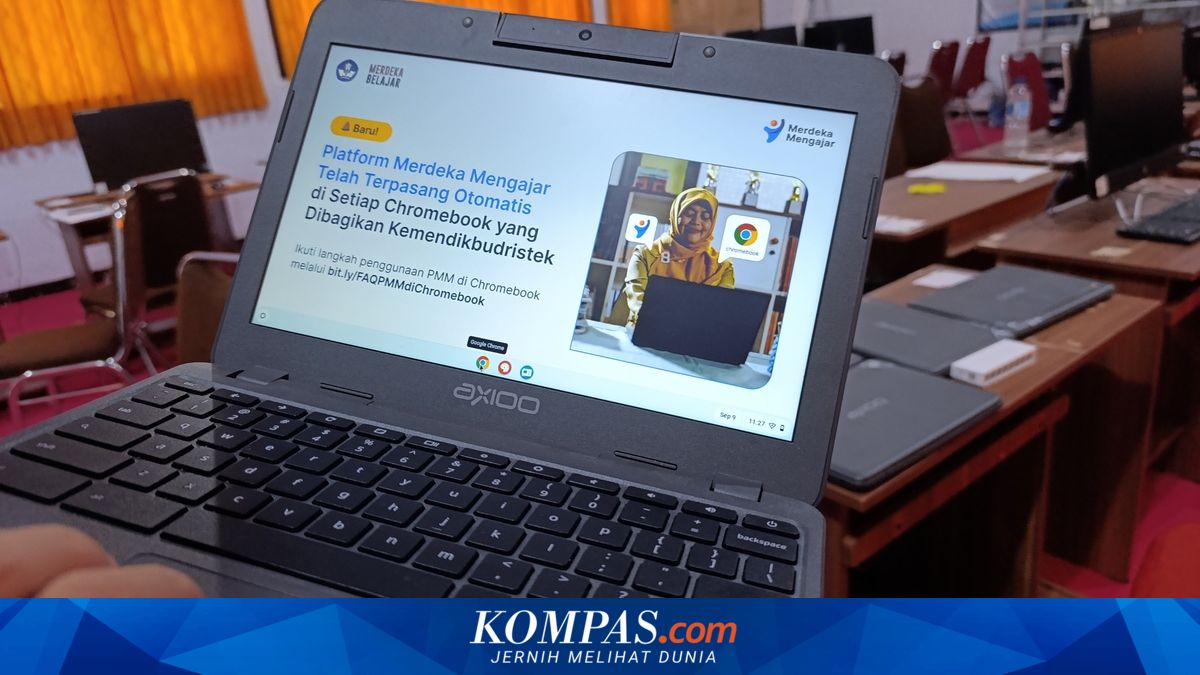
JAKARTA, KOMPAS.com - Auditor from the Financial and Development Supervisory Agency (BPKP) and Chairman of the State Financial Loss Calculation Team for the Chromebook procurement case, Dedy Nurmawan Susilo, has uncovered six irregularities in the procurement of Chromebook-based laptops.
Dedy spoke when asked for his opinion as an expert in the continuation of the trial for the alleged corruption case in the procurement of Chromebook-based laptops for three defendants.
They are former Technology Consultant in the Ministry of Education, Culture, Research, and Technology (Kemendikbudristek) environment, Ibrahim Arief; Director of SMP Kemendikbudristek in 2020–2021 as well as Budget User Representative (KPA), Mulyatsyah; and Director of SD Kemendikbudristek in 2020–2021 as well as KPA, Sri Wahyuningsih.
“Based on the procedures and evidence we obtained, we conclude there are six irregularities,” Dedy said during the trial at the Jakarta Corruption Court, Thursday (2/4/2026).
The first irregularity concerns the process of selecting the laptop operating system (OS) for the education digitalisation programme.
“The process of selecting the laptop operating system for the education digitalisation programme was not based on needs identification and was directed to use Chrome OS,” Dedy stated.
The selection of Chrome as the operating system is deemed to violate Presidential Regulation (Perpres) No. 16 of 2018 on Procurement of Goods and Services, particularly Article 18 regarding procurement planning.
“The second is (a violation of) Minister of Finance Regulation (PMK) No. 208, the Minister of Finance Regulation of 2019, which regulates budget preparation,” Dedy explained.
In Article 7 Paragraph (1) regarding the Ministry/Institution Work Plan and Budget (RKA-K/L), it states that budget preparation must be accompanied by terms of reference (TOR), cost estimate plan (RAB), and other documents.
“(The third irregularity) The 2020 laptop procurement, specifically for 2020, through the SIPlah application, did not go through price evaluation as regulated in Perpres 16 of 2018,” Dedy added.
Dedy said that procurement through SIPlah violates the procurement principles that require effectiveness and efficiency.
“The essence of effectiveness and efficiency is that there must be a price evaluation process. In SIPlah, it’s purely like a marketplace. So, entrepreneurs or providers can directly upload their products and display them at any price without any filtering at all,” Dedy explained.