
BPKH Stresses Non-Discrimination in Hajj When Questioned on War Ticket Scheme
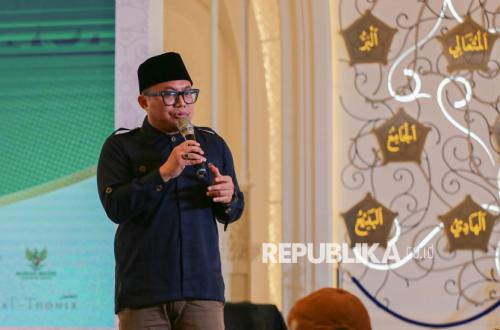
The proposal to implement a War Ticket scheme for Hajj pilgrims has drawn attention, including from the Hajj Financial Management Agency (BPKH). BPKH member Indra Gunawan emphasised that every new policy, including the mechanism for distributing Hajj quotas, must be thoroughly reviewed to avoid harming pilgrims who have been waiting for a long time and to remain aligned with the principles of justice, sustainability, and non-discrimination.
Indra stated that all Hajj financial management policies, including financing mechanisms and services for Hajj pilgrims, must be based on applicable regulations and legislation.
He stressed that, as regulated in Law No. 34 of 2014 on Hajj Financial Management and Law No. 14 of 2025 on the Third Amendment to Law No. 8 of 2019 on the Organisation of Hajj and Umrah Worship, BPKH is obligated to manage Hajj funds professionally, transparently, and accountably in accordance with legal provisions.
In the context of Indonesia’s Hajj system, we must consider the principles of justice and sustainability as stipulated in Article 2 of Law No. 14 of 2025, which states that the organisation of Hajj worship is based on, among others, justice, sustainability, non-discrimination, and affordability,” said Indra to Republika on Tuesday (14/4/2026).
Regarding the War Ticket proposal, Indra views it as a form of policy ijtihad in the complex management of Hajj, but it must be deeply tested. Particularly, it must be tested in terms of profound justice principles with legislators, stakeholders, and of course, good socialisation to pilgrims and the wider Muslim community.
He explained that as an institution managing Hajj finances, BPKH adheres firmly to Law 34 of 2014 as well as the advisory Ijtima Fatwa of the Indonesian Ulema Council (MUI), which emphasises that every policy must meet the criteria of benefit, justice, and sustainability. The primary priority remains on long-queue pilgrims who have waited for years.
“Every new scheme must ensure there is no discrimination and still uphold the principle of istitha’ah (financial and physical capability) as well as the availability of limited quotas,” said Indra.