
BPKH hands over SAR 152.4 million in banknotes for Hajj pilgrims' pocket money
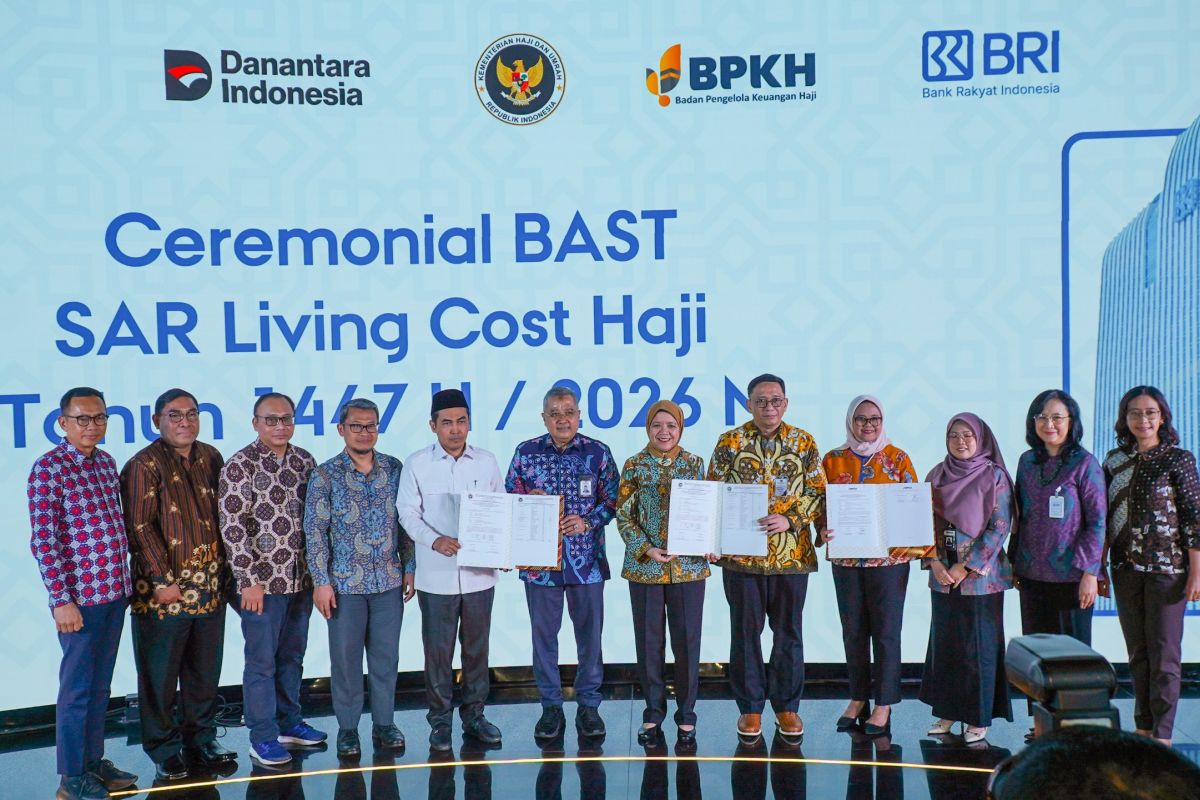
Jakarta (ANTARA) - The Hajj Financial Management Agency (BPKH) has handed over banknotes in Saudi Riyal (SAR) amounting to 152.4 million for the living cost needs of Indonesian prospective Hajj pilgrims for 1447 Hijriah/2026 CE.
“This represents BPKH’s commitment to ensuring the financial readiness of pilgrims in a transparent, accountable manner, and in accordance with Sharia principles,” said BPKH Executive Board Member Amri Yusuf when contacted in Jakarta on Friday.
BPKH has provided a total of SAR 152,490,000 in banknotes. The funds are channelled through Bank Rakyat Indonesia (BRI) to meet the needs of 203,320 regular prospective pilgrims.
Each individual will receive SAR 750, consisting of one SAR 500 note, two SAR 100 notes, and one SAR 50 note.
This pocket money is prepared as operational provisions for pilgrims while in the Holy Land, for additional daily consumption needs, as reserve funds for unforeseen expenses, or for fulfilling DAM (Hajj penalty) payment obligations.
“In this Sharia scheme, we separate the principal currency value from the distribution costs. The principal value is handed over in cash, while distribution costs are paid after all provider obligations are fulfilled. This is a form of high transparency in Hajj financial governance,” he explained.
In addition to ensuring cash availability, BPKH continues to manage Hajj finances optimally so that Hajj costs remain reasonable for the public.
Amid global economic dynamics, he said, the total cost of organising the Hajj (BPIH) for 2026 reaches around Rp87 million per person. However, through investment strategies and proper fund management, pilgrims only need to pay the Hajj Travel Cost (Bipih) of around Rp54 million.
“The difference of approximately Rp33.2 million is covered through the optimisation of the benefits from Hajj fund management by BPKH. This is concrete proof that Hajj funds are managed professionally to ease the burden on pilgrims,” said Amri.
Furthermore, he explained that if there is an escalation in costs due to global conditions, pilgrims remain protected. In line with the President’s directive, any additional costs that arise will not be borne by the pilgrims but can be covered through the state budget mechanism.