
BPKH Ensures Hajj Funds Are Managed in a Sharia-compliant and Secure Manner
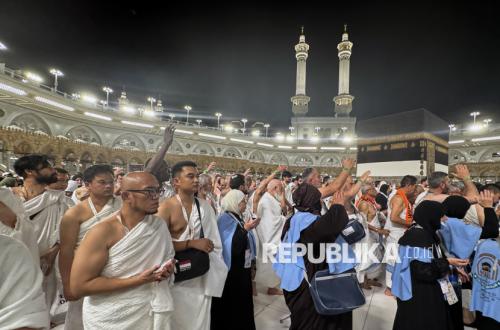
REPUBLIKA.CO.ID, Semarang — Acep Riana Jayaprawira, a member of the Steering Board of the Hajj Financial Management Agency (BPKH), emphasised that all management of the Hajj funds is conducted in accordance with Sharia principles and with prudence to safeguard the pilgrims’ funds. According to Acep, the Hajj pilgrimage is not merely a tourist activity, but a religious undertaking in which every process must be conducted in a halal manner and in keeping with Islamic Sharia. “There must be no element of riba and nothing haram in the management of Hajj funds,” he told Republika.co.id during a talk at the BPKH Connect event in Semarang on Wednesday, 20 May 2026. He explained that Hajj funds are managed through two main instruments: investments and placements in banks. All investments are placed only in Sharia-based instruments, while fund placements are made in Sharia banks. “In investments, only Sharia instruments are allowed. As for bank placements, they are made only with Islamic banks, whether full Islamic commercial banks or Sharia unit businesses,” he said. Acep also stressed that all entities under BPKH, including BPKH Limited in Saudi Arabia and Bank Muamalat, operate on Sharia principles. In terms of investment management, Acep noted that the largest instrument currently used is sovereign sukuk, as it is deemed to carry very low risk. “In risk management theory, government-issued securities are risk-free,” he said. He said the choice of sovereign sukuk is made because Law No. 34 on the Management of Hajj Funds does not yet regulate the formation of provisions for potential losses. Therefore, BPKH selects low-risk investment instruments. Acep compared sovereign sukuk with corporate sukuk, which are viewed as carrying a higher potential risk if the company’s finances deteriorate. “Sovereign sukuk derive from government activity, so God willing they can always provide a good yield,” he explained. Acep also revealed that the value derived from managing the Hajj funds has played a significant role in keeping the costs borne by pilgrims down. He explained that around 35 percent of the Hajj Organising Costs (BPIH) is currently supported by the value of the Hajj funds management by BPKH. Meanwhile, about 65 percent comes from the Biaya Perjalanan Ibadah Haji (Bipih) paid directly by the pilgrims. “The aim is to ensure that ordinary people can still perform the Hajj; it should not be the preserve of the wealthy,” he said. According to Acep, since its inception BPKH has been able to maintain liquidity to send pilgrims on the pilgrimage while also supporting the subsidy scheme for Hajj costs. He emphasised that the safety of pilgrims’ funds is the BPKH’s top priority. Every investment or fund placement is conducted only after rigorous risk, legal, and compliance reviews. He said all investment decisions involve seven members of the Governing Board and seven members of the BPKH Supervisory Board. “Law No. 34 states that Hajj funds must not disappear,” he said. Therefore, he continued, BPKH only adopts investments with low risk. However, in the future, if the law is revised to allow capital formation and loss reserves, BPKH could potentially enter into instruments with medium-low risk, with stringent mitigation measures. Furthermore, Acep acknowledged that the biggest challenge in sustaining the Hajj fund is currency volatility and the potential rise in Hajj service costs in Saudi Arabia. He said that a stronger US dollar or riyal increases the rupiah required to pay for hotels, catering, and air travel. Moreover, Saudi Arabia’s plan to increase pilgrim capacity by 2030 is expected to require larger subsidies. Therefore, BPKH is promoting efficiency by building an Indonesian haj ecosystem in Saudi Arabia, such as own hotels, catering kitchens, and even its own airline. “If we have our own hotels, own kitchens, or long-term commodity contracts, costs can be better controlled,” he said.