
BPK: Strengthening the Review Function of APIP Will Determine the Achievement of Unqualified Audit Opinions
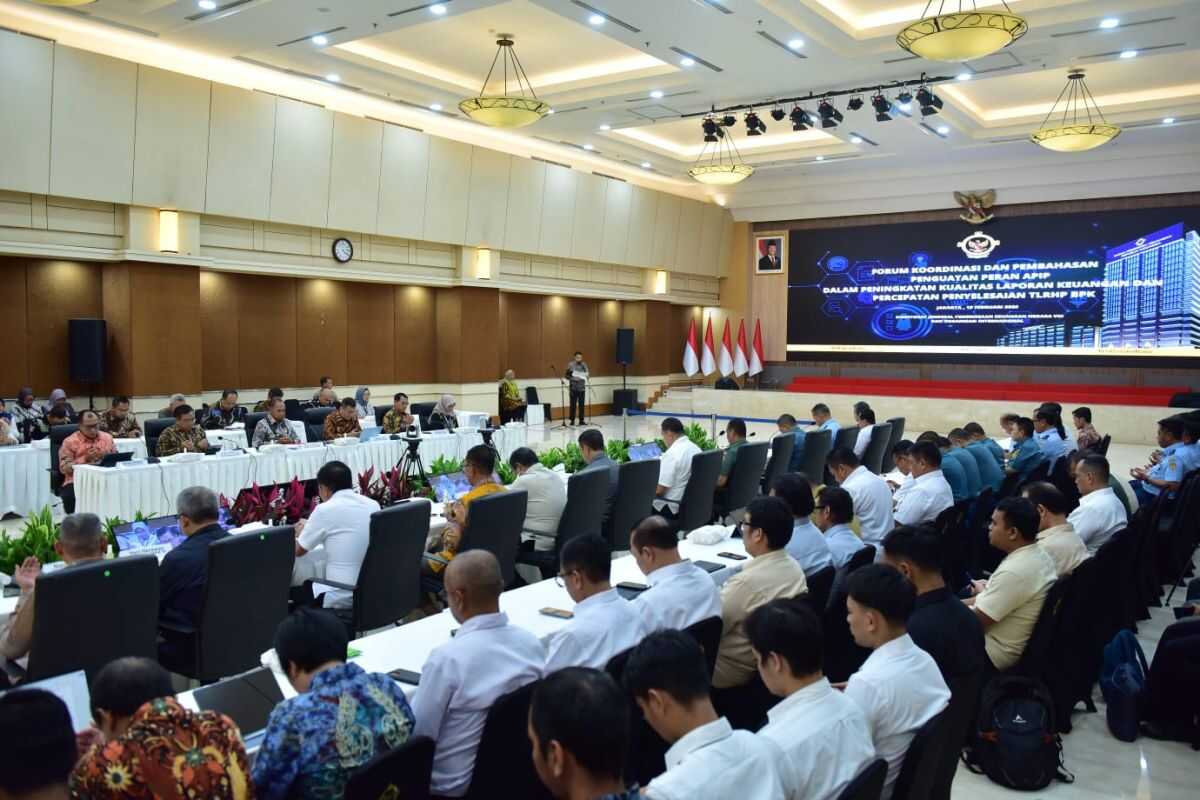
Jakarta (ANTARA) - Deputy Chairman of the Supreme Audit Agency (BPK), Budi Prijono, stated that strengthening the review function of the Government Internal Audit Agency (APIP) is crucial for achieving unqualified opinions on the Financial Statements of Ministries/Agencies (LKKL) for 2025.
“The role of the Government Internal Audit Agency (APIP) is key in supporting the smooth auditing process and improving the quality of financial reports by the Supreme Audit Agency (BPK),” he said at the Coordination Forum and Discussion on Strengthening the Role of APIP in Improving the Quality of Financial Reports and Accelerating the Completion of Follow-up Actions on BPK’s Audit Recommendations, according to an official statement, Jakarta, Wednesday.
He emphasized that APIP’s role in obtaining an unqualified opinion on LKKL is very important, so APIP is obliged to conduct a review of LKKL before submitting it to BPK to provide assurance of the accuracy, reliability, and validity of the financial report information.
Budi asserted that the review conducted by APIP should not be merely a formality, but should be able to minimize the risk of material misstatement, non-compliance with laws and regulations, and weaknesses in the Internal Control System (ICS) that may affect BPK’s opinion.
In examining financial reports, his agency uses four main criteria, namely compliance with Government Accounting Standards, adequacy of disclosures, compliance with laws and regulations, and the effectiveness of the internal control system. If the financial report meets these criteria, he added, then BPK can issue an unqualified opinion.
The Deputy Chairman of BPK said that the contribution of LKKL 2025 to the Central Government Financial Report (LKPP) is very significant in terms of Non-Tax State Revenue (PNBP), state spending, and assets. Therefore, he said, the quality of financial reports in each ministry/agency will have a direct impact on the opinion on the overall LKPP.
In addition to improving the quality of reports, accelerating the completion of follow-up actions on audit recommendations is also a major concern.
“I appreciate the commitment of entities in following up on BPK’s recommendations. However, APIP as BPK’s partner needs to continue taking steps to accelerate the process so that the completion of recommendations can be optimal and timely,” he said.
He also conveyed the importance of integrity in every stage of the examination and follow-up.
“I would like to remind that there should be no transactional practices in the examination, obtaining an unqualified opinion, or completing follow-up actions on recommendations. The management of state finances must be carried out in an orderly, efficient, effective, and integral manner,” said Budi.