
BPK Likely to Be Overwhelmed if It Becomes the Sole Authority to Calculate State Losses
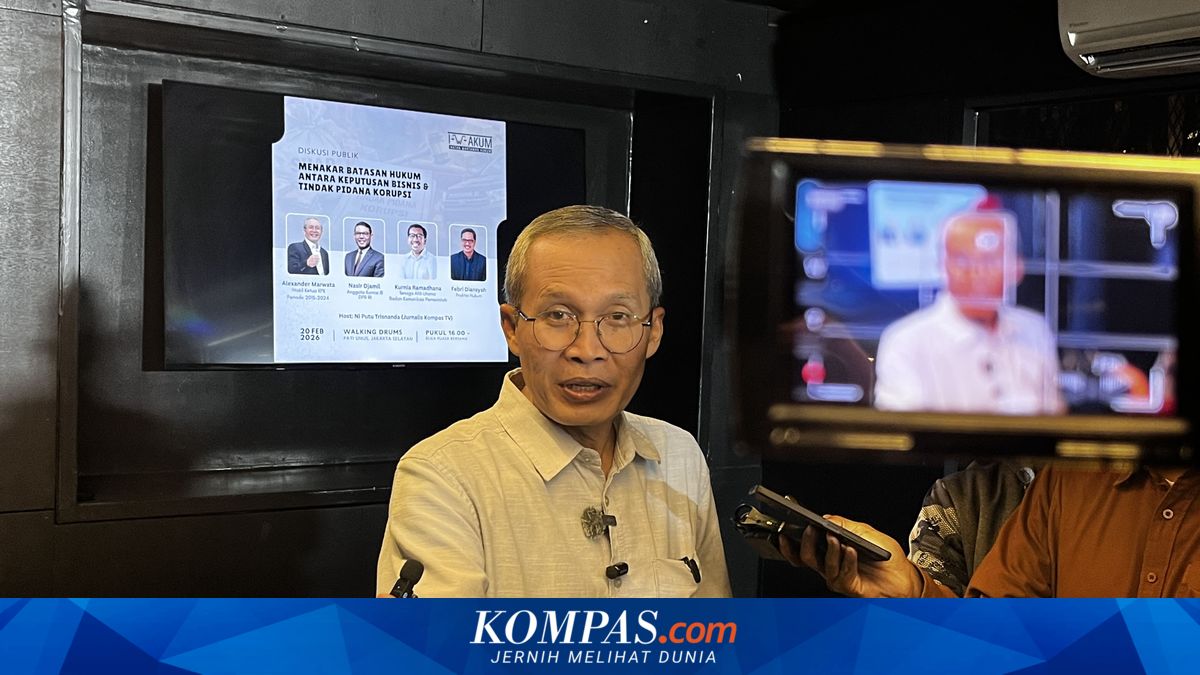
Jakarta — Former chair of the Corruption Eradication Commission (KPK), Alexander Marwata, has warned that the Audit Board of Indonesia (BPK) risks being overwhelmed if it becomes the sole agency empowered to calculate losses to the state in corruption cases. This follows the fact that many regional corruption cases rely on Articles 2 and 3 of the Corruption Law (UU Tipikor), which require the element of state loss.
“Should all corruption cases under Article 2, Article 3, or Articles 603 and 604 have the state-loss calculations become the exclusive remit of the BPK, for instance, the BPK would be overwhelmed,” Alexander said during a public hearing (RDPU) with the Legislative Body (Baleg) of the DPR RI on Tuesday (19 May 2026).
Therefore, Alexander believes the BPK will not be able to handle all audit requests if all state-loss calculations are assigned solely to that institution. He argues that the calculation of state losses does not have to be performed by a single body. In his view, anyone can calculate state losses as long as they possess the necessary competence and expertise. He even revealed that while he was still leading the KPK, he encouraged the KPK’s internal auditors to calculate state losses themselves in corruption cases.
“The KPK has forensic accountants; there is a dedicated unit to carry out the calculations. There, calculate for yourselves,” Alexander said. He emphasised that what is needed now is a standard for calculating state losses that can be used by all parties, not a restriction of authority to just one institution.
“Whoever does it must later be subject to that standard, and the results of the calculation can be tested in court,” he added. Alexander also stressed that the ultimate determination of whether there is a state loss in a corruption case still sits with the bench of judges.
“Ultimately, it is the judges who determine and set the state loss in a corruption case,” he concluded. For information, the DPR’s Baleg held the RDPU with several legal experts to discuss the authority to calculate state losses in the wake of Constitutional Court Decision No. 28/PUU-XXIV/2026. “There is a dispute, in my view, and no matter the angle or perspective, it cannot be used as a reason for misinterpretation,” said Bob.