
BPJS Ketenagakerjaan Urges Palm Oil Industry to Strengthen Occupational Safety and Worker Protection
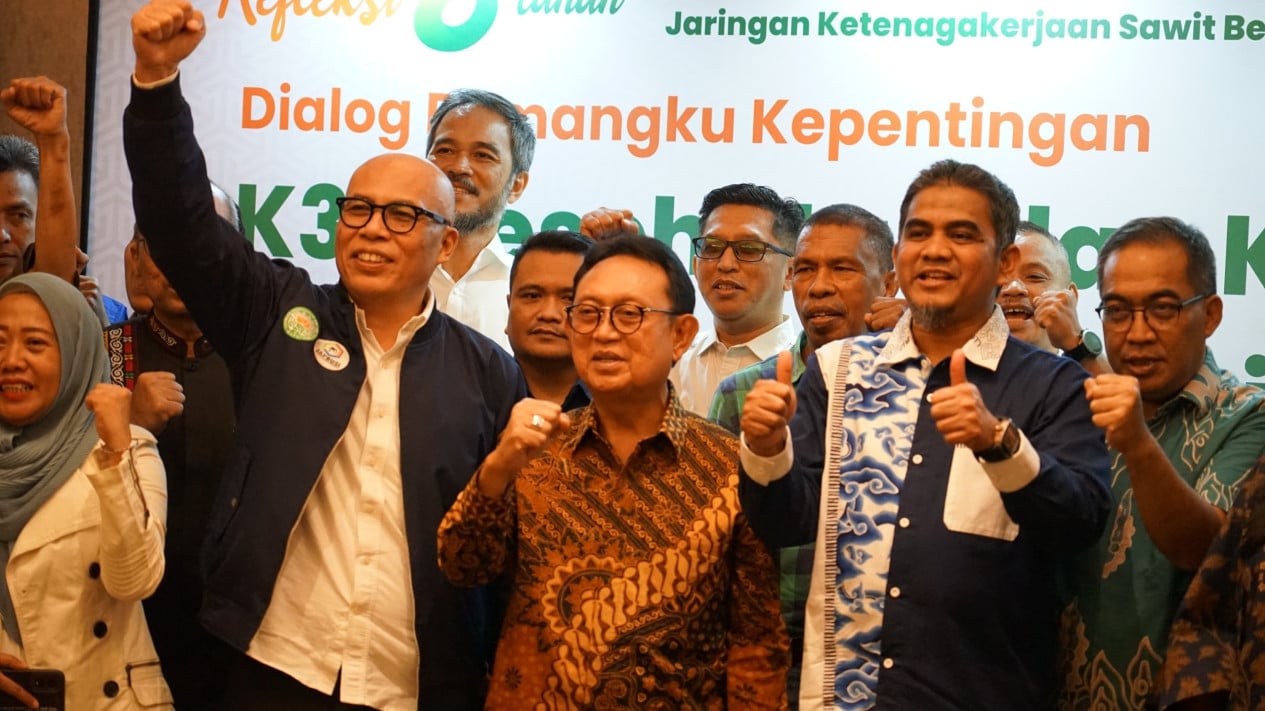
BPJS Ketenagakerjaan is urging the palm oil industry to become a leader in worker protection through strengthened occupational safety and health (K3) standards and expanded employment social security for all workers in the palm oil ecosystem, including informal workers such as farmers, agricultural labourers, and drivers.
This call was made by the Supervisory Board Chair of BPJS Ketenagakerjaan, Sumarjono Saragih, during a three-year reflection forum of JAGA SAWITAN (Sustainable Palm Oil Employment Network), organised by the Indonesian Palm Oil Producers Association (GAPKI) together with the Indonesian Palm Oil Workers’ Union Network (JAPBUSI).
According to Sumarjono, the palm oil sector, which employs a large workforce, must be at the forefront of ensuring workplace safety and social protection for its workers.
“The palm oil industry is a strategic sector that makes a significant contribution to the national economy and absorbs a large number of workers. Therefore, this sector must serve as an example in protecting workers through participation in employment social security,” said Sumarjono.
He emphasised that the implementation of occupational safety and health cannot be separated from the palm oil industry’s business processes. Worker protection through social security, he said, is not merely about meeting regulatory obligations but is also a crucial foundation for business sustainability.
“If workers are protected, productivity will increase and business continuity can be maintained. Worker protection is an investment in industry sustainability,” he stated.
The JAGA SAWITAN forum itself serves as a space for social dialogue between employers and trade unions in Indonesia’s palm oil industry to strengthen healthy, inclusive, and fair industrial relations while promoting sustainable palm oil practices.
During the event, BPJS Ketenagakerjaan and GAPKI also reaffirmed their commitment to expanding social security protection for palm oil workers through various schemes, including the use of the Palm Oil Revenue Sharing Fund (DBH) to reach both formal and informal workers in the industry ecosystem.
BPJS Ketenagakerjaan data shows that the number of plantation sector workers protected through this scheme continues to grow. In 2024, 364,605 workers were recorded, increasing to 417,386 workers in 2025.
Nevertheless, Sumarjono believes that this coverage remains far from adequate. He urged stronger collaboration between local governments, industry actors, and other stakeholders to expand worker protection in the palm oil sector.