
BPJS Kesehatan PBI Deactivation Row: PDI-P Criticises Social Affairs Ministry for Carelessly Discarding Poor Citizens' Data
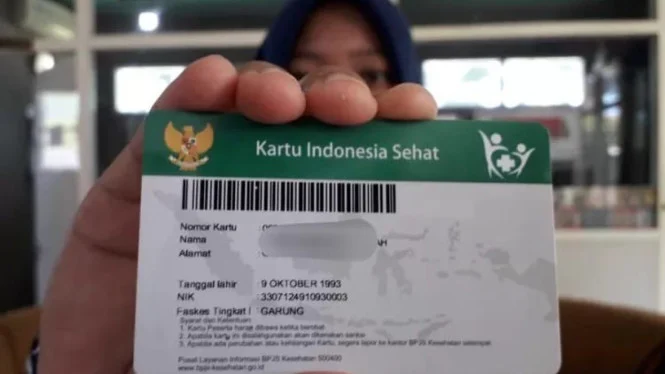
Jakarta, VIVA – The chaotic deactivation of hundreds of thousands of BPJS Kesehatan memberships in the Contribution Assistance Recipient (PBI) category has recently drawn fierce criticism from parliament. Muhammad Abdul Aziz Sefudin, a member of House of Representatives Commission VIII from the PDI Perjuangan (PDI-P) faction, has taken aim at government policy which he considers to have disregarded the principle of fairness for the poor due to data inaccuracies.
Aziz expressed his concern over the plight of patients with chronic illnesses who were suddenly unable to access medical services because their membership status had been blocked without prior notification. In his view, the use of the National Social-Economic Single Database (DTSEN) as a policy foundation should prioritise those who are genuinely eligible, rather than creating turmoil that threatens citizens’ lives.
“Rather than reducing poverty, the government appears to be carelessly discarding poor citizens’ data by categorising them as already prosperous. Meanwhile, conditions on the ground are the complete opposite, to the point of endangering their lives,” Aziz said in a written statement on Wednesday, 18 February 2026.
The PDI-P politician argued that the fundamental problem lies in databases at the village and social services office level that are not regularly updated. He stressed that fair policy must not rely solely on administrative figures on paper, but must be grounded in facts on the ground.
“This means there should no longer be any ‘genuinely poor people’ who fall victim to mismatches in government data,” he emphasised.
Furthermore, Aziz cautioned the government against using laws or policies as instruments that ultimately harm the wider public. He pointed to the growing phenomenon of declining public trust resulting from the government’s sluggish responses.
“The possibility of declining public trust is very real, especially as Generation Z sees the government only showing up after incidents in the community go viral first,” Aziz remarked.
As a proposed solution, Aziz urged the Ministry of Social Affairs to carry out a comprehensive evaluation of the data input and updating processes within the DTSEN. He stressed that every policy affecting ordinary citizens must be preceded by extensive and tiered public socialisation.
“Every decision must consider its impact on vulnerable groups and must not create new problems, whether in the form of social jealousy or inequality of access,” he concluded.