
BPJS Kesehatan: Participant Fees to Increase to Ensure Sustainability of Services
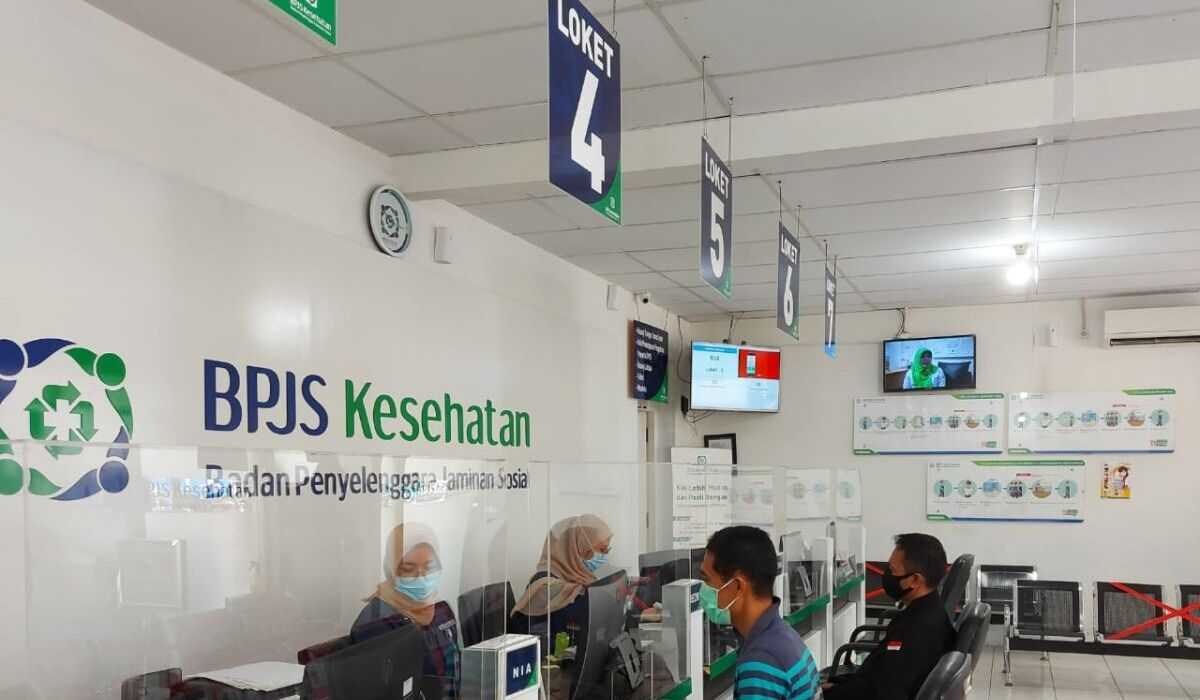
The amount of fees paid by participants in the National Health Insurance (JKN) program needs to be evaluated to maintain the sustainability of healthcare financing in the face of rising medical costs in recent years.
The Head of Public Relations at BPJS Kesehatan, Rizzky Anugrah, said that Presidential Regulation Number 64 of 2020 actually mandates that the amount of BPJS Kesehatan fees be reviewed at most every two years using standard actuarial practices for social security that are common and generally applicable. “This means that it has been more than 5 years since the JKN fees have been adjusted,” he said, Thursday (26/2).
In fact, during this period, various factors in healthcare financing have undergone significant changes. Starting from inflation in healthcare costs, rising prices of medicines, medical goods and services, to continuously increasing healthcare service rates.
He also highlighted the impact of the rebound effect on the utilization of healthcare services after the Covid-19 pandemic, which has increased the utilization of services by JKN participants.
“In 2023, there was also an adjustment in service rates according to Health Minister Regulation Number 3 of 2023, which caused a significant increase in healthcare costs for a number of specific benefit packages (diagnoses),” said Rizzky.
In addition, the increasing number of JKN participants also encourages an increase in the number of healthcare service users, which ultimately has an impact on the program’s financing burden.
Rizzky emphasized that his party does not have the authority to make adjustments to JKN fees. The process is under the coordination of the National Social Security Council as the leading sector.
However, from the perspective of the implementing agency, an evaluation of the amount of fees is considered important to maintain the sustainability of the JKN Program.
“In order to maintain the sustainability of the JKN Program, we hope that the government can evaluate the JKN fees so that they can be adjusted to the factual conditions,” he said.
He added that the evaluation process needs to be carefully studied by involving various parties and still considering the financial conditions and the public’s ability to pay.
“Of course, it must also be carefully studied with various parties, and it must also pay attention to the financial conditions and the public’s ability to pay,” he said.
To date, the amount of BPJS Kesehatan participant fees still refers to the applicable regulations. For the Non-Wage Earner (PBPU) or independent participant segment, the fees for class I are set at IDR 150,000 per person per month, class II IDR 100,000, and class III IDR 42,000 per person per month. Specifically for class III participants, the government provides a subsidy of IDR 7,000 per person per month so that the fees paid by participants become IDR 35,000. (H-3)
The JKN fees managed by BPJS Kesehatan need to be increased every two years to prevent a deficit and maintain the sustainability of healthcare services.
At the regional level, the district/city government is encouraged to prepare an emergency scheme through the APBD to temporarily cover affected residents who are in the process of reactivating their membership.
MEMBER of Commission IX of the DPR RI, Edy Wuryanto, emphasized that the sustainability of BPJS Kesehatan is important. However, increasing BPJS Kesehatan fees does not solve the deficit problem.
The Indonesian Consumer Foundation emphasized that the increase in JKN fees must take into account the public’s ability to pay and encourage the elimination of fines.
The Coordinator of Advocacy for BPJS Watch, Timboel Siregar, said that the increase in BPJS Kesehatan fees should not be applied to independent participants in classes 1, 2, and 3 or the middle class.
The JKN fees managed by BPJS Kesehatan need to be increased every two years to prevent a deficit and maintain the sustainability of healthcare services.
MEMBER of Commission IX of the DPR RI, Edy Wuryanto, emphasized that the sustainability of BPJS Kesehatan is important. However, increasing BPJS Kesehatan fees does not solve the deficit problem.
The Indonesian Consumer Foundation emphasized that the increase in JKN fees must take into account the public’s ability to pay and encourage the elimination of fines.
The Head of Public Relations of BPJS Kesehatan, Rizzky Anugerah, responded to the statement by the Minister of Health regarding the increase in JKN participant fees.
The appointment of Major General TNI (Retired) Dr. Prihati Pujowaskito as Director General of BPJS Kesehatan for the period 2026-2031 is expected to provide clarity in resolving the problems of the JKN program.
Copyright @ 2026 Media Group - mediaindonesia. All Rights Reserved