
BPJS Kesehatan Covers Monthly Deficit of Rp 2 Trillion
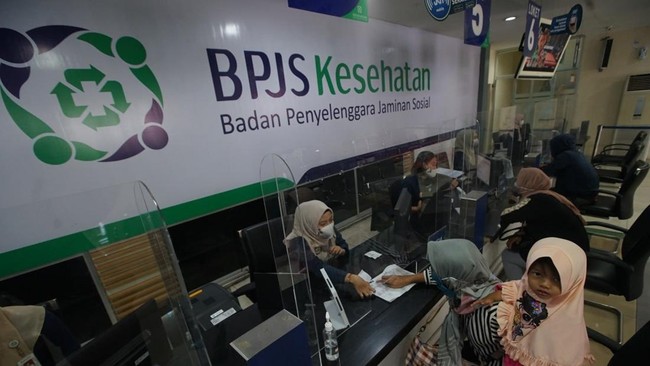
BPJS Kesehatan records a very high claims ratio for services under the Jaminan Kesehatan Nasional (JKN) programme. BPJS Kesehatan Chief Executive Prihati Pujowaskito stated that the organisation is covering a deficit of Rp 2 trillion per month. “Our monthly claims ratio involves receiving Rp 14 trillion and paying out approximately Rp 16 trillion, resulting in a Rp 2 trillion deficit each month,” she said during a meeting with Commission XI at the DPR RI building in Jakarta on Wednesday (8/4/2026). Prihati admitted that although BPJS Kesehatan has cash reserves sufficient to maintain the company’s finances for now, they cannot sustain it for long. This is because the financial health level of BPJS can only hold for 1.5 to 6 months. “These cash reserves will become unhealthy by November 2026, and by early next year, it will lead to payment defaults,” she revealed. She further stated that BPJS Kesehatan will receive a capital injection from this year’s state budget allocation of Rp 20 trillion. This will increase premium revenues from the previous Rp 48 trillion to Rp 68 trillion. “This has been promised by the Minister of Finance but has not yet flowed in. The process is still in regulation,” she added. “We are continuously monitoring because we hope this will come through. In the regulation, there could be premium adjustments or injections, so we will propose preferring injections first, as premium adjustments would be uncomfortable for the people,” she concluded. Previously, she admitted that healthcare service costs are higher than premium revenues. This has caused BPJS Kesehatan to bear deficits from rising JKN programme claims. “Healthcare service costs have sustainably exceeded premium revenues and are even on an increasing trend,” she stated. Prihati revealed that the current health insurance claims trend is the highest in the last eight years. The JKN programme claims ratio reached 111.86% as of February 2026. “As an implication, if this condition continues, the deficit will keep accumulating and directly pressure the financial health of JKN,” she said. BPJS Kesehatan recorded a claims ratio of 110.37% in 2018. However, in 2019, the JKN programme claims ratio gradually decreased to 97.05%. Even during the pandemic, the claims ratio declined to 68.29% in 2020 and 63.03% in 2021. “In 2019, there was an improvement where JKN financial health reached a balance point with a more controlled claims ratio,” she stated. However, the claims ratio rose again to 78.78% in 2022. It then broke through 104.72% in 2023. The figure continued to swell to 105.78% in 2024 and 107.69% in 2025. “Since 2023, there has been a significant change where the claims ratio is above 100%,” she concluded.