
BPJS Health Insurance Contribution Rates as of 3 March 2026
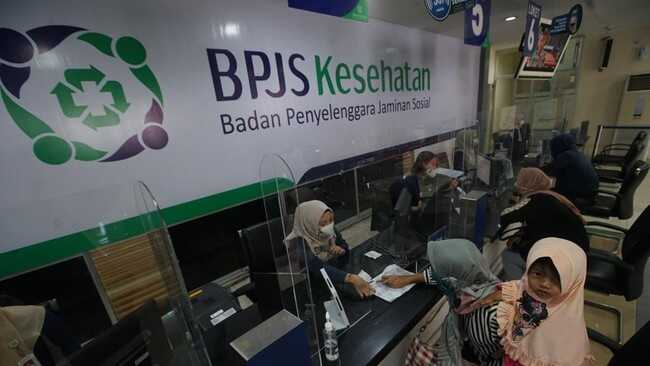
Jakarta — Health Minister Budi Gunadi Sadikin has commented on proposals to increase BPJS Health insurance contributions. He signalled potential rate increases in the future, though these would be limited to higher-income groups.
The Health Minister emphasised that if tariff adjustments occur, low-income populations would not be affected. This is because contributions from participants in the first to fifth income deciles are paid by the government through an assistance scheme.
“If rates are increased for poor people in deciles 1-5, there will be no impact. Because the government pays for poor people’s contributions,” he stated.
He emphasised that the BPJS system adheres to social insurance principles with a cross-subsidy scheme. This means participants with higher economic capacity help finance coverage for lower-income participants.
“The concept of BPJS social insurance is that wealthy people subsidise poor people. It’s the same as tax. In taxes, wealthy people pay more, but access remains equal,” he explained.
Under Presidential Regulation 63/2022, the contribution calculation scheme for participants is divided into several categories. First, recipients of insurance premium assistance (PBI) have contributions paid directly by the government.
Second, wage earners employed in government institutions—including civil servants, military personnel, police officers, state officials, and non-civil servant government employees—pay 5% of monthly salary or wages, with 4% paid by employers and 1% by participants.
Third, wage earners employed in state-owned enterprises (BUMN), regional-owned enterprises (BUMD), and private companies pay 5% of monthly salary or wages, with 4% paid by employers and 1% by participants.
Fourth, contributions for additional family members of wage earners (fourth child and onwards, parents, and in-laws) are set at 1% of salary or wages per person per month, paid by the wage earner.
Fifth, contributions for other relatives of wage earners such as siblings/in-laws, domestic workers, and others, as well as self-employed workers and non-workers, have specific schedules: Rp 42,000 per person monthly for Class III ward facilities; Rp 100,000 per person monthly for Class II ward facilities; and Rp 150,000 per person monthly for Class I ward facilities.
Sixth, health insurance contributions for veterans, independence pioneers, and widows, widowers, or orphans of veterans or independence pioneers are set at 5% of 45% of the basic salary of civil servants in grade III/a with 14 years’ service monthly, paid by the government.
Under the latest contribution scheme in Presidential Regulation 63/2022, contributions must be paid by the 10th of each month at the latest. Late payment penalties have not been charged since 1 July 2016. Penalties are only imposed if within 45 days of membership reactivation, the participant receives inpatient health services.
Based on Presidential Regulation 64/2020, service penalties are calculated at 5% of the initial diagnosis cost of inpatient health services multiplied by the number of months in arrears, with the following conditions: the maximum number of months in arrears is 12 months; the maximum penalty is Rp 30,000,000; and for wage earners, penalties are covered by employers.