
BPJS Health Expands National Health Insurance Coverage to Remote Areas with TNI Support
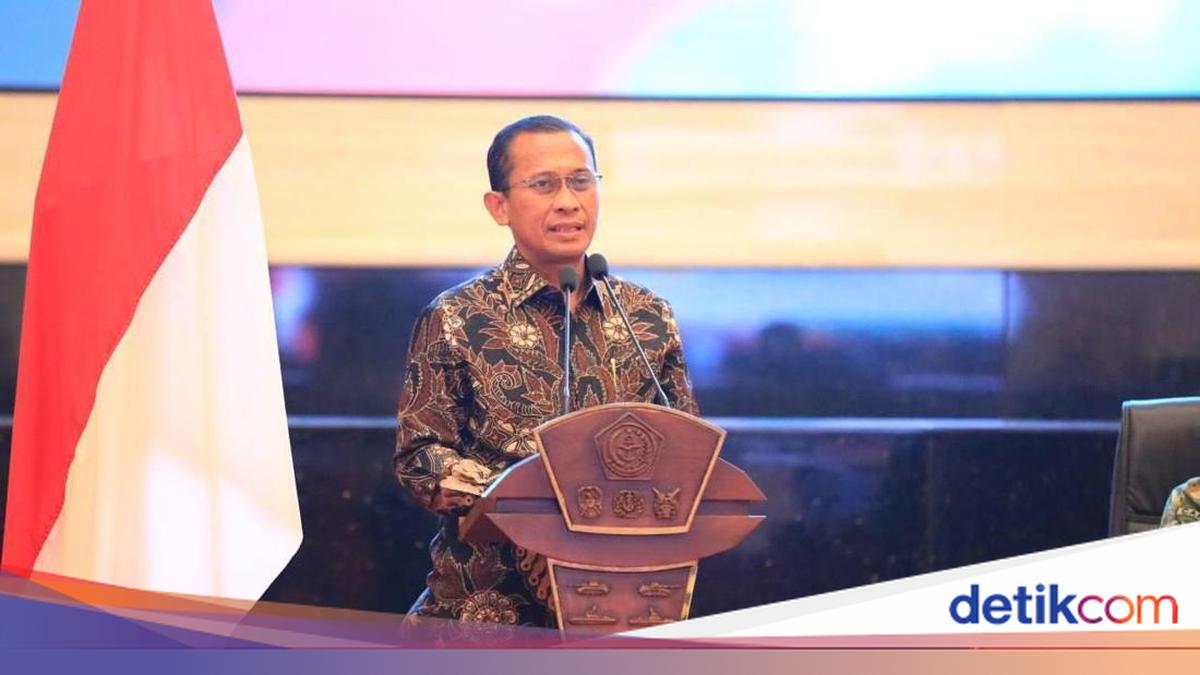
BPJS Kesehatan continues to strengthen collaboration with the Indonesian National Armed Forces (TNI) to support equitable access to National Health Insurance (JKN) services for programme participants. The collaboration is considered vital to ensure TNI personnel and their families receive quality healthcare services extending to remote and border regions.
This was stated by BPJS Kesehatan Chief Executive Officer Prihati Pujowaskito during the Technical Health Coordination Meeting of the TNI for Fiscal Year 2026.
Prihati revealed that as of 1 March 2026, the number of JKN participants had reached 284.69 million people. Of this total, 1.48 million people were TNI personnel and family members who had registered as JKN participants.
“This broad coverage of participation must be matched with adequate healthcare facilities and collaboration among various stakeholders, including the TNI which has a strategic role as a healthcare service provider. Currently BPJS Kesehatan has cooperated with 23,517 Primary Health Care Facilities (FKTP) and 3,182 Advanced-Level Referral Health Facilities (FKRTL) throughout Indonesia. Of these figures, 577 TNI primary clinics serve as FKTP and 120 TNI hospitals and main clinics are part of FKRTL partners of BPJS Kesehatan,” said Prihati in a written statement on Friday 13 March 2026.
Pujowaskito explained that the presence of TNI-owned healthcare facilities is essential for expanding access to healthcare services, particularly in areas with limited healthcare infrastructure. According to him, collaboration between BPJS Kesehatan and the TNI is one of the strengths in ensuring JKN participants continue to receive easily accessible healthcare services, including in areas with limited access.
“From the perspective of healthcare service financing, BPJS Kesehatan has disbursed 190.3 trillion rupiah. This condition demonstrates the importance of strengthening primary healthcare services so that healthcare services can be more optimal, whilst maintaining the sustainability of JKN Programme financing,” he explained.
Beyond strengthening primary healthcare services, Pujowaskito added that BPJS Kesehatan continues to encourage expansion of healthcare access to difficult-to-reach areas. Through compensation policy in Areas Without Adequate Healthcare Facilities (DBTFMS), BPJS Kesehatan endeavours to provide JKN protection in disadvantaged, frontier, and outermost regions (3T).
Such services are delivered through various approaches, including deployment of healthcare personnel, cooperation with specific healthcare facilities, and utilisation of floating hospitals to reach remote and border areas.
“BPJS Kesehatan continues to introduce various service innovations to enhance access convenience for JKN participants. Through the Mobile JKN Application, participants can access various services digitally, from registering for online queues at healthcare facilities, updating membership data, to receiving information and service complaints,” he said.
Pujowaskito added that BPJS Kesehatan has also introduced the Administrative Services through WhatsApp (PANDAWA) which can be accessed through the number 08118165165 to facilitate participants in handling membership administration without having to visit the BPJS Kesehatan branch office directly. Additionally, there is a Care Center 165 service available 24 hours.
These various innovations are part of BPJS Kesehatan’s commitment to delivering increasingly easy and rapid services for all JKN participants.
“Through the support and synergy with the TNI, BPJS Kesehatan is optimistic that efforts to equalise JKN services can continue to be strengthened. Consequently, the JKN Programme will be able to deliver tangible impact on improving the health status of the Indonesian people,” he concluded.