
BPJS Health Director Praises Sultan HB X's Spirit of Mutual Cooperation in JKN Premium Collection in DIY
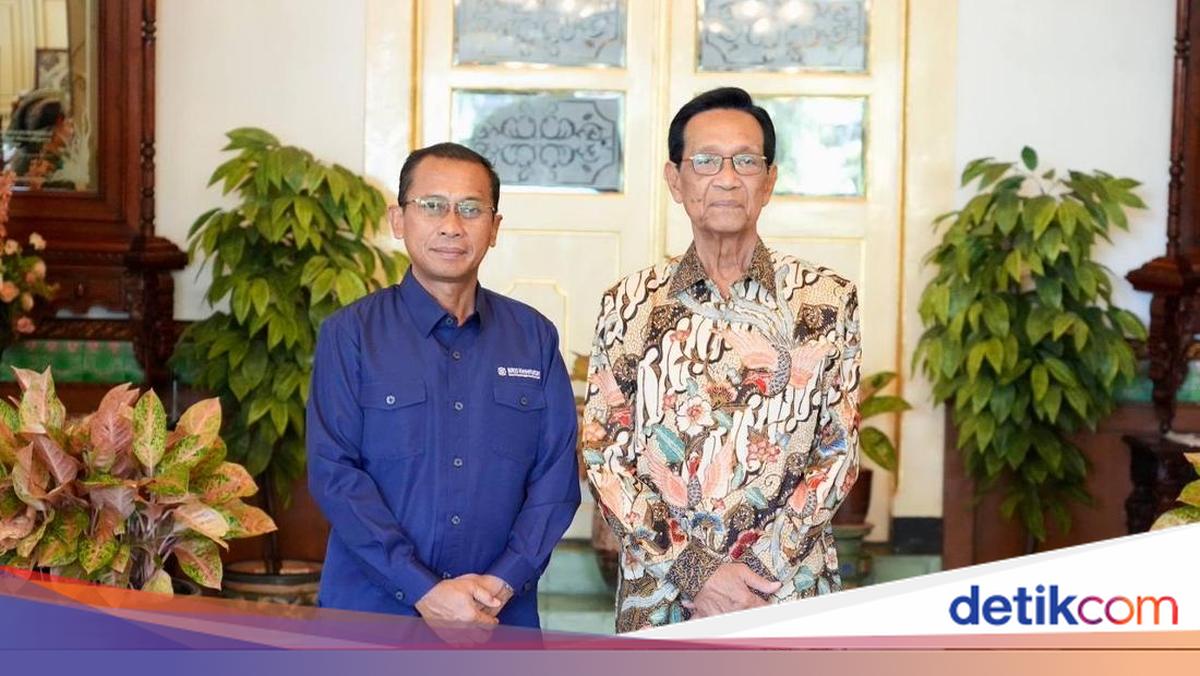
The Director General of BPJS Kesehatan (Indonesian Health Social Security Administrator), Prihati Pujowaskito, has emphasised the critical role of regional governments in supporting the sustainability of the National Health Insurance Programme (JKN). This comes as the programme is viewed as essential for communities to access healthcare services.
Pujowaskito made these remarks following a visit to the Office of the Governor of the Special Region of Yogyakarta (DIY) in Yogyakarta recently.
“The JKN programme is a state programme mandated to BPJS Kesehatan to manage so that its benefits can be felt maximally by society. The funding source for the JKN programme is not from taxes, but from participant contributions. There are contributions from participants and employers that are managed collectively to guarantee healthcare services for all JKN participants,” said Pujo in a written statement on Tuesday (17 March 2026).
Pujo explained that the contribution of regional governments in ensuring all layers of Indonesia’s population are protected by health insurance is substantial. Based on data as of 14 March 2026, 284.8 million Indonesians have been registered in the JKN programme.
Of this number, 96.8 million are subsidised by the central government as recipients of health insurance premium assistance (PBI JK). Meanwhile, 49.1 million people are subsidised by regional governments as non-wage earners (PBPU) class III participants, commonly known as PBPU Pemda participants.
Pujo also expressed appreciation for DIY Provincial Governor Sri Sultan Hamengkubuwono X, who has consistently provided JKN protection to residents, ultimately achieving universal health coverage (UHC). Currently, 3,722,454 residents of DIY have been registered as JKN participants, representing 99.21% of the total population with an activation rate of 87.76%. In fact, five regencies/cities in the DIY region have also successfully achieved UHC status with JKN participation exceeding 98%.
“Thank you to the DIY Regional Government and other regional governments that have consistently worked together through mutual cooperation by registering and paying JKN premiums for residents not yet protected by health insurance. We also express the highest appreciation to all regions that have successfully realised UHC. Thank you for implementing mutual cooperation in the form of shared contribution through the JKN programme,” said Pujo.
Pujo further explained that the JKN programme is a manifestation of Indonesia’s spirit of mutual cooperation involving many parties, not just BPJS Kesehatan alone. Cross-sectoral synergy strengthening is needed, including collaboration between central and regional governments, to manage the complex JKN ecosystem and fulfil people’s rights to access quality healthcare services.
“The state has presented the JKN programme to provide health insurance protection to Indonesia’s residents, so that when they are ill they are not burdened by treatment costs. Before the JKN programme existed, many sick people could not afford treatment due to cost constraints. In 2025, we recorded that the community’s use of the JKN programme exceeded 2 million cases per day,” he explained.
“This proves how important the JKN programme is to all of us. Therefore, let us maintain it together so that the JKN programme can continue to benefit us in the future,” he added.
Meanwhile, DIY Regional Secretary Ni Made Dwipanti Indrayanti stated that DIY Governor Sri Sultan Hamengkubuwono X extends his thanks for the appreciation given to the DIY Regional Government for achieving UHC coverage exceeding 99%.
“Alhamdulillah (praise be to God) our JKN participation coverage has reached 99%. Regarding verification of PBI JK participant data that has been deactivated, in DIY everything is safe, there are no problems,” she concluded.