
BPJPH Harmonises 1,060 HS Codes for Mandatory Halal Products
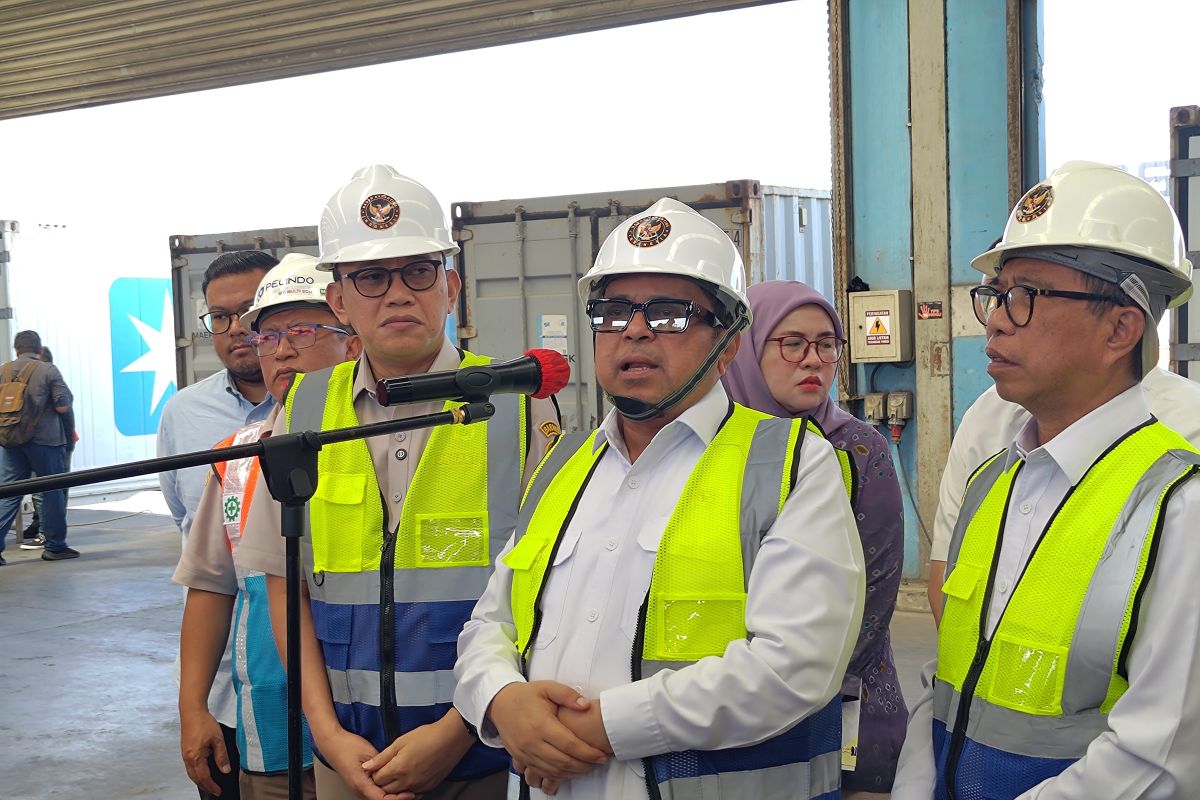
Jakarta (ANTARA) - The Halal Product Assurance Organising Agency (BPJPH) has harmonised around 1,060 commodity classification codes or Harmonized System Codes (HS Codes) to strengthen the supervision of mandatory halal products entering and circulating in Indonesia.
BPJPH Head Haikal Hasan stated that the harmonisation is part of the preparations for implementing the mandatory halal policy in October 2026.
“Up to now, we have identified 1,060 items that we have harmonised for the purpose of (halal) checking, and this will continue to increase,” Haikal said in Tanjung Priok, Jakarta, on Tuesday.
HS Codes are commodity classification codes used to identify product types in international trade and customs activities.
Through the harmonisation of HS Codes, BPJPH aligns the list of commodity codes with categories of products that must have halal certification, enabling easier, more integrated, and targeted supervision of imported products from shipment and at the country’s entry points.
According to him, harmonising HS Codes is necessary to ensure that products entering Indonesia can be more clearly identified in the halal supervision process.
He said the supervision applies to products from all countries, both through inspections in the country of origin and upon entry into Indonesia.
“And this applies to all countries. We will inspect in the country of origin, as well as upon entry here,” he stated.
Haikal explained that the supervision of mandatory halal products is part of the implementation of Law No. 33 of 2014 on Halal Product Assurance.
He stated that products entering, traded, and distributed in Indonesian territory must have halal certification.
Meanwhile, products categorised as non-halal may still circulate as long as they include non-halal labelling in accordance with regulations.
“So they are not prohibited, just labelled, so we have choices between halal and non-halal,” he said.
The mandatory halal certification policy will be expanded starting in October 2026 in accordance with the mandate of Law No. 33 of 2014 and Government Regulation No. 42 of 2024.
The expansion covers a number of products entering, circulating, and traded in Indonesia, including food products, beverages, raw materials, slaughter products, and various specific consumer goods.
BPJPH stated that it has accelerated the issuance of up to 10,000 halal certificates per day starting in early May 2026 for business actors, particularly micro, small, and medium enterprises (MSMEs), to support the implementation of the policy.
Based on data from the agency on 1 May 2026, there are around 3 million business actors with halal certificates out of approximately 66 million MSMEs in Indonesia.
Haikal said BPJPH continues to strengthen cooperation with various ministries, agencies, and related organisations to expand the implementation of the national halal product assurance.
He mentioned that BPJPH has collaborated with several ministries, including the Ministry of Trade, Ministry of Home Affairs, Ministry of Tourism, Ministry of Health, and Ministry of Villages and Underserved Regions.
In addition, cooperation is also conducted with the Indonesian Ulema Council (MUI), Indonesian National Police, and other agencies related to strengthening the halal certification ecosystem.
On Tuesday, BPJPH signed a memorandum of understanding (MoU) with the Indonesian Quarantine Agency (Barantin) to strengthen the supervision of imported products through data exchange, joint supervision, and coordination of law enforcement at the country’s entry points.
“This is one part of the long journey (of enforcing halal certification regulations) to protect the entire nation and all the Indonesian homeland in accordance with the mandate of the law often stated by our President, Mr Prabowo Subianto,” Haikal said.