
BPJPH Encourages Cross-Sector Synergy to Strengthen the Competitiveness of Halal MSMEs
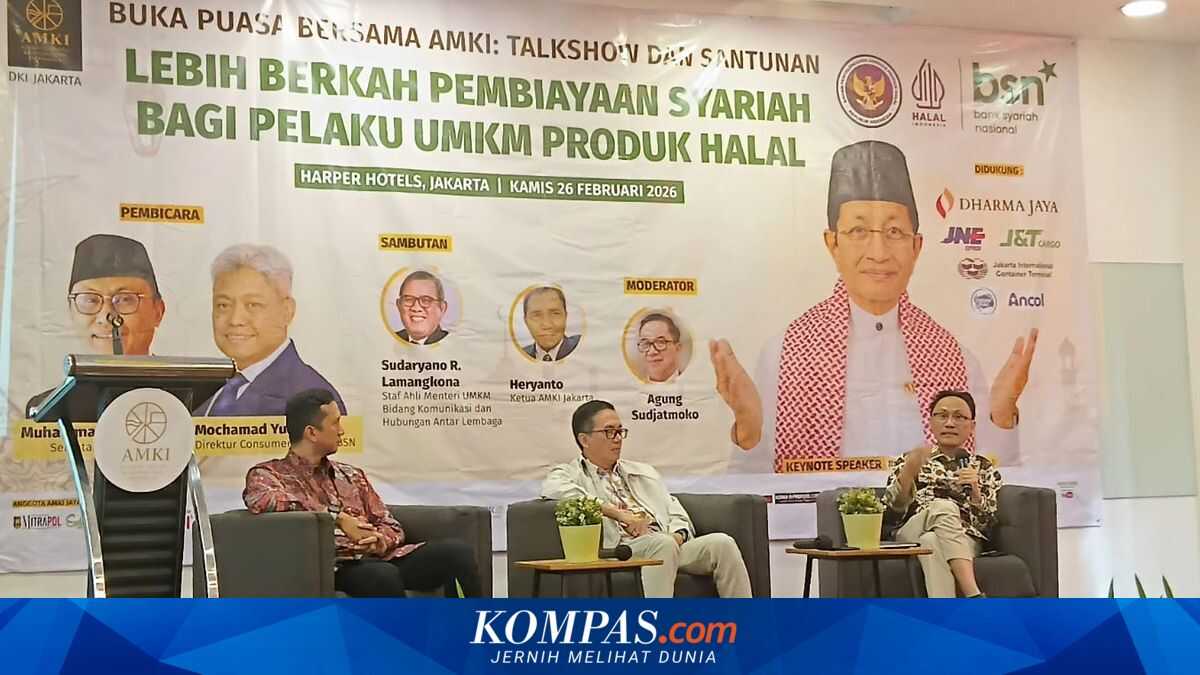
KOMPAS.com – The Badan Penyelenggara Jaminan Produk Halal (BPJPH) is encouraging the strengthening of cross-sector synergy to enhance the competitiveness of Micro, Small, and Medium Enterprises (MSMEs) producing halal products.
This was stated by the Secretary General of BPJPH, Muhammad Aqil Irham, when he was a speaker at a talk show entitled “More Beneficial Financing for Halal MSME Actors” during the joint breaking of the fast and charity event organised by the Asosiasi Media Konvergensi Indonesia (AMKI) in Jakarta, Thursday (26/2/2026).
Aqil affirmed that strengthening halal product MSMEs cannot be done in isolation, but requires cross-sector synergy.
This strengthening is carried out by continuously strengthening socialisation, education, literacy, as well as facilitation and assistance for halal certification for micro and small business actors (UMK).
“The number of our MSMEs is very large and spread throughout Indonesia, so synergy and collaboration from all parties are needed to help MSME actors obtain halal certificates,” he said in a written statement received by Kompas.com.
Furthermore, Aqil said that current market trends show that public awareness of halal products is increasing.
Therefore, MSME actors are expected to respond to this phenomenon seriously.
“Our MSMEs must follow market developments. Consumers today are increasingly selective in choosing products. Even children of the (Gen) Z generation, when they are in malls or public places, if they want to eat, they will ask first, is this (certified) halal?” said Aqil.
According to him, these examples are a great opportunity to increase the competitiveness of halal MSME actors.
Aqil added that, along with increasing public awareness, the halal label is now not just a matter of fulfilling regulatory compliance, but has become an important variable in the economy.
He said that BPJPH allocates a budget to facilitate financing for UMK halal certification, the number of which continues to increase each year.
“This year (2026), the allocation has increased to 1.35 million free halal certificates from 1.1 million certificates in 2025,” said Aqil.
However, this number is relatively small compared to the large number of MSMEs in Indonesia.
Therefore, said Aqil, collaboration involving all related stakeholders is needed to make halal certification a success.