
BPJPH Commits to Involving Universities in Realising the Halal Ecosystem
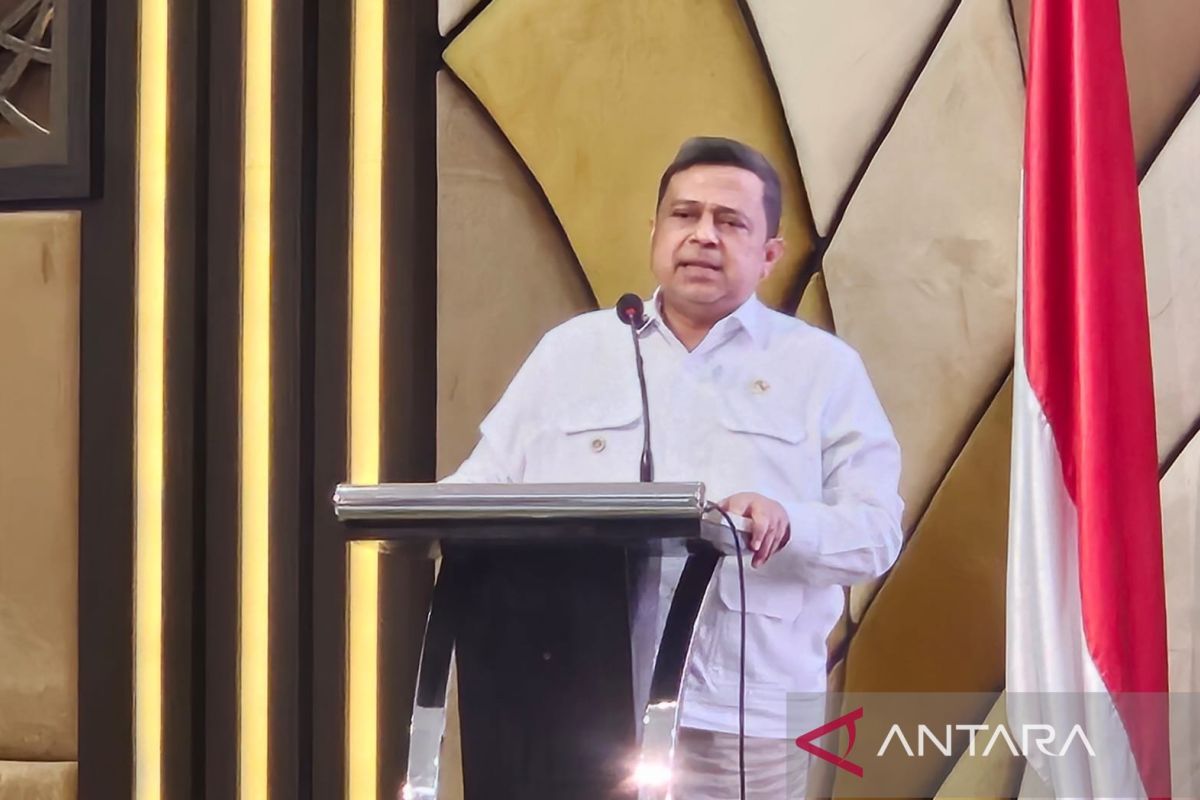
Malang, East Java - The Halal Product Assurance Organising Agency (BPJPH) is committed to continuously involving higher education institutions in realising the halal ecosystem in Indonesia.
BPJPH Head Ahmad Haikal Hasan, after attending the Indonesia Halal Ecosystem Summit & UB Halal Metric Award 2026 at Brawijaya University in Malang, East Java, on Tuesday, stated that universities have so far played a role as halal inspection institutions (LPH).
“Universities are involved as LPH because they have laboratories, including Brawijaya University, which is one of the pioneers of halal in Indonesia,” Haikal said.
In addition to universities, BPJPH is also collaborating with relevant parties, such as Commission VIII of the DPR RI, the Food and Drug Supervisory Agency (BPOM), the National Food Agency, and the Indonesian Ulema Council, to accelerate the halal ecosystem.
“Starting in October 2026, we will work with the police for persuasive appeals regarding halal obligations,” he said.
The presence of universities is part of BPJPH’s strategy in realising mandatory halal or the halal certification obligation in October 2026.
Haikal stated that halal certification is not merely a formal requirement but aims to add value to all products of business actors in Indonesia, including penetrating global market competition.
Product halal assurance, he said, is no longer just about providing certainty to the Muslim community, but has now evolved to benefit all society.
BPJPH emphasises that halal certification is based on three main principles: transparency, traceability, and trust.
“This has become customer satisfaction. Even in Europe, halal is recognised as elite food,” he said.
Meanwhile, Brawijaya University Rector Prof Widodo said that halal has become a new system that will have a positive impact on the advancement of industry in Indonesia because it provides product quality assurance to consumers.
Therefore, Widodo stated that Brawijaya University has a commitment not only to realise the halal ecosystem but also to actively participate in development steps.
“Brawijaya University also already has a halal testing laboratory certified by ISO 17025 and accredited by the National Accreditation Committee (KAN),” he said.
Looking ahead, he encouraged his staff to strengthen the formulation of halal testing services so that they can be more accessible to the public.
“Hopefully, people can conduct that analysis more quickly and cheaply,” he added.