
BPJPH Chief Calls on Media to Strengthen Accuracy of Information on Halal Product Certification
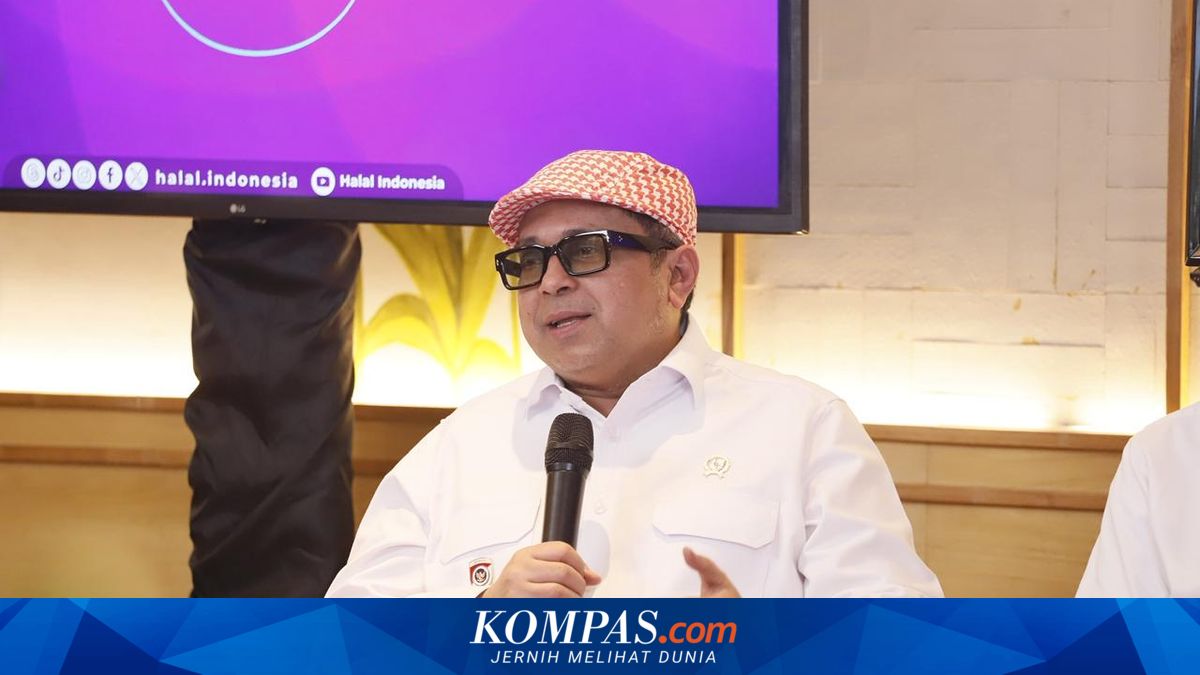
The head of the Halal Product Guarantee Agency (BPJPH), Ahmad Haikal Hasan, commonly known as Babe Haikal, has emphasised the important role of mass media in conveying accurate and precise information regarding halal product guarantees (JPH) in Indonesia.
“Mass media has a noble role in spreading accurate information about JPH to enhance public literacy, monitor policy implementation, encourage consumer awareness, and promote active participation by business actors in halal compliance,” he stated in a press release, on Monday, 9 March 2026.
The activity also served as an opportunity to enhance public literacy and respond to various issues concerning JPH that have emerged in society in recent times.
Babe Haikal highlighted that information accuracy has become increasingly important amid the emergence of incomplete perceptions regarding JPH.
One issue that has recently circulated in the media is the assumption that products from the United States can enter Indonesia without requiring halal certification.
“This assumption is incorrect. Halal certification requirements in Indonesia apply to all products circulating within Indonesia, including imported products from the US and from other countries,” Babe Haikal stated firmly.
“Products do not need halal certification in Indonesia if they already possess a halal certificate from a Foreign Halal Body (LHLN) that has been recognised by BPJPH. Therefore, they do not need to be re-certified in Indonesia. Registration alone is sufficient so that their halal certificate can be formally recognised in Indonesia,” he continued.
Currently, several halal bodies in the US have been recognised by BPJPH, including the Islamic Food and Nutrition Council of America (IFANCA), American Halal Foundation (AHF), Islamic Services of America (ISA), Halal Transactions of Omaha (HTO), and the Islamic Society of the Washington Area (ISWA) Halal Certification Department.
Furthermore, Babe Haikal conveyed that the US Government through the United States Department of Agriculture (USDA) has previously stated its commitment to complying with Indonesia’s mandatory halal requirements.
According to him, the recognition mechanism through Mutual Recognition Agreement (MRA) actually plays a strategic role in strengthening halal governance globally.
In addition to facilitating the recognition of halal certificates between countries, this scheme can also encourage the export of national halal products and strengthen Indonesia’s position in the dynamics of international halal standards.
“Our principle is clear. Products that are halal must be clearly identified with halal certificates and labels, whilst non-halal products must also be clearly labelled as not halal, so that consumers can make conscious choices, obtain information certainty, and feel protected in consuming products circulating in the market,” Babe Haikal explained.
Also present were Fariza Y Irawady, Expert Staff to the BPJPH Head, and Beny Cahyadie, Head of the Legal, Human Resources, and Public Relations Bureau.
Through the Media Gathering activity, BPJPH hopes that the JPH literacy of media personnel will continue to be strengthened so that information regarding halal policy can be conveyed accurately, educatively, and constructively to the public.
This collaboration is considered important, particularly in preparation for the implementation of the Mandatory Halal policy scheduled for October 2026.