
BPH Migas monitors fuel and aviation fuel distribution ahead of Lebaran exodus
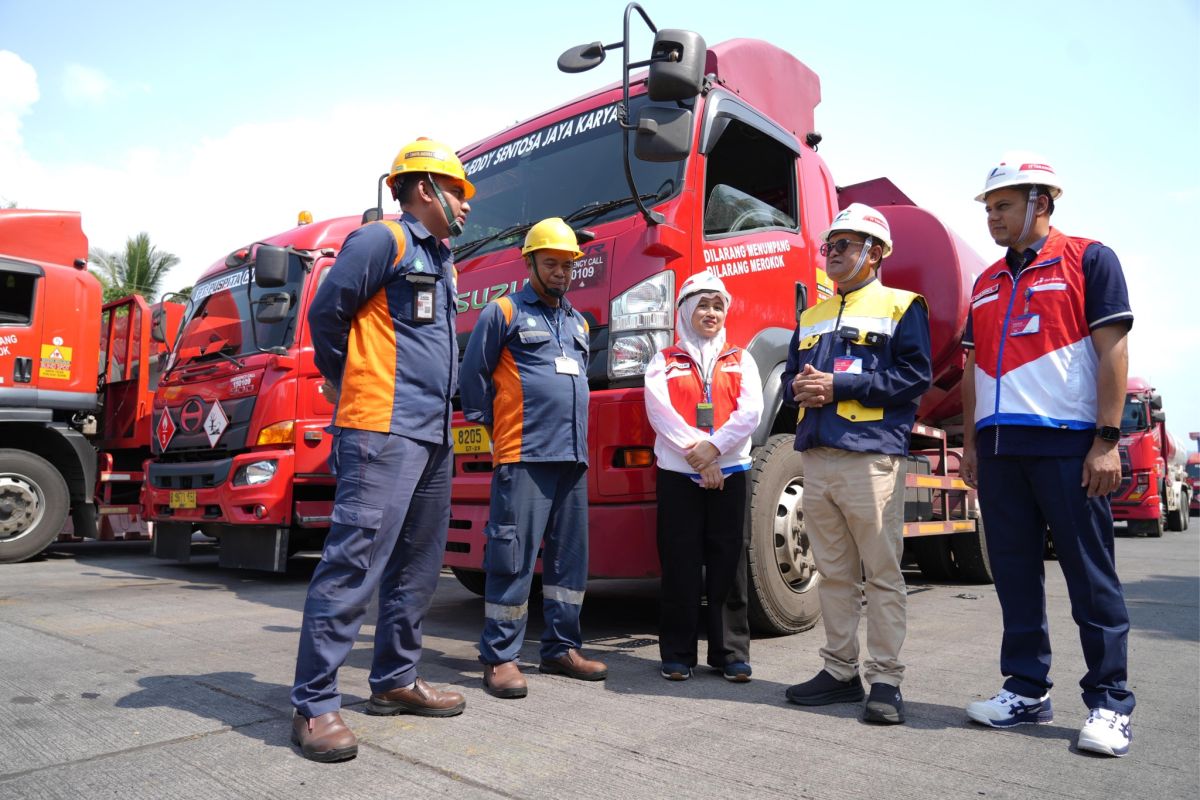
The Upstream Oil and Gas Regulator (BPH Migas) has conducted direct monitoring of key fuel distribution nodes, including the Aviation Fuel Terminal (AFT) Juanda in Surabaya and Ketapang Port in Banyuwangi, East Java.
BPH Migas Head Wahyudi Anas stated that the agency is also monitoring petrol stations (SPBU) along toll and non-toll routes in Pasuruan, Jember and Situbondo regions, as well as the Integrated Terminal Tanjung Wangi in Banyuwangi.
Based on inspections, aviation fuel stocks are deemed adequate to support flight operations during the Lebaran period. Potential increases in aviation fuel consumption have been anticipated by the assigned business entities.
“We are conducting monitoring of preparations for the Lebaran 1447 H exodus. Starting from AFT Juanda, where BPH Migas has confirmed that aviation fuel stocks at AFT Juanda extend to 24 days, which is sufficiently safe and smooth. There is a potential consumption increase in aviation fuel of around 2-4 per cent that has been anticipated by the Pertamina Group for supply purposes,” said Wahyudi.
Monitoring then continued to a petrol station at a rest area on the Pasuruan toll route on Friday (13 March). At that location, Biosolar consumption was recorded as increasing ahead of operational restrictions on non-essential freight vehicle movements before Lebaran.
Wahyudi noted that Biosolar consumption increased by approximately 20 per cent, as from 7 days before Lebaran, non-essential freight vehicles are not permitted to operate on toll roads or inter-city and inter-district routes. For Pertalite, there was no significant increase.
BPH Migas subsequently conducted technical training on the issuance of Recommendation Letters (Surkom) for the purchase of specific fuel types (JBT) Biosolar and special assignment fuel types (JBKP) Pertalite.
Wahyudi appreciated the Jember Regency Government for implementing the regulation on issuing recommendation letters to consumer users from the micro-enterprise, fisheries, agriculture, transport and public service sectors.
Also in Jember, BPH Migas conducted a surprise inspection of a petrol station located on an alternative route on Saturday (14 March).
The inspection uncovered potential misuse of subsidised fuel, resulting in the sealing of that petrol station. The investigation process is currently being carried out by law enforcement officials.
Wahyudi ensured that fuel supply in the surrounding area remains secure. The fuel allocation from the sealed petrol station will be diverted to the nearest petrol station so that the public continues to obtain fuel without disruption.
“BPH Migas, together with Pertamina Patra Niaga, will reallocate quotas for JBT and JBKP to surrounding petrol stations,” said Wahyudi.
On Sunday (15 March), Wahyudi inspected the Integrated Terminal (IT) Tanjung Wangi. From the monitoring results, fuel stocks are in the range of more than 30 days with distribution optimised through fuel tankers to various regions.
Pertamina Patra Niaga in the East Java, Bali and Nusa Tenggara region (Jatimbalinus) has also prepared 17 fuel tankers. For the north coast route itself, five fuel tanker points have been prepared along Banyuwangi to Surabaya.
Regarding supply and distribution of marine transport fuel, fuel stocks for PT ASDP Indonesia Ferry (ASDP) services have been prioritised by Pertamina Patra Niaga Jatimbalinus, including the preparation of dedicated fuel tankers to increase stocks.
The Ramadan Eid Task Force (Satgas) of PT Pertamina (Persero), which has been running since 9 March 2026 until 1 April 2026, is deemed to have strengthened fuel stocks, prepared distribution routes and facilities and infrastructure for the public.
The reliability of this fuel supply has been appreciated by the Director of Human Resources and Corporate Services at PT ASDP Indonesia Ferry (Persero), Ardhi Ekapaty. Thanks were extended to BPH Migas for the quota management provided for special ship transport services.
“The conditions to date show that vehicles from both Gilimanuk and Ketapang have already increased. So far, things are going well and fuel requirements are being met,” he concluded.