
Boyamin and MAKI Challenge International Agreements Law at Constitutional Court
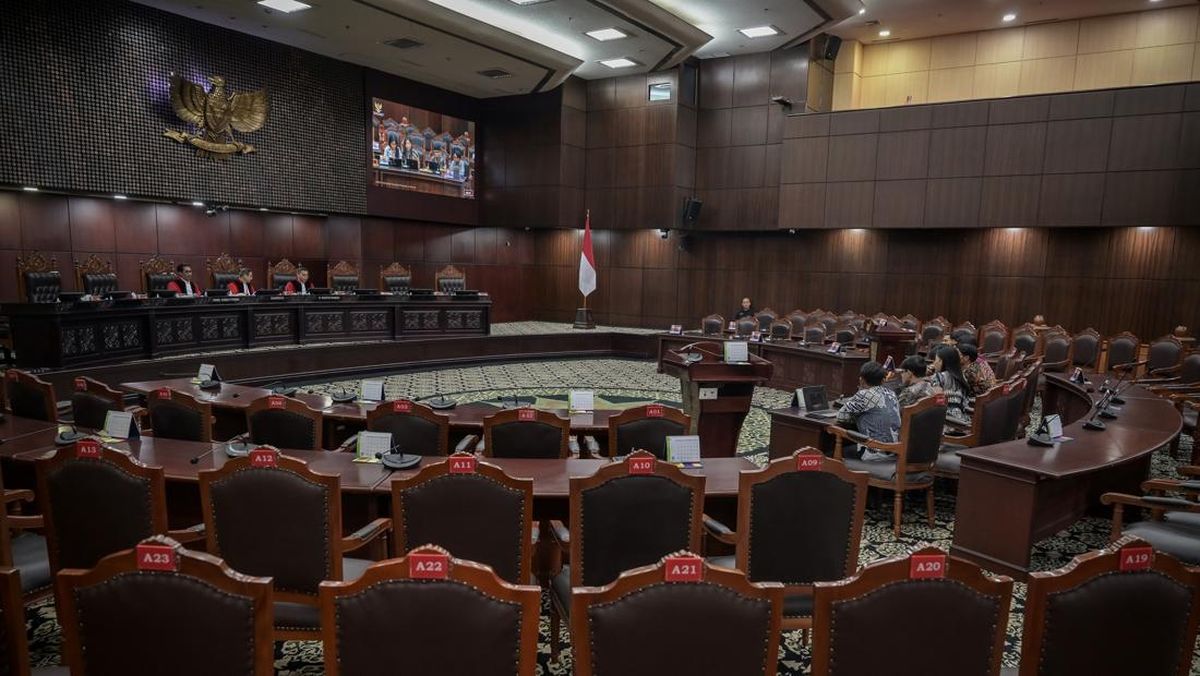
The Anti-Corruption Society (MAKI), led by Boyamin Saiman, along with several petitioners, has challenged Law No. 24/2000 on International Agreements at the Constitutional Court (MK). In the inaugural hearing held on Wednesday (29/4), they requested a material examination of Article 10 of the International Agreements Law against the 1945 Constitution. Article 10 stipulates that international agreements must be regulated through legislation. “This [petition for material examination of the International Agreements Law] is triggered by the uncertainty regarding the continuation and the failure to submit to the DPR the Gaza Palestine Peace Agreement (Board of Peace - BoP) between President [of Indonesia] Prabowo [Subianto] and [US President] Donald Trump,” Boyamin told CNNIndonesia.com via text message before the preliminary hearing. According to the MK website, the preliminary hearing for the petition was presided over by Constitutional Justice Enny Nurbaningsih, along with Constitutional Justices Ridwan Mansyur and Arsul Sani. Dwi Nurdiansyah Santoso, the legal representative of the petitioners, stated that Article 10 of the International Agreements Law contradicts the 1945 Constitution. Article 10 of the International Agreements Law states, “The ratification of international agreements shall be done by law if it concerns: a. political matters, peace, defence, and state security; b. changes to territory or determination of state boundaries of the Republic of Indonesia; c. sovereignty or sovereign rights of the state; d. human rights and the environment; e. the establishment of new legal rules; f. foreign loans and/or grants.” Dwi explained that the existence of the aforementioned article is the root of inefficiency due to the absence of definite parameters regarding the nominal limits of “state financial burdens” in every international agreement. According to the petitioners, the constitution actually requires DPR approval for agreements that have broad impacts and burden the state finances. Dwi elaborated, referring to the provisions of Article 11 paragraph (2) of the 1945 Constitution, that the president in making other international agreements must obtain DPR approval. The criteria are those that cause broad and fundamental consequences for the people’s lives related to state financial burdens, and/or require changes or the formation of laws. According to the petitioners, the absence of a time limit for submitting approval to the DPR for international agreements is a form of legal smuggling and arbitrariness. Furthermore, he added, the recognition of the obligation to seek DPR approval becomes illusory and merely formalistic if the aforementioned law does not stipulate a definite time limit for the president. The petitioners assess that the absence of the phrase ‘time limit’ provides a legal loophole for the executive to implement agreements de facto, while delaying indefinitely in submitting the agreement draft to parliament. Boyamin and colleagues then view this practice of indefinite delays as a manifestation of executive tyranny and abuse of power, which is diametrically opposed to the rule of law principle enshrined in Article 1 paragraph (3) of the 1945 Constitution. The petitioners also requested that the MK declare Article 10 of Law No. 24/2000 on International Agreements constitutional with the addition of a three-month time limitation phrase. “To declare Article 10 of Law No. 24/2000 on International Agreements in the phrase ‘The ratification of international agreements shall be done by law if it concerns: …’ contradicts the 1945 Constitution of the Republic of Indonesia and has no binding legal force conditionally (conditionally unconstitutional), insofar as it is not interpreted: ‘no later than three (3) months from the signing of the aforementioned agreement’,” said Dwi, reading the petitioners’ petition as quoted from the MK website. Before closing the hearing, Constitutional Justice Enny Nurbaningsih stated that the petitioners were given 14 days to perfect their petition. Subsequently, the MK will schedule the next hearing with the agenda of hearing the main points of the petition’s improvements.