
Boosting Two Domestic Economic Growth Engines, Purbaya: Global Economy, I Don't Care!
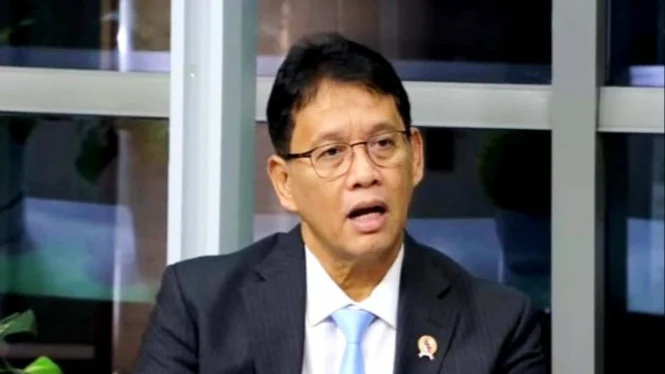
Jakarta, VIVA – Finance Minister Purbaya Yudhi Sadewa has said that one of the key challenges in driving national economic growth to 8 per cent is ensuring that the domestic economy can grow strongly and remain stable.
According to Purbaya, the national economy is 90 per cent dependent on the domestic economy, with only the remaining 10 per cent influenced by external global factors.
“Because the national economy is 90 per cent dependent on the domestic economy, with only 10 per cent from global factors,” Purbaya said during the ‘Apa Kabar Indonesia Pagi’ programme on TvOne, Friday, 20 February 2026.
Accordingly, Purbaya stated that to ensure the national economy runs well and strongly, its growth engines must be optimised.
These engines are government spending and private sector investment. If both engines can operate simultaneously and optimally, Purbaya is confident that the national economy could readily achieve growth of at least 6 per cent.
“Over the past 20 years, our economic growth engines have always been lopsided. I think if I could just return to the era of President SBY alone in terms of driving the private sector, 6 per cent would already be within reach,” Purbaya said.
“Then if you add stimulus in the style of President Jokowi’s governance, growth would certainly exceed 6 per cent,” he added.
For this reason, Purbaya stressed that both national economic engines — government spending and private sector performance — must at the very least run in tandem. This must be done whilst protecting the domestic market to provide space for local entrepreneurs to do business.
“So if I can ensure that the 90 per cent domestic economy works well, both engines are running, and the market is truly safeguarded for domestic entrepreneurs alone, I don’t care about the 10 per cent. I can say, ‘Global economy? I don’t care.’ So we must protect the domestic side,” Purbaya said.
“But I’m not saying or praying that the external economy must collapse — not at all. Rather, we must have the assurance that if we protect our economy and domestic demand, even if the global economy is in turmoil, we will still be healthy,” he added.