
Boosting Green Energy: HVDC Technology Key to Electricity Interconnection
JAKARTA - High Voltage Direct Current (HVDC) technology is considered key to connecting renewable energy sources, which are typically located in remote areas, with electricity demand centres, amid the acceleration of the national energy transition.
The government, together with PT PLN (Persero), in the Electricity Supply Business Plan (RUPTL) for 2025-2034, targets the addition of 69.5 gigawatts (GW) of power plant capacity, with 76 percent coming from new renewable energy (EBT) sources such as solar, hydro, wind, and geothermal power.
This target is further reinforced by directives from President Prabowo Subianto, who is pushing for the development of solar power plants with a capacity of 100 GW in a relatively short time.
In the RUPTL, the construction of energy storage systems such as batteries and pumped-storage hydropower is also planned, along with two major HVDC transmission projects in the next decade.
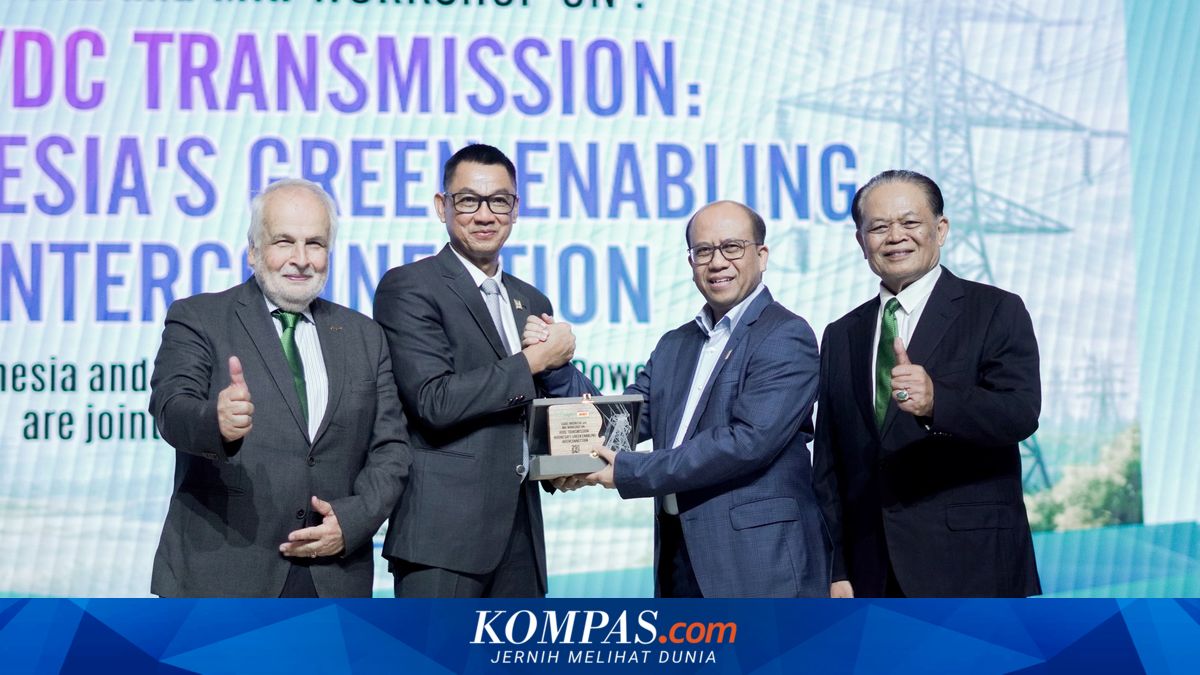
The issue of strengthening electricity interconnection has become a topic of discussion in a workshop themed “HVDC Transmission: Indonesia’s Green Enabling Interconnection”, organised by the Indonesian Electrical Power Society (MKI) together with CIGRE Indonesia.
This forum brings together industry players, regulators, and global partners to discuss the role of HVDC as the backbone of green electricity interconnection in Indonesia.
PLN President Director Darmawan Prasodjo stated that Indonesia needs a transmission network of up to around 48,000 kilometres to support the national energy transition strategy.
According to him, building this network requires cross-sector collaboration.
“With a spirit of togetherness, we can create a better energy future. We want to deliver more affordable energy, encourage greater investment, and accelerate national development,” Darmawan said in a written statement on Tuesday (21/4/2026).
One of the projects being prepared is the Sumatra-Java interconnection based on HVDC.
With a circuit length of around 112 kilometres, this project is expected to bridge supply imbalances between regions while strengthening the reliability of the national electricity system.
General Chairman of MKI, who also serves as Director of Project Management and New Renewable Energy at PLN, Suroso Isnandar, emphasised that inter-regional electricity interconnection is now an urgent need to support the energy transition. “This interconnection is no longer just talk, but a crucial need to support the energy transition and ensure the reliability of the national electricity system,” he said.
The government has also demonstrated its commitment through the allocation of fiscal support amounting to Rp 402.4 trillion in 2026 for the energy resilience sector.
On the other hand, investments in the electricity sector are projected to exceed $500 billion to pursue the energy transition targets.
With the increasing share of renewable energy in the national energy mix, the development of HVDC-based transmission networks is expected to become the backbone of Indonesia’s electricity system in the future, while ensuring more equitable and reliable electricity distribution.