
Bogor Regency to be National Pilot Project for Accelerated Tuberculosis Elimination
We are focusing on Bogor Regency as a pilot project so that this intervention can become a model for other regencies.
Bogor Regency (ANTARA) - The central government has designated Bogor Regency as a national pilot project to accelerate the elimination of tuberculosis (TB) through structured interventions and cross-sectoral collaboration in order to reduce the number of cases of the infectious disease.
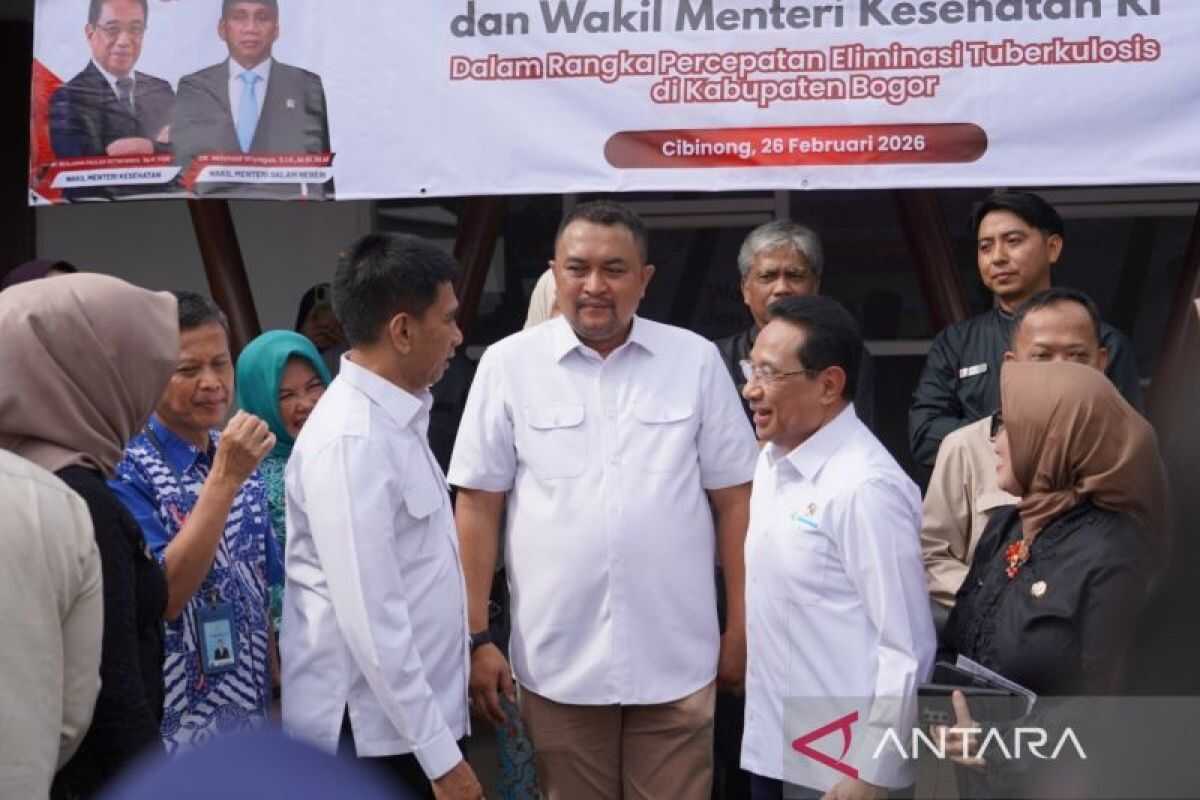
This designation was marked by a working visit by the Deputy Minister of Health of the Republic of Indonesia, Dr. Benyamin Paulus Octavianus, and the Deputy Minister of Home Affairs of the Republic of Indonesia, Police Commissioner General (Retired) Akhmad Wiyagus, in order to accelerate the handling of TB in Bogor Regency, Thursday, which took place at the Cimandala Health Center, Sukaraja, and the Multipurpose Building I of the Bogor Regency Secretariat.
The Regent of Bogor, Rudy Susmanto, reaffirmed the Bogor Regency Government’s commitment to accelerating the handling of TB through strengthening collaboration between the central and regional governments and optimising health services to the lowest level.
“The health centre has an important role in early detection, patient support, and ensuring compliance with TB treatment,” said Rudy while inspecting health services at the Cimandala Health Centre.
He explained that accelerating the handling of TB is part of his vision and mission together with the Vice Regent of Bogor, Ade Ruhandi, which is in line with the central government’s policy direction in strengthening health services and controlling infectious diseases.
“TB management cannot be done alone, but must be done through collaboration and synergy with all parties,” he said.
Meanwhile, the Regional Secretary of Bogor Regency, Ajat Rochmat Jatnika, emphasised the importance of cross-sectoral collaboration by involving health cadres in all villages and sub-districts and optimising the approximately 5,000 posyandu (integrated health service posts) spread throughout the Bogor Regency area.
He said that currently, 101 health centres, four regional general hospitals, central and vertical hospitals, and 25 private hospitals and clinics are actively serving TB patients. In addition, there are already 103 villages and sub-districts that have been established as TB-ready villages.
“The target is that by 2027, all villages and sub-districts in Bogor Regency will become TB-ready villages,” said Ajat.
“I hope that in the first semester of 2026, Bogor Regency will have TB-ready villages. The regional government’s governance has been running well, let’s work together to accelerate the completion of this TB,” said Akhmad.
Meanwhile, the Deputy Minister of Health, Dr. Benyamin Paulus Octavianus, expressed his appreciation to health workers in Bogor Regency and West Java for their efforts to accelerate the handling of TB through a collaborative, community-based approach.
He explained that the intervention strategies promoted by the central government include examining all family members of patients using X-rays, providing preventive medication, and using portable X-ray equipment with rapid results facilitated by the Ministry of Health.
Through this program, the government aims to reduce TB cases by at least 50 percent while strengthening early detection and patient support systems at the community level.
At the sub-district level, the Head of Cibinong Sub-district, Acep Sajidin, said that all 13 sub-districts in his area have been established as TB-ready sub-districts, which regularly coordinate with health centres to support the acceleration of the elimination of the disease.