
Bogor Population Nearly Reaches 6 Million in 2025 Net Population Data
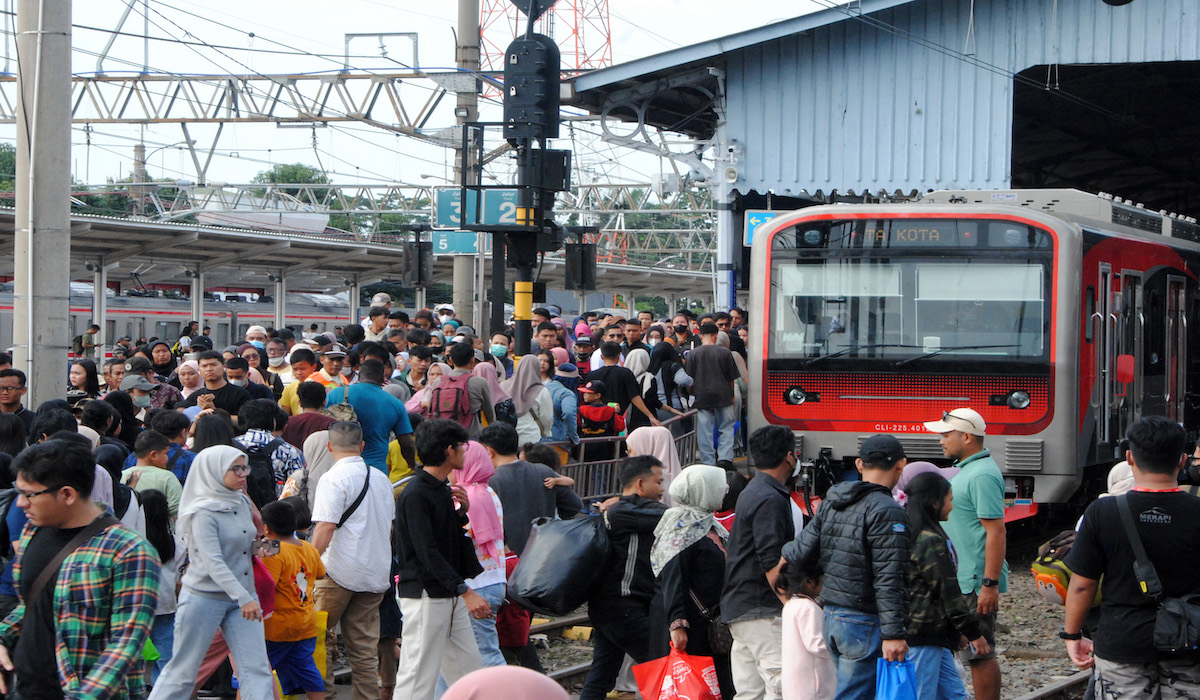
The Ministry of Home Affairs (Kemendagri), through the Directorate General of Population and Civil Registration (Ditjen Dukcapil), officially released the Net Population Data (DKB) for the second semester of 2025. The latest data emphasises the dominance of population density on Java Island, particularly in West Java Province.
Dirjen Dukcapil Teguh Setyabudi stated that the accuracy of population data is a fundamental foundation for development planning and the allocation of state budgets.
“Population data is the key to public services and the development of democracy. Although population density is uneven from Sabang to Merauke, everything is now integrated into a single national system,” said Teguh in a briefing in Jakarta on Thursday, 12 March.
The second semester 2025 DKB data revealed that the three provinces with the largest populations are West Java (52.2 million inhabitants), East Java (42.2 million inhabitants), and Central Java (38.6 million inhabitants). Meanwhile, the regions with the smallest populations are West Papua and South Papua, each with 588,000 inhabitants.
At the district/city level, Bogor Regency once again became the area with the largest population, approaching 6 million inhabitants.
The next positions were followed by Bandung Regency (3.9 million inhabitants) and Tangerang Regency (3.5 million inhabitants). In contrast, Supiori Regency in Papua has only 29,000 inhabitants.
Teguh revealed that the most dynamic population mobility occurred in buffer regions and industrial centres. Bogor Regency recorded the highest population mutation (133,000), followed by Bekasi Regency (104,000), and Bandung Regency (96,000).
Regarding birth rates, Dukcapil recorded a total of 5.8 million birth certificates issued nationally throughout 2025. West Java contributed the highest number of births at 438,000 individuals.
“A total of 23.4 per cent of birth certificates were issued within less than 30 days after the baby was born. The faster a birth certificate is issued, the faster the child’s civil rights are fulfilled by the state,” concluded Teguh.
The DKB was the result of a rigorous process of data cleansing and synchronisation to eliminate duplicate data or anomalies.
The high population density and urbanisation have increased the use of motor vehicles, which ultimately contributed to rising temperatures in Indonesia.