
Bogor City Government Announces Fate of Angkot Vehicles: Will They Be Phased Out? Here's the Answer
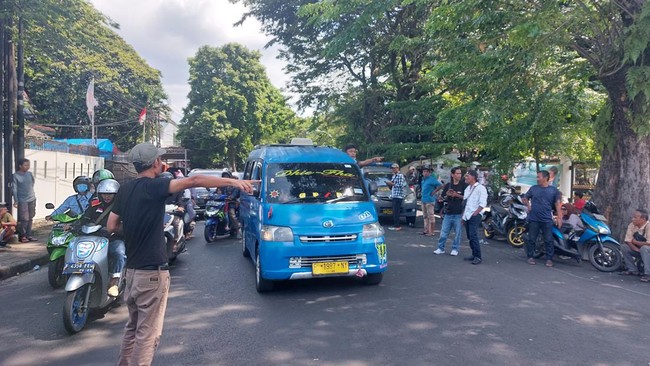
Jakarta, CNBC Indonesia - Bogor Mayor Dedie Abdu Rachim has revealed details regarding the future of angkot vehicles in Bogor City, where there had previously been discussions about eliminating them in the City of Rain.
Dedie stated that the city administration currently has no plans to remove the angkot vehicles in Bogor. However, there will be restrictions based on their age, meaning that if an angkot is sufficiently old, it will need to undergo renewal. The City Government (Pemkot) is also preparing the implementation of Bogor City Regional Regulation (Perda) No. 8 of 2023 on Transportation with Provisions for Age Limits in its Regulations.
“Regarding angkot, we will not eliminate them in the near future; they are still permitted to operate, but gradually, we will implement Perda No. 8 of 2023, namely restrictions on the age of angkot,” Dedie told CNBC Indonesia on Sunday (12/4/2026).
The administration will not rush or act hastily in implementing this Perda and will continue to listen to input from angkot drivers’ associations.
“We do not want to act hastily in issuing the Mayor’s Regulation (Perwali) for angkot renewal. So it’s better if we focus first; we will take technical steps in the field later, working together with the Bogor Police Resort and the Provincial Transport Agency, to ensure that this implementation is effective, without any heavy field dynamics,” Dedie continued.
The administration is also considering the fate of angkot drivers if this policy forces some to lose their jobs.
“This includes how we think about redirecting these drivers to other fields that are possible at this time, so they can continue working,” he said.
In addition to angkot, the administration will continue to optimise the BisKita Transpakuan service, which is currently operating on four corridors out of the six planned. He revealed that several prospective operators have shown interest in joining BisKita Transpakuan.
“Yesterday, several prospective operators expressed interest in joining BisKita Transpakuan. But as conveyed from the start, for this first phase, two corridors, namely corridors 3 and 4, are non-subsidised. So for non-subsidised ones, they indeed need to recalculate,” he explained.
He is optimistic that BisKita operations can expand further to cover Bogor City, which is divided into six corridors.
“So we are optimistic. Public transport should indeed become more modern: more on time, cheaper, and more reliable,” he clarified.