
BNPP Indonesia Strengthens Collaboration for Community Welfare in Maritime Border Areas
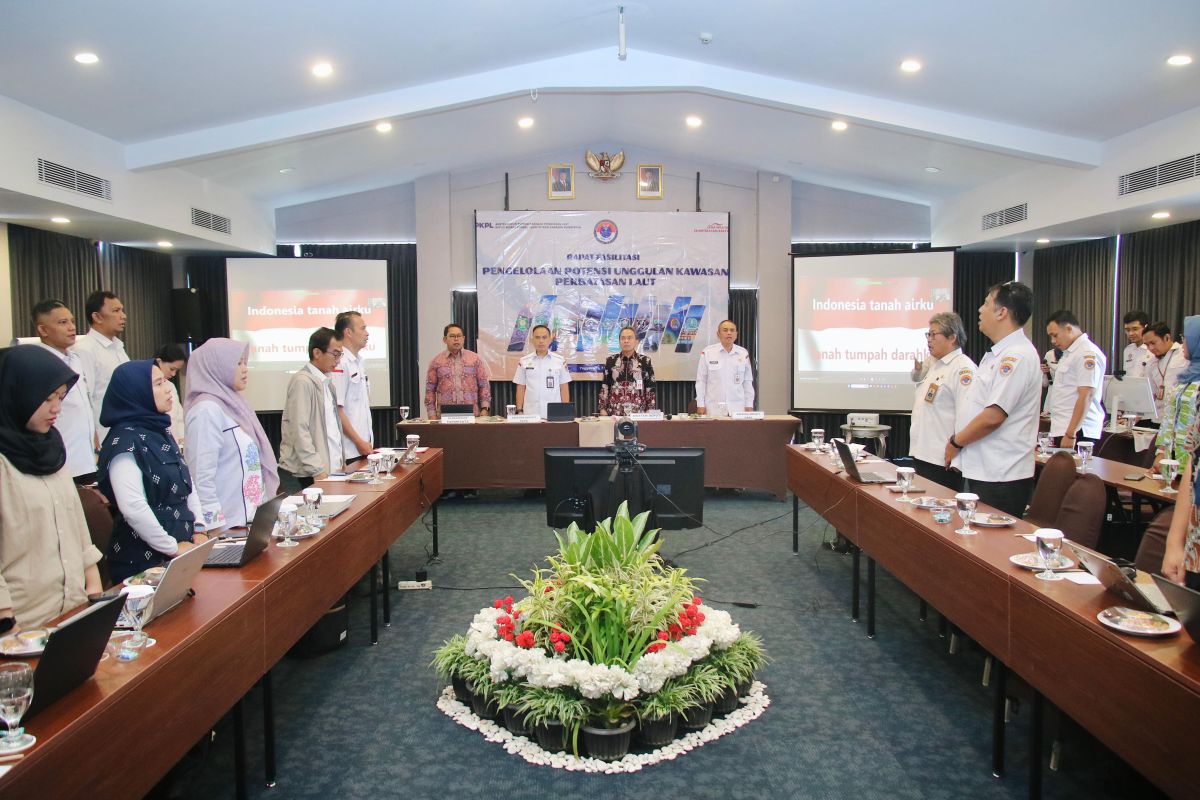
Jakarta (ANTARA) - Indonesia’s National Border Management Agency (BNPP) is committed to strengthening cross-sectoral collaboration to develop superior potentials in maritime border areas as part of efforts to enhance the welfare of coastal communities around maritime border zones.
This commitment was affirmed by Yedi Rahmat, Assistant Deputy for Maritime Border Area Management at BNPP Indonesia, during the Forum on Managing Superior Potentials in Maritime Border Areas.
“This forum is designed to facilitate the integrated development of superior potentials in maritime border areas. It is not just about marine resources and fisheries, but also about how these potentials can be managed collaboratively to directly impact the improvement of community welfare,” Yedi said in his statement in Jakarta on Thursday.
He explained that the forum serves as a strategic platform to synergise various stakeholders in optimising superior potentials in maritime border areas, both in the marine and fisheries sectors as well as other leading sectors.
Yedi emphasised that BNPP Indonesia plays a strategic role in ensuring that border area management aligns with the national development agenda. According to him, the optimisation of superior potentials in maritime border areas must be carried out through a cross-sectoral and cross-regional approach to ensure sustainable benefits.
The forum featured several speakers from ministries, agencies, and local governments who presented opportunities and challenges in developing superior potentials in maritime border areas.
From the tourism sector, Yusuf Hartanto, representative of the Borobudur Authority Executive Agency, stressed that marine tourism and border areas are one of the main focuses of the Ministry of Tourism’s priority programmes for 2025–2026.
“Quality tourism is a flagship programme of the Ministry of Tourism. One of its focuses is enhancing travel safety, both in marine and land areas, including border zones that have enormous potential,” said Yusuf.
He also highlighted the importance of improving human resource capacity through upskilling and reskilling programmes to support readiness and professionalism in managing tourist destinations.
Furthermore, the development of tourist villages and digital transformation in tourism through the Tourist 5.0 concept is considered essential. Yusuf revealed that the Ministry of Tourism has prepared various digital platforms, such as the National Tourism Information System (Sisparnas) and the Tourist Village Network (Jadesta), which can be utilised by border regions to expand tourism promotion and networking.
From a regional perspective, Yance, Head of the Nunukan Regional Tourism Promotion Agency (BPPD), outlined the marine tourism potentials in border areas, particularly on Sebatik Island.
He mentioned several destinations directly facing neighbouring countries, such as Batu Lamampu Beach and the Karang Unarang area, which have significant potential to be developed as niche tourism spots.
“Karang Unarang actually has strong fishing tourism potential. There are already fish aggregating devices there that also serve as security pillars. This can be developed into a tourist attraction, of course with solid infrastructure and planning support,” said Yance.
He also highlighted the need to develop natural potentials in the Krayan area, which to date have not been optimally utilised.
Meanwhile, Ismawan Harijono, Assistant Deputy for Spatial Planning of Border Areas at BNPP Indonesia, affirmed that tourism development in border areas cannot stand alone.
According to him, collaboration with various supporting activities, such as organising national and international events and exhibitions, is required.
“PLBN has great potential as a hub for activities. At Badau PLBN, for example, the potential of arowana fish can be developed into thematic tourism events that attract foreign tourists,” he stated.
From the trade perspective, a representative from the Ministry of Trade conveyed that strengthening the capacity of business actors in border areas can be facilitated through export-import training, both online and via special training centres. He also emphasised the importance of product certification, including sanitary, phytosanitary, and halal certificates, to encourage border SMEs to penetrate export markets.
In the marine and fisheries sector, Ilham, Chair of the Working Team for Managing Data and Fishery Service Information from the Directorate of Fishermen Protection and Empowerment, affirmed that the development of Red and White Fishermen Villages (KNMP) in border areas is a strategic step to drive fishermen’s welfare transformation.
He outlined significant achievements in the Samber Binyeri Red and White Fishermen Village, where fishermen’s incomes increased by up to 78 per cent, accompanied by surges in fish production and sales. “This increase is inseparable from infrastructure support such as ice factories and cold storage, which allow fishermen to stay at sea longer and maintain the quality of their catch,” explained Ilham.
According to him, the main challenges still faced include limitations in fishermen’s human resource capacity, access to capital, and supporting infrastructure.
Therefore, the KNMP programme requires strong synergy between central government, local government, business world, and communities, with BNPP Indonesia as a strategic partner in border area management.
Through this forum, BNPP Indonesia reaffirmed its commitment to continue strengthening coordination and cross-sectoral synergy in managing maritime border areas.
With a collaborative approach involving central government, local government, business, and communities, BNPP Indonesia is optimistic that superior potentials in maritime border areas can be optimised sustainably as engines of economic growth and enhancers of community welfare at the nation’s front door.