
BNPP Inaugurates Programme to Renovate 15,000 Uninhabitable Houses in 3T Areas
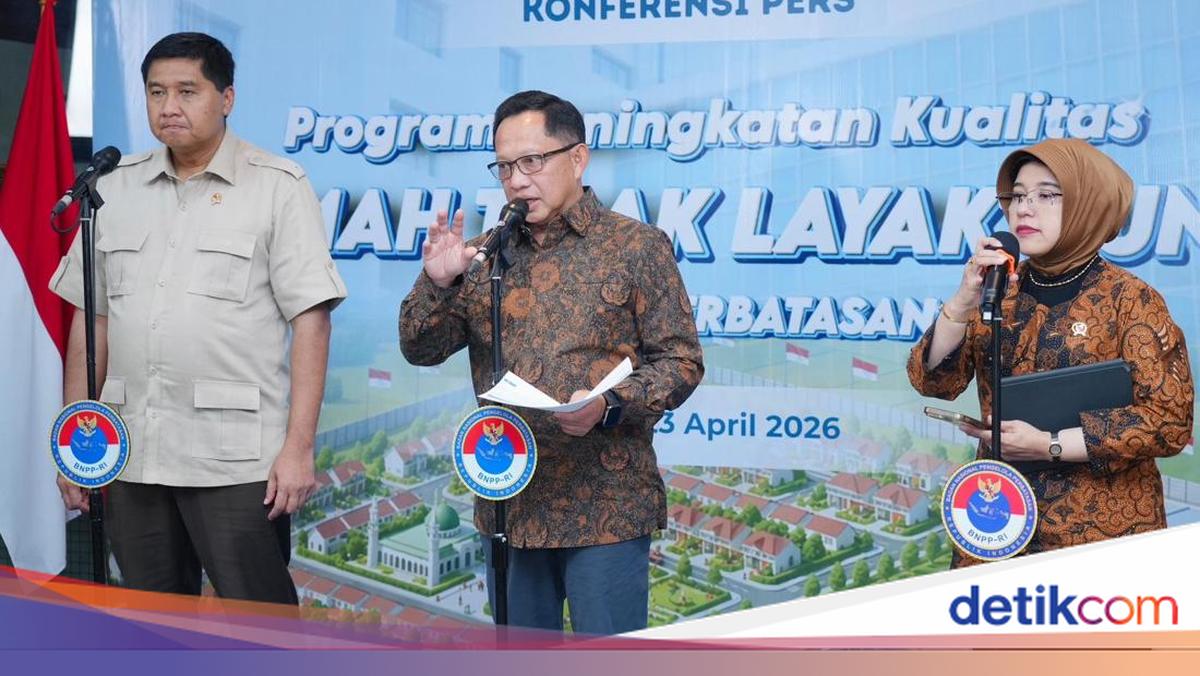
Head of the National Border Management Agency (BNPP) of Indonesia, Tito Karnavian, inaugurated the distribution of assistance for improving the quality of 15,000 Uninhabitable Houses (RTLH), or house renovations, in 3T (Lagging, Frontier, and Outermost) areas through the Self-Help Housing Stimulant Assistance (BSPS) scheme.
The inauguration was conducted alongside the Minister of Housing and Human Settlements (PKP) Maruarar Sirait and Head of the Central Statistics Agency (BPS) of Indonesia Amalia Adininggar Widyasanti.
Tito emphasised that the BSPS programme represents a concrete step by the state to deliver developmental justice to border communities. He noted that previously, few programmes had truly addressed the real needs of residents in border regions.
“One of BNPP’s tasks, and the government’s task, is to bring justice to border communities. It is also to improve the welfare of border communities so that they feel proud of the nation, proud of the government, and nationalism will grow stronger,” Tito stated in his remarks on Friday (24/4/2026).
Tito revealed that the BSPS programme in border areas was initially allocated for 10,000 houses out of the total 400,000 national programme units by the Ministry of PKP in 2026. However, following field visits to areas affected by flash floods in the Sitaro Islands, North Sulawesi, the number was increased to 15,000 units.
“There has been no programme since the old days to renovate houses in border areas. We have selected 40 strategic regencies and cities in the border areas, covering 17 provinces,” explained the Minister of Home Affairs.
On that occasion, Tito also appreciated the support from the President and the cross-ministerial and agency synergy. According to him, BPS’s involvement is crucial to ensure aid reaches the right targets.
Tito explained that the National Single Socio-Economic Data held by BPS will be used to verify and validate aid recipients on a by-name, by-address basis.
He hopes that the 15,000 RTLH house renovation programme will serve as a catalyst for other ministries and agencies to introduce thematic programmes in border areas, from people’s markets and docks to educational facilities. With cross-sectoral synergy and accurate data support, BNPP is optimistic that border development will become increasingly inclusive, just, and sustainable.
Meanwhile, Maruarar affirmed that renovating people’s houses is one of the national priorities in line with the President’s directives. She explained that the scope of the BSPS programme this year has increased significantly compared to the previous year.
“Last year, it was 45,000 houses across Indonesia. This year, 400,000 houses. The increase is extraordinary, from 45,000 to 400,000. Last year, 222 regencies and cities did not receive this programme, especially in border areas. This year, no one should be left out,” said Maruarar.
Maruarar added that the entire BSPS implementation will be 100% based on BPS data, with locations determined by the Head of BNPP Indonesia. In its execution, the programme involves technical advisors and empowerment advisors to ensure renovation quality meets each house’s needs.
“We are ready to work quickly. Within one to two months ahead, this programme will already be underway,” she stated.
On the same occasion, Amalia assessed the collaboration between BNPP Indonesia, the Ministry of PKP, and BPS as an important breakthrough in border area development. According to her, data-based policies are key to making government interventions more effective and on target.
“We have also provided data on housing unfitness backlogs for 40 regencies and cities in border areas. We have seen that the majority of border areas have very high rates. There is around 85% of uninhabitable houses in one of the border regencies,” Amalia explained.
In addition, BPS has provided village and urban classifications as well as criteria for coastal areas based on BPS Head Regulation Number 268 of 2025, which serves as an important reference in housing programme planning.