
BNPB warns of further landslide risk at Bantargebang waste treatment facility due to rain
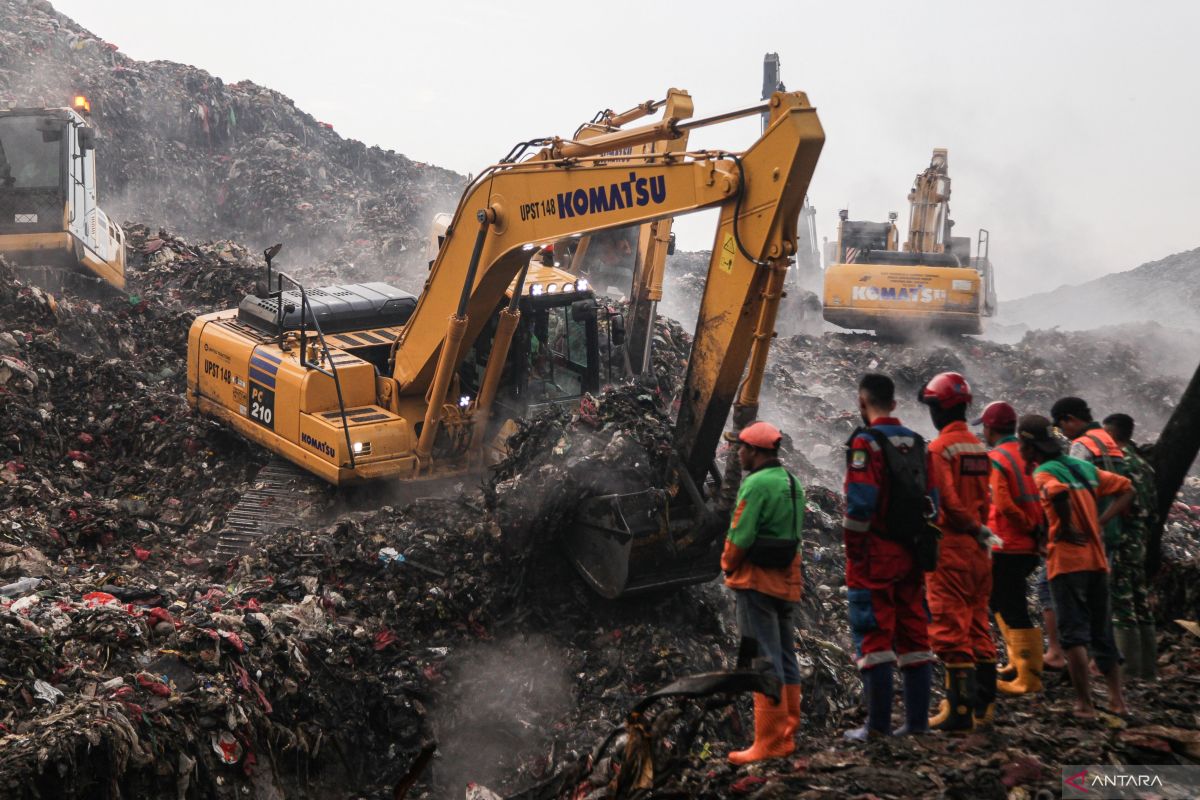
Jakarta — Indonesia’s National Disaster Management Agency (BNPB) has warned of the risk of further landslides at the Bantargebang Integrated Waste Treatment Facility (TPST) in Bekasi City, West Java, due to the high potential for rain over the coming days.
Abdul Muhari, Head of the BNPB’s Centre for Disaster Data, Information and Communications, stated in Jakarta on Monday that the Meteorological, Climatological and Geophysical Agency (BMKG) forecast indicates the potential for heavy rain across the Greater Jakarta region, including the incident location, over the next two days. This heightens the risk of further landslides as the stability of the waste mound at the location remains unstable.
“Field teams have been instructed to strictly implement safety protocols to prevent further loss of life,” he said.
A waste mountain landslide occurred in Zone 4 of Bantargebang TPST on Sunday, 8 March at approximately 14:30 local time. In addition to claiming lives, the landslide buried several waste trucks and makeshift commercial structures near the site.
Meanwhile, Desiana Kartika Bahari, Head of the Jakarta Search and Rescue Office, stated that the operation to locate victims continues to involve hundreds of combined search and rescue personnel. “On Monday at approximately 12:05 local time, one victim was discovered deceased and was immediately taken to the Polri Kramat Jati Hospital for identification,” she said.
Preliminary figures show 13 people have been affected, comprising four deceased, four survivors, and five others still missing. The identified deceased are Enda Widayanti (25), a stall owner; Sumine (60), a stall owner; Dedi Sutrisno, a truck driver from Karawang; and Irwan Supriatin, a truck driver.
The five victims still missing are Riki, Hardianto, Ato, Dofir, and one victim not yet identified.
The search and evacuation operation involves approximately 336 combined search and rescue personnel. Teams are opening access to the collapse site using heavy equipment such as excavators and deploying tracking dogs (K9) to detect the possible location of victims still buried under the material.