
BNPB: 36,000 Permanent Houses to be Built for Flood Victims in Sumatra
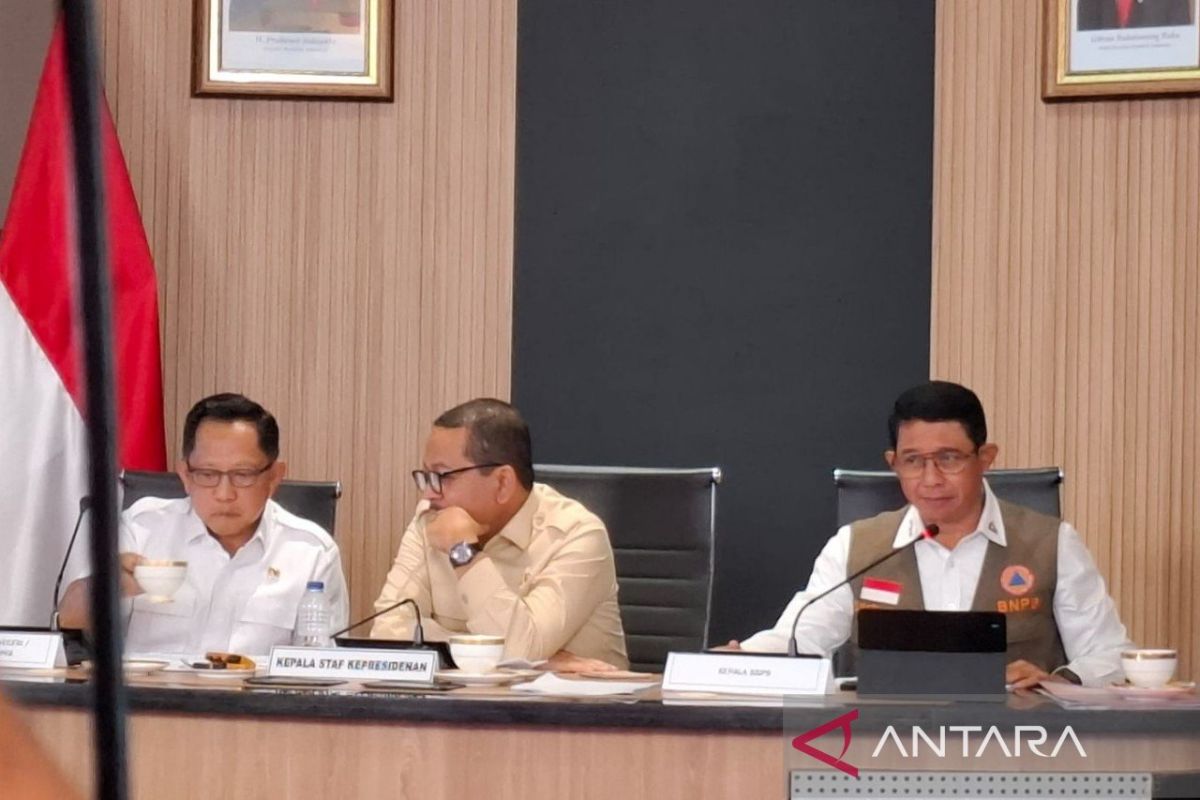
Jakarta (ANTARA) - Head of the National Disaster Management Agency (BNPB) Suharyanto stated that around 36,000 permanent housing units (huntap) are being built for communities affected by flooding in three provinces in Sumatra, as part of post-disaster recovery efforts.
“Indeed, in the construction of huntap, we have obtained several data points. Please display perhaps on that slide, around 36,000 huntap units are being built,” said Suharyanto during a press conference in Jakarta on Wednesday.
Suharyanto explained that the construction of huntap in the three provinces—Aceh, North Sumatra, and West Sumatra—is being carried out by BNPB, the Ministry of Public Housing and Human Settlements (PKP), and other parties such as the Tzu Chi Buddhist Foundation.
In its implementation, he said, BNPB’s huntap construction is divided into two schemes: directly built by BNPB or independently built by the community.
Communities can build their permanent housing independently with assistance worth Rp60 million per unit. The funds are disbursed in two stages: Rp30 million in the initial phase and the remainder in the subsequent phase.
BNPB also provides technical guidelines for independent house construction to ensure that the built housing meets habitability standards and can be safely used by survivors.
One of the provisions applied is the use of specific materials, such as reinforced concrete, to ensure building strength.
“So it’s not haphazard even if it’s built individually by affected community members,” he said.
Furthermore, Suharyanto noted differences in the construction index values between huntap built by BNPB and those built by the Ministry of PKP or other parties.
These differences are influenced by the construction concept, particularly for communities relocated to centralised locations compared to those remaining in their original sites.
“So I ask fellow media not to overemphasise this because, of course, for communities moved from their environment or village to a centralised location, at one point, mentally it’s different if they are built in their village or at that point. And this also applies throughout other regions in the Unitary Republic of Indonesia,” he said.
Suharyanto stated that communities are given the choice to occupy centralised housing or rebuild homes at their original locations, as long as the land is deemed safe from disaster risks.
“If they indeed want better, centralised housing, they can register with the district, and then the district will channel them to the huntap locations built by the Ministry of PKP,” said Suharyanto.
“But if they want to stay in their village and have land, and the designated land is safe from disasters, from flooding, not a red zone, then if BNPB builds it, we will build it, but if they want to build it themselves, that’s also allowed,” he added.
Suharyanto said this aid scheme is intended for communities that are fully dependent on government support.
Meanwhile, for communities with greater capacity, they are allowed to add funding to improve housing quality.
“If the community wants to add themselves, perhaps from their family or from the local government, from the Governor or Regent, wanting to add funds, that’s fine, so that the affected communities get better permanent housing,” he concluded.