
BNN and BPOM Heads Discuss Surge in New Psychoactive Substances, Including in Vapes
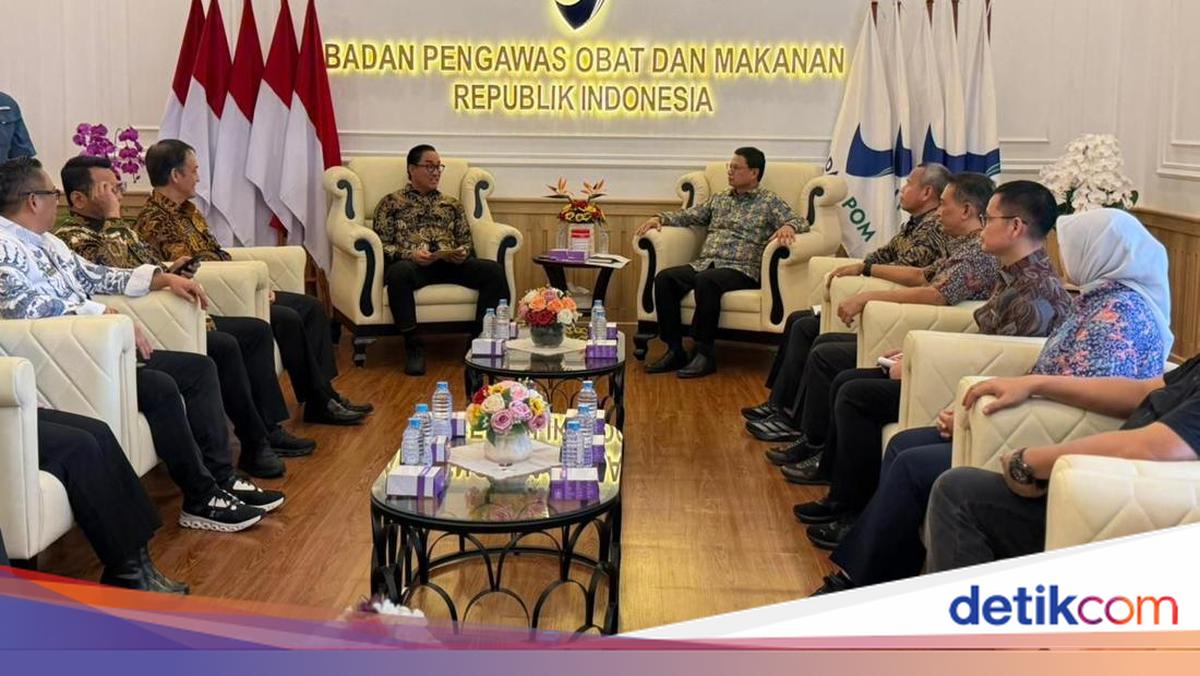
The National Narcotics Agency (BNN) cannot operate in isolation and absolutely requires close collaboration with various institutions, including the Food and Drug Supervisory Agency (BPOM), to counter the threat of narcotics crime,” emphasised Inspector General Suyudi during a meeting on Friday (10/4/2026) at the BPOM RI office on Jalan Percetakan Negara, Johar Baru, Central Jakarta. Inspector General Suyudi noted that a collaborative survey by BRIN, BPS, and BNN for the 2023-2025 period recorded a national prevalence rate of 2.11%. This equates to 4.1 million productive-age individuals currently exposed to narcotics. “Spotlighting the surge in New Psychoactive Substances (NPS), UNODC data as of 5 April 2026 records 1,448 types of NPS in 153 countries. Globally, 1,386 psychoactive substances have been identified, of which 175 types have entered Indonesia,” Suyudi explained. He then detailed that BNN’s Laboratory Centre has identified 100 types of NPS domestically, with 177 substances already regulated under law. However, he added, in-depth regulation is urgently needed for five substances without legal coverage: Ketamine, Kratom, AB-INACA, MDMB-5-METHYL-INACA, and Isopropoxate. “The massive modus operandi of infiltrating narcotics through e-cigarette liquids (vapes), where BNN’s Puslab found highly dangerous contents such as Synthetic Cannabinoid, Sabu, and even Etomidate,” Suyudi stated. He recounted the success of his team in uncovering a clandestine Russian syndicate network in Bali “that produced the narcotic Mephedrone,” he added. Inspector General Suyudi then appreciated BPOM’s swift response in halting the circulation of Dinitrogen Oxide (N2O gas) or laughing gas, popularly misused as ‘Baby Whip’ on online marketplaces. He expressed support for Professor Ikrar’s firm stance in criminalising violators of pharmaceutical quality standards, with maximum penalties of 12 years’ imprisonment or a Rp5 billion fine, to create a deterrent effect. “Appreciating the BPOM Head’s Circular No. HK.04.4.42.421.09.16.1740 of 2016 on prohibiting the use of Kratom in traditional medicines and supplements,” stated Inspector General Suyudi while touching on the dynamics of the Kratom plant (Mitragyna speciosa). Inspector General Suyudi explained that the circular was followed up with BNN Head’s Letter No. B/3985/X/KA/PL.02/2019/BNNn, classifying Kratom as a Schedule I Narcotic with a five-year transition period. Since that transition has expired, BNN initiated a Focus Group Discussion (FGD) on 29 November 2025 with BRIN, the Ministry of Health, academics, and BPOM for a comprehensive review. “BNN RI has officially revoked the 2019 BNN Head’s Letter, so the support for classifying Kratom as a Schedule I Narcotic no longer applies. It then issued a 2026 BNN Head’s Letter that fully supports the implementation of the National Risk Assessment and further scientific research with the Ministry of Health, BRIN, and BPOM, until Kratom’s active compounds can meet medicinal raw material standards,” clarified Inspector General Suyudi. In this audience, Professor Ikrar reaffirmed his commitment to discussing various strategic issues with BNN, prioritising public interest, safety, and health. He described this high-level meeting as a valuable momentum and essential initial step to build stronger national protection synergy between the two institutions. “Every collaborative step and future policy-making must always prioritise a scientific-based approach, where all actions are fully supported by data and empirical facts,” said Professor Ikrar. Professor Ikrar added that, besides regular drug oversight, his agency is also focusing on the potential misuse of ketamine. He appreciated the FGD held at the end of 2025 on this matter. “The highest appreciation for BNN RI’s initiative in organising the Focus Group Discussion (FGD), deemed highly constructive in dissecting various drug and prohibited substance vulnerability issues,” stated Professor Ikrar. In response to the vulnerabilities in Kratom circulation, Professor Ikrar said the Ministry of Health (Kemenkes) will take a strategic role to conduct in-depth research first. The aim is to determine its medical status and policy direction. “There is regulatory dynamics where vape licensing authority, previously held by BPOM, has shifted, so BPOM’s current authority is limited to restricting its advertising,” noted Professor Ikrar. “This advertising restriction authority for vapes must be maximised, as BPOM continues to receive a surge in reports and public concerns regarding vape circulation and negative impacts,” he added. On the discussed topics, Professor Ikrar warned about the emerging trend of misusing dinitrogen oxide (N2O), which should be strictly used as medical anaesthetic gas but is now detected to deviate and widely misused as ‘laughing gas’ for recreational purposes. “Indonesia’s geographical condition as an archipelagic nation creates so many vulnerability points and ‘rat routes’, making cross-agency surveillance collaboration an absolute requirement to close smuggling gaps,” said Professor Ikrar. He then outlined tactical cooperation plans encompassing operations to handle hard drug circulation, integrated intelligence operations, follow-up on precursor substance tracing, and massive anti-drug education dissemination via social media. He agreed to promptly update the Memorandum of Understanding (MoU) between BPOM and BNN RI to make the operational cooperation foundation more relevant and adaptive to modern crime challenges. “Instructing the technical teams from BPOM and BNN RI to immediately sit together to formulate and finalise the MoU update draft as soon as possible,” concluded Professor Ikrar.