
BNI Share Buyback Seen as Boosting Public Confidence
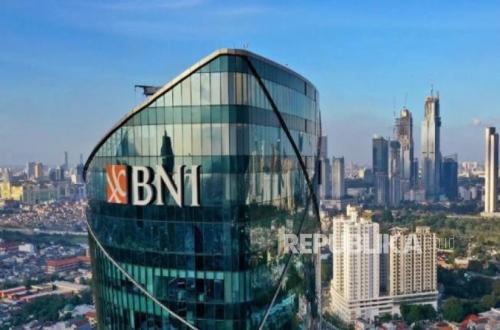
Jakarta – PT Bank Negara Indonesia (Persero) Tbk. is planning a share buyback, which is viewed as boosting public confidence in the national banking sector amid global economic uncertainty. The move is also seen as a signal that the state-owned bank’s fundamentals remain strong even as the stock market faces pressures. In an information disclosure, BNI prepared a maximum fund of Rp905.48 billion for the buyback. The funds will come from free cash flow in the form of retained earnings whose use has not been determined, with a transaction value not exceeding 10 percent of the company’s issued and paid-up capital.
“The plan will be submitted for approval at the Annual General Meeting of Shareholders (RUPST) on 9 March 2026. If approved, the buyback is expected to run for up to 12 months after the RUPS,” Corporate Secretary BNI Okki Rushartomo wrote in the information disclosure cited on Sunday (8/3/2026).
Okki explained that this step is considered because Indonesian bank shares faced pressure throughout 2025. Global uncertainty due to geopolitical risk and tariff war threats are among the factors affecting market sentiment.
Domestically, the banking industry also faces liquidity challenges and slower credit demand. By the end of 2025, BNI’s share price had risen only about 0.5 percent year-on-year.
Nevertheless, BNI said the company’s performance remains resilient. Capital adequacy is still strong, asset quality is maintained, and loan growth continues across various business segments.
Economist Syafruddin Karimi of Andalas University assessed that the buyback could provide a positive sentiment for the banking sector. He said the move sends a message to the market that management believes the current share price does not fully reflect the company’s fundamental strength.
“This message is important because big-bank shares are often a benchmark for investors to gauge the health of the financial sector. If the market sees BNI daring to buy back shares amid global pressure, it signals that the national banking industry is still strong,” Syafruddin said.
He noted the immediate effect of buybacks is usually a reduction in selling pressure in the market. Institutional investor confidence could also rise, potentially improving stock valuation.
In addition, the stability of large bank shares is also expected to support the movement of the Indonesia Stock Exchange’s (IHSG) Composite Index, given banks’ heavy weighting in the domestic stock market index.
“If large-bank shares are more stable, the IHSG will have a pillar. The market will see that Indonesia’s banking sector still has resilience,” he said.
According to Syafruddin, the buyback could also help maintain public confidence in the banking sector. Banks, he noted, essentially offer customers a sense of safety, so signals of stability become an important factor.
He added that the impact on public perception is not instant. However, if the move is supported by open communication and sound financial performance, public confidence in the banking sector can become stronger.
“Buybacks are not the only factor. But if done from a strong fundamental position, it can reinforce belief that the national banking sector remains solid amid market volatility,” Syafruddin said.