
BMKG: Peak of Total Lunar Eclipse on 3 March 2026 Occurs at 18:33 WIB, Viewable from Indonesia
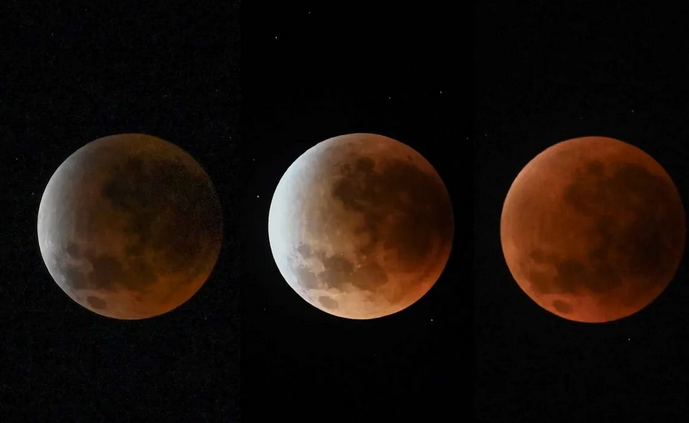
Indonesia’s Meteorological, Climatological and Geophysical Agency (BMKG) has confirmed that a total lunar eclipse (GBT) will occur on Tuesday, 3 March 2026, and can be observed from various regions across Indonesia. This rare astronomical event is projected to be one of the most remarkable celestial phenomena throughout 2026.
Nelly Florida Riama, Deputy Head of BMKG’s Geophysics Division, explained that a lunar eclipse is an astronomical event that occurs when the Sun, Earth and Moon align in a straight line, which only happens during the full moon phase. In this configuration, the Moon enters completely into Earth’s umbra or core shadow.
“This causes the Moon to enter fully into the core shadow (umbra) of the Earth. This phenomenon presents a beautiful sight; if the sky is clear, the Moon will appear reddish at the peak of the eclipse,” said Nelly in Jakarta on Monday, 2 March.
Based on BMKG data, the entire eclipse process will last 5 hours 41 minutes 51 seconds, from the initial phase until it ends completely. The partial or penumbral eclipse phase will last 3 hours 27 minutes 47 seconds, whilst the totality phase will last 59 minutes 27 seconds.
Fachri Radjab, Acting Director of BMKG’s Seismic Engineering, Potential Geophysics and Time Standards division, stated that the eclipse will begin to be observable at 18:03:56 WIB.
During the peak phase, the Moon is estimated to appear reddish due to the phenomenon of Rayleigh scattering in Earth’s atmosphere. Sunlight with short wavelengths such as blue is scattered in the atmosphere, whilst red light continues to pass through and reaches the Moon’s surface.
BMKG explained that eastern Indonesia will have better viewing opportunities because the eclipse’s initial phase coincides with moonrise. Meanwhile, in western Indonesia, the Moon will only become visible when the eclipse has entered the totality phase or is approaching its peak.
“This phenomenon will completely end at 21:24 WIB (or midnight in WIT zones) when the Moon exits Earth’s penumbra shadow. The public is urged to find observation locations with minimal light pollution and with clear sky views towards the direction of moonrise,” said Fachri.
Throughout 2026, globally there are expected to be four eclipse events, consisting of two Solar Eclipses and two Lunar Eclipses. However, only the Total Lunar Eclipse on 3 March 2026 can be directly witnessed from Indonesia.
Astronomically, this event is the 27th member of a total of 71 eclipses in the Saros 133 series. The previous eclipse in the same series occurred on 21 February 2008 and is projected to occur again on 13 March 2044.