
BMKG outlines efforts to tackle forest and land fires and floods in Sumatra ahead of the dry season
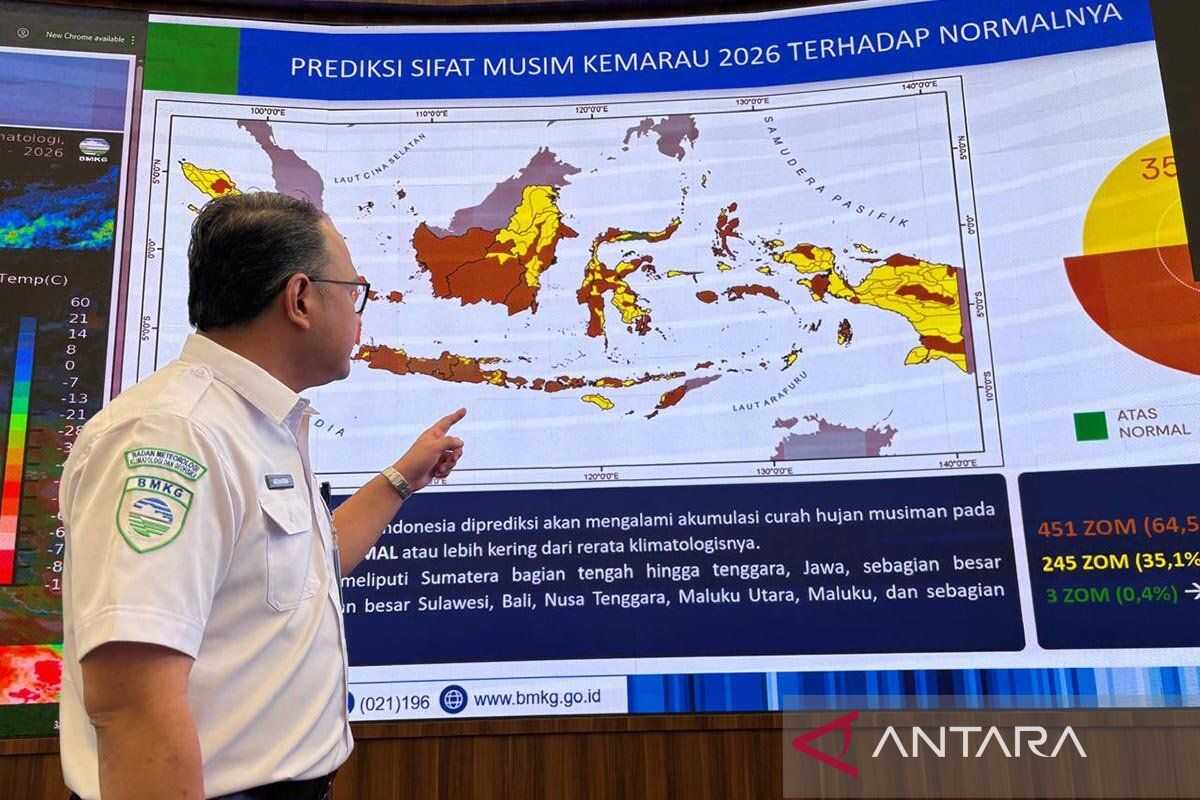
Jakarta — The Meteorology, Climatology, and Geophysics Agency (BMKG) continues to monitor conditions in disaster-affected areas in an effort to prevent forest and land fires (karhutla) and floods in several areas of Sumatra. BMKG head Teuku Faisal Fathani, at a press conference in Jakarta on Wednesday, explained that the Weather Modification Operation (OMC) is still being conducted in Riau and West Kalimantan (Kalbar) to prevent and assist in handling karhutla at several locations in those provinces. ‘Meanwhile to the north, in North Sumatra, we also need to conduct the OMC several times to reduce rainfall. For those in Riau, we are increasing rainfall to saturate the soil and to raise its moisture content so that the potential for karhutla is reduced,’ Faisal said. He said the OMC is being conducted in North Sumatra because several areas are still experiencing floods, including those recently hit by Tapanuli Tengah and Tapanuli Selatan. The government will soon hold a national coordination meeting to anticipate and mitigate potential karhutla ahead of the dry season. ‘That is when there are still clouds that can be seeded; we try to modify the weather so that when facing a longer dry season, the conditions are already wetter and more saturated,’ he said. BMKG predicts the start of the dry season in Indonesia will begin in April 2026, starting in Nusa Tenggara and gradually expanding to other regions. Not only that, Faisal warned that the duration of the dry season across much of Indonesia, in the 400 seasonal zones (ZOM), will be longer than normal. The peak dry season in August 2026 is expected to affect central and southern Sumatra, central Java to eastern Java, most of Kalimantan, Sulawesi, Bali and Nusa Tenggara, parts of Maluku, North Maluku and Papua. Meanwhile, BMKG forecasts that the September peak will affect parts of Lampung, parts of Java, most of NTT, northern and eastern Sulawesi, most of North Maluku, parts of Maluku and a small portion of Papua.