
BMKG: Exercise Caution Against Heavy Rainfall and Strong Winds Until 5 March
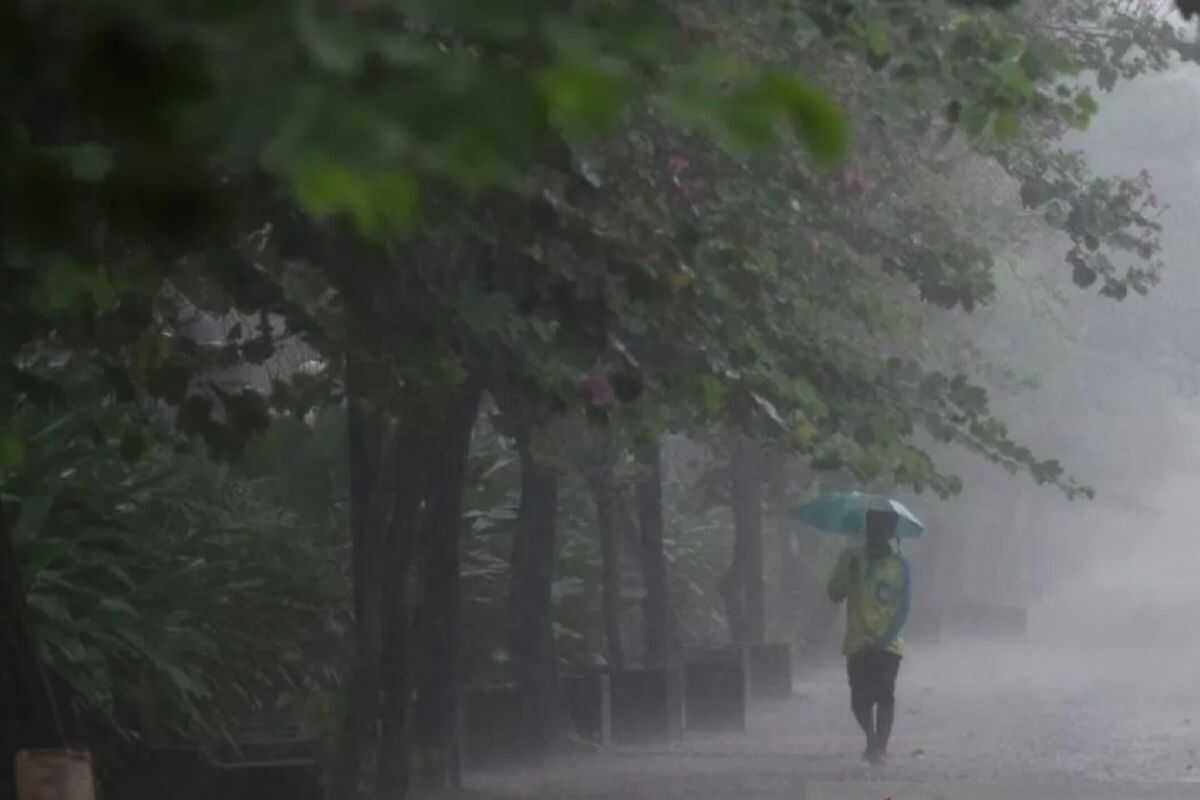
The Indonesian Meteorology, Climatology and Geophysics Agency (BMKG) has released weather forecasts for the coming week. The public is urged to increase caution against potential severe weather across various regions of Indonesia. These conditions represent a continuation of extreme to very heavy rainfall recorded during 23-26 February 2026.
BMKG recorded extreme rainfall in Bali reaching 216.9 millimetres per day. Additionally, very heavy rainfall was also detected in South Sulawesi at 146.5 millimetres per day. Meanwhile, in other regions, light to moderate rainfall continues to dominate with varying intensities.
“The increase in rainfall intensity is influenced by atmospheric dynamics supporting the development of rain clouds in various regions,” BMKG stated in an official statement on Saturday (28 February).
The meeting of monsoon winds from the north with westerly winds from the Indian Ocean in Indonesia’s southern regions has also contributed to these conditions. Activity of the Madden-Julian Oscillation (MJO) in phase 3 over the Indian Ocean has also been monitored as active in most Indonesian regions, particularly from the central to southern areas.
BMKG forecasts that atmospheric phenomena on global, regional and local scales will continue to have significant impacts on weather conditions in Indonesia in the coming days. On a global scale, weak-category La Niña remains detected through Southern Oscillation Index (SOI) and Niño 3.4 values with potential to increase rain cloud formation, particularly in eastern Indonesia.
Additionally, MJO activity is predicted to continue affecting Indonesian atmospheric conditions and is expected to remain in phases 3 to 4 (Maritime Continent). The combination of MJO, equatorial Rossby waves, Kelvin waves and low-frequency waves are forecast to be active in various regions, ranging from the Indian Ocean south-west of Lampung to south of East Nusa Tenggara, Java, Bali, West Nusa Tenggara, parts of Kalimantan, the Sulawesi Sea, most of Sulawesi, North Maluku, Maluku and Papua.
Cyclonic circulation has also been detected in the Indian Ocean south-west of Lampung and the Pacific Ocean north-east of Papua New Guinea forming convergence and confluence zones. These conditions can support rain cloud development around these regions.
For the period 27 February to 1 March 2026, weather across Indonesia is generally dominated by light to moderate rainfall. However, increased rainfall with moderate to heavy intensity is forecast in several regions, including Aceh, Jambi, South Sumatra, Bangka Belitung Islands, Bengkulu, Lampung, DKI Jakarta, West Kalimantan, Central Kalimantan, East Kalimantan, North Kalimantan, North Sulawesi, Gorontalo, Central Sulawesi, West Sulawesi, South-East Sulawesi, North Maluku and Papua regions.
BMKG has also declared heavy to very heavy rainfall alert status in Banten, West Java, Central Java, Special Region of Yogyakarta, East Java, Bali, West Nusa Tenggara, East Nusa Tenggara, South Sulawesi and Maluku. Additionally, strong winds are forecast to occur in Banten, DKI Jakarta, West Java, East Java, Bali, West Nusa Tenggara, East Nusa Tenggara, Central Sulawesi, South Sulawesi, South-East Sulawesi, Maluku, North Maluku and Papua.
Meanwhile, for the period 2-5 March 2026, light to moderate rainfall is expected to continue dominating most Indonesian regions. Increased rainfall with moderate to heavy intensity is forecast in Aceh, North Sumatra, West Sumatra, Riau, Jambi, South Sumatra, Bengkulu, Lampung, Banten, DKI Jakarta, West Java, Central Java, Special Region of Yogyakarta, Bali, West Nusa Tenggara, West Kalimantan, Central Kalimantan, East Kalimantan, North Kalimantan, South Kalimantan, North Sulawesi, Central Sulawesi, South-East Sulawesi, North Maluku, Maluku and Papua regions.
BMKG urges the public and stakeholders to increase vigilance against potential hydrometeorological disasters resulting from extreme weather, such as heavy rainfall accompanied by lightning or thunder and strong winds.
Weather conditions that can change at any time are expected to receive attention in activity planning, particularly land, sea and air travel, and various outdoor activities. Weather forecast information and extreme weather early warning alerts can be accessed regularly through BMKG’s official channels.