
Blue-Water TNI AL: Between Fleet Expansion and Deterrence Capability
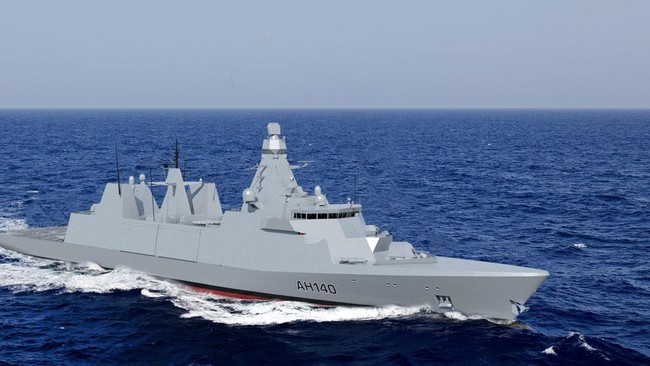
Indonesia’s modernisation of the TNI AL is increasingly viewed as a transition towards blue-water naval reach. However, this shift is not surprising but rather a strategic imperative.
Amid rising global uncertainty and intensifying maritime competition, it is natural for Indonesia to adopt a more outward-looking orientation. This transition reflects a gradual evolution from a coastal defence-focused posture towards one capable of maintaining presence, projecting influence, and selectively exercising sea control beyond territorial waters.
On the surface, this shift is most evident in plans for new platform acquisitions. Several media outlets have reported that the Garibaldi aircraft carrier is scheduled to be received by the TNI AL before the Armed Forces Day commemoration in October this year. The arrival of this vessel is regarded as a leap in Indonesia’s ability to project power across various regions.
Beyond its symbolic value as a marker of status and strategic ambition, the aircraft carrier can also open space for developing carrier-based naval aviation—should Indonesia consistently pursue this over the next 15 to 20 years—and expand capacity in humanitarian assistance and disaster relief operations.
In parallel, the acquisition of surface vessels and submarines is also accelerating. Indonesia has acquired two multipurpose offshore patrol vessels (PPA) from Italy, namely KRI Brawijaya and KRI Prabu Siliwangi. The Red-and-White Frigate Programme—which adopts the Arrowhead 140 design—recorded significant progress last year with the launch of its first unit.
Beneath the waves, the TNI AL awaits the construction of the first Scorpene Evolved submarine, a platform projected to significantly enhance underwater deterrence capability. Meanwhile, the acquisition of smaller-sized vessels continues.
The Raja Haji Fisabilillah-class offshore patrol vessels and several fast missile craft (KCR) continue to be produced by domestic shipyards. Overall, the presence of these various platforms not only strengthens coastal defence but also contributes to the formation of a layered, adaptive, and more resilient maritime power structure.
However, achieving credible and deterrent blue-water reach capability does not depend solely on increasing ship numbers. This view was also expressed by the Chief of Staff of the Navy (KSAL), Muhammad Ali, on 11 February.
He stated that in 2026, the TNI AL will prioritise the acquisition of high-capability platforms, particularly frigates and submarines. This choice of terminology suggests that the TNI AL’s orientation does not end at tonnage or quantity but rather on the qualitative superiority of each platform.
Although not elaborated in detail what is meant by “high-capability”, basic principles of naval warfare have long emphasised that quality—in terms of sensors, weapons, system integration, and combat readiness—far outweighs mere symbolism or prestige.
Conceptually, high-capability assets rest on a combination of mission flexibility, system maturity, survivability, and easy integration with broader force structures and units. Collectively, these elements create higher levels of performance whilst delivering decisive operational effects.
This quality is reflected in a vessel’s range and deployment flexibility, integration of its sensor and weapons systems, and resilience of its command, control, communications, and computer (C4) architecture. In an era marked by electromagnetic spectrum contestation, cyber disruption, and asymmetric threats, system resilience and redundancy often become determining factors in whether a platform can maintain its functions when under combat pressure.
Within the context of the TNI AL’s blue-water reach capability, the concept of operations (CONOPS) for high-capability platforms is positioned as part of the Escort Vessel Unit (Satkorta) or incorporated into Naval Task Groups (Guspurla), particularly in the Surface Action Group (SAG) format tasked with conducting area defence.
In many navies, this role is typically undertaken by upper-tier surface combatants with high capability, particularly those specialising in anti-submarine warfare (ASW) and anti-air warfare (AAW). These vessels are generally fewer in number but serve as the protective core of formations, building layered defence against underwater, air, and missile threats.
Essentially, these platforms act as a protective “umbrella”—creating a protective bubble that enables other vessels, including amphibious ships, logistics support vessels, and aircraft carriers, to operate with higher survivability and operational manoeuvrability, even when deployed far from national waters.
Such an operational concept becomes increasingly essential as threats evolve and become more complex and lethal. The development and proliferation of high-speed, long-range precision munitions, drones, and electronic warfare capabilities have fundamentally transformed the character of maritime conflict.
The crisis in the Red Sea, for example, underscores the urgency of robust anti-air warfare capability. The proliferation of long-range drones, anti-ship missiles, and asymmetric air threats demonstrate that maritime security is now inseparable from layered air defence systems.
In this context, AAW assets play a determining role—not only to protect sea lines of communication (SLOC) but also to ensure the survivability of other naval units, including aircraft carriers. Indonesia itself possesses