
Blue Food and Strong Fishermen, Indonesia Sovereign
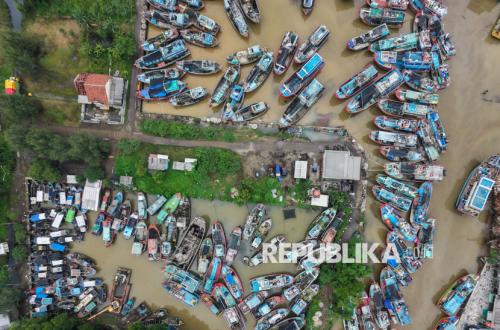
Fishermen’s Day is not just an annual routine, but an important and sacred day for fishermen who await state policies reaching their fishing nets and the plates of their children’s meals at home. Fish is gold for fishermen every day, working from the dark of night until the sun rises. The result? The east season is abundant, and the west season is scarce in fish. That is the annual cycle that continues to repeat until now. Are fishermen prosperous yet? How has the fate of fishermen been over the past five years? Can the red-and-white Fishermen’s Cooperative answer the basic problems of fishermen today? Strong Fishermen It is somewhat heavy to say that fishermen are prosperous? Let us look at the facts through the numbers of the Fishermen’s Exchange Rate, which is now a national measure. The NTN describes the ratio between the price index received by fishermen (from catches) and the price index paid (for consumption and production), which serves as an indicator of welfare level. Data for 2020 (98.69), 2021 (104.69), 2022 (106.45), 2023 (105.40), 2024 (101.62), and 2025 (103.86). These numbers are not just about data and the interpretations behind them; these numbers show the achievements and hard sweat of all stakeholders, measured every month. Are these numbers welfare or poverty? Seeing numbers above 100 means fishermen are experiencing a surplus, or simply put, the value of catches is still more than their capital. Indeed, we cannot claim prosperity, but the fact that our fishermen are strong and able to survive in conditions like now is undeniable. Over these five years, fishermen have been in surplus; during the early corona in 2020, it dipped temporarily, as everyone experienced. For more than 20 years immersed and accompanying fishermen, I understand well that small fishermen are able to compete with all their shortcomings: capital, skills, and even fish prices that are often unfriendly. Without fishermen, there would be no fish reaching our tables with number one quality; what there would be is imported fish that has died three times before reaching our dinner plates. The strength of fishermen can be interpreted in two ways. First, they have succeeded and are proud to be fishermen up to the level where their children pursue higher education and graduate as bachelor’s degree holders. Indeed, it is still small, around 1-2% from fishermen’s families who are graduates. That means out of 3.2 million fishermen, only 64,000 are graduates. The average education of fishermen’s graduates is nearly 80% primary to junior high school level. I call this fishermen being prosperous; the measure is simple and directly visible. Graduates in fishermen’s households are rare, but the trend is continuously increasing. Proof that fishermen are advancing in thinking and economy. Second, fishermen are strong, able to keep surviving in the uncertainty of catches, fish prices, and mastery of technology. It is tough, but they succeed; in fact, their productivity continues to increase. Small fishermen’s fish catches for the 2025 period are lifted at 7.5 million tonnes, up around 14% from 2024 which was around 6 million tonnes. Even global fish production is nearly 90% produced by small fishermen. These numbers once again prove that fishermen can be prosperous. The measure of fishermen’s welfare index is time to be changed; it should no longer just rely on the exchange rate with two main components: output and expenditure. Factors such as assets, skills, catches, working capital, and market conditions should also become comprehensive measuring tools to gauge the meaning of welfare. The welfare index can be measured with score changes from 1 to 10 to facilitate categorisation.