
Blue Economy: Indonesia's New Growth Engine
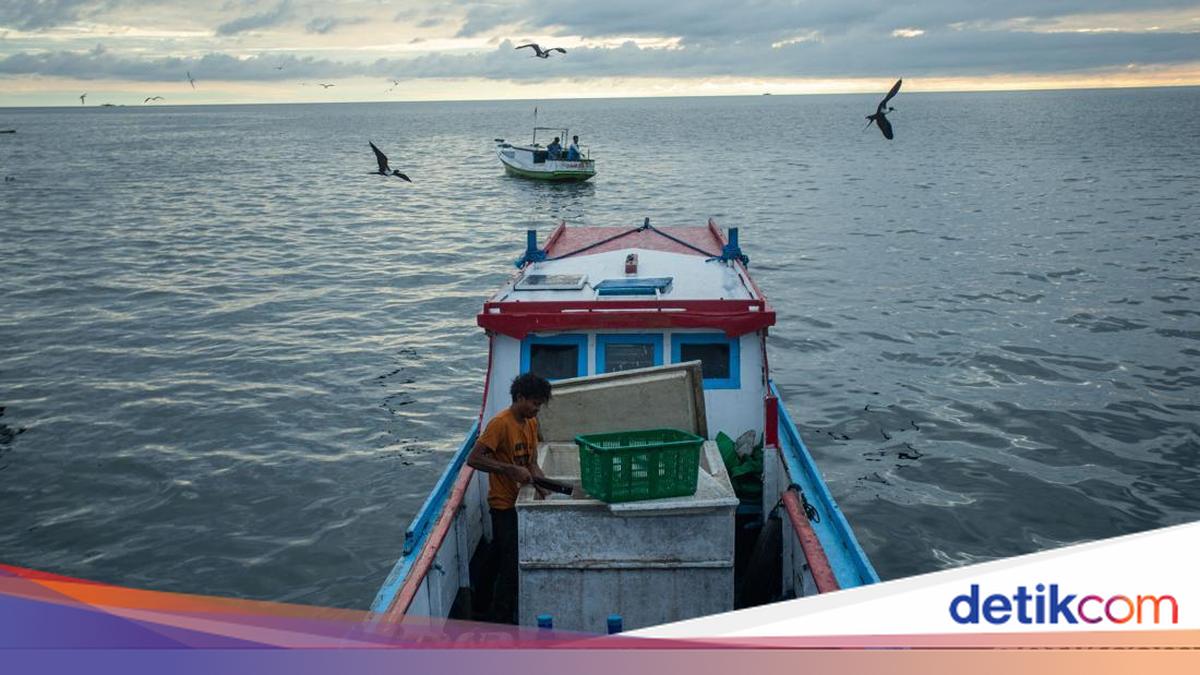
Indonesia is a maritime country, yet it has not fully become a maritime economy. Amid abundant marine resources, the contribution of this sector to public welfare still does not reflect its potential.
Data from the Ministry of Marine Affairs and Fisheries shows that Indonesia’s fisheries production has reached more than 20 million tonnes per year, making it one of the largest in the world. However, this large production has not fully translated into improved welfare for fishermen.
For years, the sea has been positioned more as a space for exploitation. Fish are caught as much as possible, marine products are exported in raw or semi-processed forms, and this cycle continues. This approach may yield short-term benefits, but in the long term, it leaves various problems, from declining fish stocks to value-added imbalances that do not favour fishermen.
Yet, amid the dynamics of the global economy that increasingly demand sustainability, such an approach is becoming less relevant. The world is shifting. Natural resources are no longer valued by how much can be exploited, but by how intelligently they are managed to generate sustainable value.
The blue economy concept emerges in this context of change. However, the blue economy is often misunderstood as merely an environmental agenda. In fact, its essence is much broader. The blue economy is a development strategy that integrates economic growth, ecological sustainability, and social welfare within a mutually reinforcing framework.
From this perspective, the sea is no longer just a production space, but a long-term economic asset. This means that maintaining the health of marine ecosystems is not a burden, but an investment. The Food and Agriculture Organization (FAO) notes that more than 90 percent of the world’s fish stocks have been maximally or over-exploited. This serves as a warning that without proper management, marine resources could face serious pressure.
Experiences in various countries show that this approach is not merely a normative concept. In regional interactions through ASEAN, it is evident that countries in the region are beginning to adopt more measured, data-based, and sustainability-oriented fisheries management policies. This not only impacts resource conservation but also enhances economic competitiveness.
On the other hand, the productivity-based approach developed by the Asian Productivity Organization demonstrates that efficiency and sustainability are not mutually exclusive. On the contrary, sustainability often becomes a prerequisite for long-term efficiency. Resources managed well will produce more stable and predictable outputs.
Indonesia has actually shown a direction aligned with blue economy principles. The marine and fisheries sector contributes around 2.6 percent to the national Gross Domestic Product, a figure that indicates great potential but can still be improved. More measured fisheries management policies, efforts to control fish catching, and encouragement of more sustainable practices reflect a paradigm shift. This approach is important not only for preserving marine ecosystems but also for ensuring that economic benefits can be felt more equitably.
Nevertheless, implementation challenges cannot be ignored. The blue economy requires more than just policies on paper. It demands consistency in execution, strengthened governance, and effective cross-sector coordination. In addition, the involvement of business actors and coastal communities is a key factor in ensuring that this transformation truly takes place.
Another equally important aspect is the change in mindset. So far, sustainability has often been viewed as a constraint on growth. However, in the context of the blue economy, sustainability is actually the foundation of that growth itself. Without sustainability, economic growth in the marine sector will be temporary and vulnerable to crises.
In this context, the blue economy can become one of Indonesia’s new growth engines. With its vast marine resource potential, strategic geographical position, and a continuously growing global market, Indonesia has the opportunity to become a major player in the world’s maritime economy. However, this opportunity can only be utilised if managed with the right approach.
Looking ahead, what is needed is not just increased production, but improved management quality. Not just expansion, but also efficiency. And not just economic growth, but inclusive and sustainable growth.
In the end, the blue economy is not a choice, but a necessity. Amid pressures on natural resources and increasingly complex global market demands, this approach becomes a middle path that can bridge economic interests and sustainability. The question is no longer whether Indonesia needs to adopt the blue economy, but how quickly and consistently we can implement it.