
Bloody Demonstrations Shake Pakistan Following Ali Khamenei's Death, 20 Killed
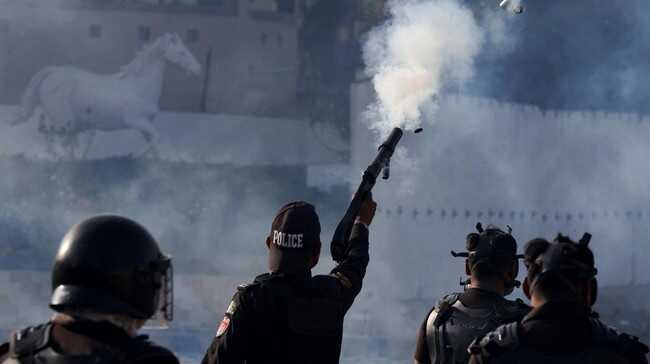
A wave of anger swept through several major cities across Pakistan on Sunday, 1 February 2026, one day after the United States and Israel confirmed the death of Iran’s Supreme Leader, Ayatollah Ali Khamenei, in a coordinated airstrike in Tehran. The widespread unrest resulted in at least 20 deaths and dozens of injuries across various regions of the country.
Deaths were reported scattered across several cities. Ten people died in Karachi, at least eight people were killed in Skardu, in the Gilgit-Baltistan region, and two people in the capital Islamabad.
The protest actions, largely led by Pakistan’s Shiite Muslim community, escalated into clashes when security forces fired tear gas and rubber bullets to disperse crowds.
Pakistan, with a population exceeding 250 million people, has a Sunni Muslim majority. However, the Shiite community comprises more than 20% of the population and is scattered across various regions.
In Islamabad, thousands gathered near the Red Zone, a highly restricted area housing parliament, government offices, and several major foreign embassies. Crowds chanted slogans such as “Those who side with America are traitors” and called for “revenge against Israel”.
Between 5,000 and 8,000 people, including women and children, gathered near one of the capital’s largest hotels whilst carrying posters bearing Khamenei’s image.
The Pakistani government had previously condemned the combined US-Israeli military attack that killed Khamenei, whilst also criticising Iran’s retaliatory attacks against Gulf states.
During the action, some participants called for crowds to move towards the diplomatic zone, whilst others urged maintaining “discipline”.
Ali Nawab, an activist from the Shiite political party Majlis Wahdat-e-Muslimeen, stated that organisers had reached an agreement with local authorities to keep the action peaceful.
“There are some people you can see here who deliberately try to make provocative moves and cause us to do things we shouldn’t. We are here for a purpose, and we will move forward when ordered to do so,” he said, according to Al Jazeera.
Authorities blocked access to the Red Zone, which also houses the US Embassy and other diplomatic missions. When crowds attempted to breach it, police fired tear gas and rubber bullets. Several witnesses reported hearing the sound of live gunfire.
As crowds retreated, tear gas was fired again, causing several people to be injured. Al Jazeera reported seeing several victims struck by rubber bullet shrapnel.
Doctors at Islamabad’s Government Poly Clinic Hospital stated they had received at least two bodies and were treating at least 35 injured people.
Mouwaddid Hussain, 52, said the government had betrayed them. “Are we enemies of the state? We are here to mourn the death of our leader, and we cannot even mourn here? They promised they would allow us to be here and demonstrate, but they broke their promise,” he said.
Karachi Erupts, 10 People Killed
The deadliest violence occurred in Karachi, Pakistan’s largest city. Hundreds gathered outside the US Embassy and Consulate on Mai Kolachi Road.
Several youths climbed the outer gate of the consulate, entered the grounds, and smashed windows of the main building. Crowds were eventually dispersed with tear gas and gunfire. It remains unclear whether the gunfire came from security forces on duty.
At least 10 people died and 60 others were injured in the clashes, according to a statement by Police Surgeon Summaiya Syed.
The Chief Minister of Sindh Province, Murad Ali Shah, described the incident as “extremely tragic” and ordered an independent investigation.
“At a time when the nation is facing a war-like situation, acts of sabotage against peace and order are inappropriate,” he said, whilst expressing solidarity with Iran and its people.
The US Embassy in Islamabad stated in a brief statement on the X platform that it was monitoring reports of demonstrations at US facilities in Karachi, Lahore, and Islamabad. US citizens were advised to avoid crowds.
Violence against US facilities is not without precedent. In November 1979, crowds stormed and set fire to the US Embassy in Islamabad, killing two Americans and two Pakistani staff.
The incident occurred several days after Iran’s Islamic Revolution leader, Ayatollah Ruhollah Khomeini, broadcast claims, later proven false, that the US and Israel were behind the seizure of the Grand Mosque in Mecca. The rumour spread rapidly and triggered mob violence.
Violence in Northern Regions
In Gilgit-Baltistan, a mountainous region in the north with a significant Shiite population, the situation also deteriorated. At least eight people died in Skardu after crowds burned the office of the United Nations Military Observer Group in India and Pakistan. Several other buildings, including a school, were also damaged.
Authorities imposed a three-day curfew in Skardu and stated the situation remained tense.
In Lahore, hundreds gathered outside the US Embassy. Some attempted to breach it before being dispersed with tear gas. There were no reported deaths in the city.
Protests also took place in Peshawar, Multan, and Faisalabad, with crowds condemning the US and Israel and mourning Khamenei’s death.
Calls for Restraint
Interior Minister Mohsin Naqvi visited Islamabad’s security sites on Sunday and ordered additional troops around the diplomatic zone.
“Following Ayatollah Khamenei’s martyrdom, every Pakistani citizen feels sadness just as Iranian citizens mourn,” he said.
“We are all with you. We urge citizens not to take justice into their own hands and to protest peacefully,” he added.
Prime Minister Shehbaz Sharif subsequently expressed condolences over Khamenei’s death.