
Blok M's Ups and Downs: Dutch-Designed, Dormant and Revived
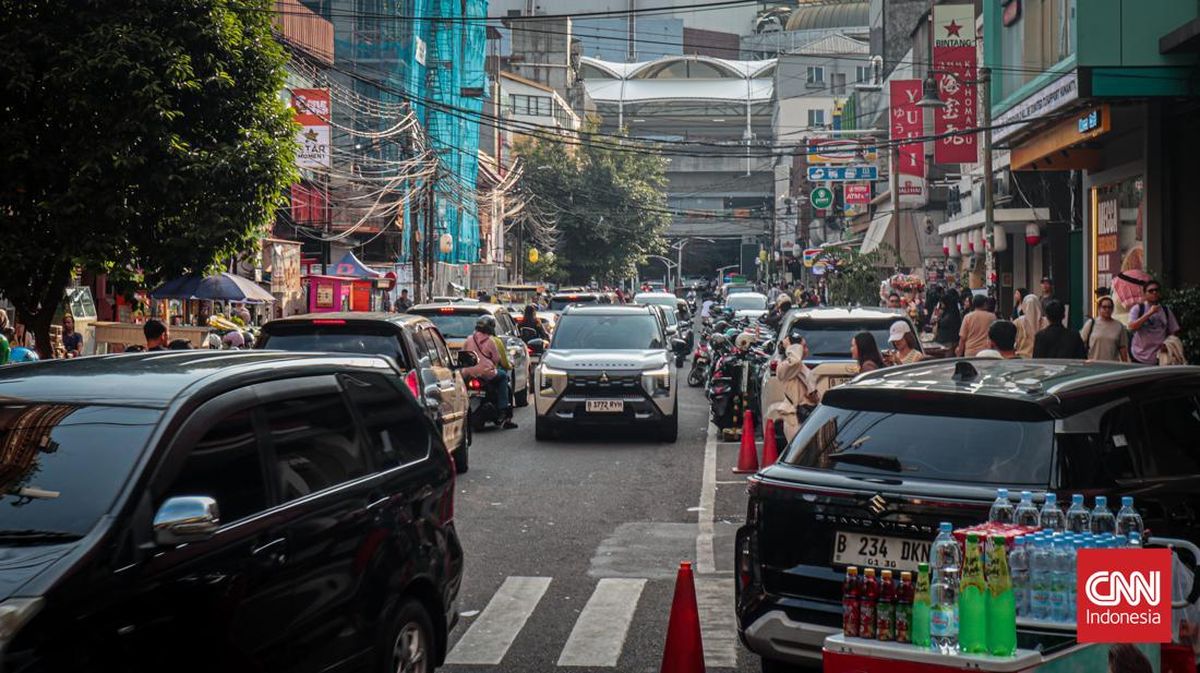
Blok M in Kebayoran Baru, South Jakarta, is renowned as one of Jakarta’s key shopping, dining, and social hubs. The area was once a hotspot for Jakarta’s youth, particularly from the 1980s to the early 2000s.
However, its popularity has not always been smooth. Blok M experienced periods of decline, with its shopping centres and underground terminals losing their appeal and appearing dormant.
Now, the urban cycle has turned once more. Blok M in South Jakarta has seen increased visitor mobility, with the operation of the Mass Rapid Transit (MRT) and the emergence of public spaces like Martha Christina Tiahahu Literary Park and M Bloc Space revitalising the area, making it a bustling gathering spot, especially for younger generations.
History of development
The bustling nature and function of Blok M as a mobility hub has a long history. The development of Blok M began in the 1940s during Dutch colonial rule.
At that time, the Gambir area was considered too crowded, with the government centre and the Presidential Palace located there.
As a solution, the colonial government designed a new satellite city in Kebayoran. The housing concept mirrored the garden city layout of the elite Menteng area, divided into alphabetical blocks from A to S. Blok M was designated as the city’s central area.
This urban planning concept continued post-independence. Historian Andi Achdian explained that after sovereignty recognition in 1949, the Republic of Indonesia continued the plan to build a satellite city in Kebayoran with an integrated design.
Andi stated that under the execution of architect Mohammad Soesilo, Kebayoran was designed with a modern concept.
“The history primarily began in 1949 with sovereignty recognition. There was a major plan at the time to establish Jakarta as the capital and build a new satellite city in Kebayoran,” Andi said.
According to Andi, the architect appointed was Dutch, while the executor was Indonesian, Mohammad Soesilo.
“He was given responsibility to develop the area. Thus, Kebayoran at that time was built with modern integrated housing models,” Andi said.
The integrated system designed for Kebayoran included residential areas equipped with transportation systems, commercial zones, and business districts (offices).
“This was a modern design applied in the formation of a satellite city from the early days of the Republic of Indonesia,” Andi said.
Andi also noted that Blok M was intentionally designed to stand out from other blocks. It was planned as a comprehensive hub.
“It was designed from the start as the hub, a node connecting other areas. Blok M became a transport transit centre for Jakarta at the time, so its development was distinct from blocks like K and G, which became residential areas,” Andi said.
Shopping hub, “Little Tokyo”, and Melawai Cross
Entering the 1970s and 1980s, Kebayoran Baru experienced rapid growth alongside the emergence of a new middle class due to economic expansion. This directly transformed Blok M into a commercial and entertainment hub.
“Initially, the Kebayoran settlements were intended for Indonesian officials, including high-ranking ones. They were Indonesia’s new middle class, benefiting from the economic prosperity of the 70s and 80s,” Andi said.
“This led to a new lifestyle that provided leisure spaces for the middle-class youth,” he added.
The area’s rapid development was also driven by the Blok M Bus Terminal and the proliferation of modern shopping centres. Melawai Road earned the nickname “Little Tokyo” due to the numerous Japanese restaurants in the area.
Melawai was popular among Japanese expatriates who had long worked for Japanese companies operating in Jakarta then.
For young people, Blok M was the trend destination. Aldiron Plaza and American Hamburger (AH) became iconic venues, with the peak being the youth gatherings at Melawai.
According to Andi, Melawai Cross functioned as a public space for social status display.
“Nowadays, people showcase on social media. Back then, it had to be face-to-face. People wore imported shoes, imported clothes, styled hair, and displayed it all in public,” Andi said.